
What distinguishes his and hers wedding band sets from individual rings?
His and hers wedding band sets are designed as a coordinated pair, with shared details such as metal, finish, profile or engraving that create a unified look. Individual rings are chosen separately, so they may reflect different styles without the same deliberate connection in design or symbolism.
His and hers wedding band sets are designed and selected as a connected pair, whereas individually purchased rings are chosen independently. A set may share a metal, finish, profile, engraving or design feature, creating a deliberate relationship between the two bands while still allowing each ring to suit the wearer’s hand and personal style.
The main distinction is the level of coordination. With individual rings, one person may choose a plain, highly polished band while the other selects a patterned, shaped or stone-set design, without any requirement for the rings to relate. In a his and hers set, the relationship is considered from the outset. The bands might be near-identical, subtly matched or designed with complementary details rather than made as exact duplicates.
Matching does not necessarily mean producing two rings of the same width or shape. Differences in finger size, comfort preferences and everyday activities often make variation appropriate. For example, one band may be wider and more substantial, while the other is narrower but uses the same precious metal and brushed finish. A curved or shaped band may also be designed to sit neatly beside an engagement ring, while the partner’s ring uses the same edge detail or surface treatment in a simpler profile.
Sets can be distinguished by shared design elements such as:
The symbolism is also different. Individually purchased rings can represent each person’s own taste and decision-making. A coordinated set adds a visible connection: the rings are separate pieces, but their shared details signify a joint commitment and a considered choice made for the couple. This symbolism can be understated. The connection may only be apparent when the bands are viewed together, which is useful for couples who want a personal link without wearing visibly identical jewellery.
There are practical differences as well. When a set is planned together, the metal colour, durability, finish and maintenance requirements can be assessed at the same time. This helps avoid an unintended contrast between rings, particularly where one partner prefers a different metal or where a wedding band needs to sit beside an existing engagement ring. Individually selected rings can still work well together, but compatibility may need to be checked afterwards, including how the profiles meet, whether the finishes complement one another and whether the metals are suitable for the intended wear.
Bespoke design makes it possible to preserve the defining connection of a set while accommodating individual requirements. One ring could include a more pronounced texture, a wider band or a discreet stone, while the other remains relatively plain. The rings may also be made to different dimensions or comfort profiles, provided that a common design detail links them. This is often more practical than insisting on identical rings that do not suit both wearers.
When comparing a set with individual rings, consider:
Ultimately, the difference is not that a wedding band set must look identical, but that its relationship is intentional. Individual rings offer complete independence, while his and hers sets provide a planned balance between unity and personal choice. A consultation allows the shared details, proportions, metals and practical requirements to be assessed together before the rings are made or selected.
His and hers wedding band sets are designed together so that the two rings share an intentional connection, while individually purchased rings are selected independently. The connection may come from the same metal, finish, edge detail, profile or engraving rather than from making the bands identical.
This coordinated approach allows each ring to suit its wearer. One band can be wider, more textured or shaped to sit beside an engagement ring, while the other can be narrower or simpler, provided a considered detail links the pair. The result is a unified appearance that reflects a shared commitment without disregarding comfort, lifestyle or personal taste.
- the same metal, such as yellow gold, white gold, platinum or another selected material;
- a consistent finish, including polished, satin, brushed or hammered surfaces;
- matching edges, bevels, grooves, milgrain details or patterned sections;
- complementary profiles, with one ring echoing the shape or proportions of the other;
- co-ordinated gemstones, diamond details or setting styles; and
- related engraving, initials, dates or symbols placed inside the bands.
- whether you want a clearly matching appearance or a more discreet connection;
- how each ring will sit on the finger and alongside any engagement ring;
- the preferred width, profile, finish and comfort fit for each wearer;
- the suitability of the chosen metal for everyday use and future maintenance;
- whether meaningful engraving or a shared symbol should be included; and
- whether the rings should be designed together now, even if one will be worn alongside other jewellery.
Discuss Your His and Hers Wedding Band Set
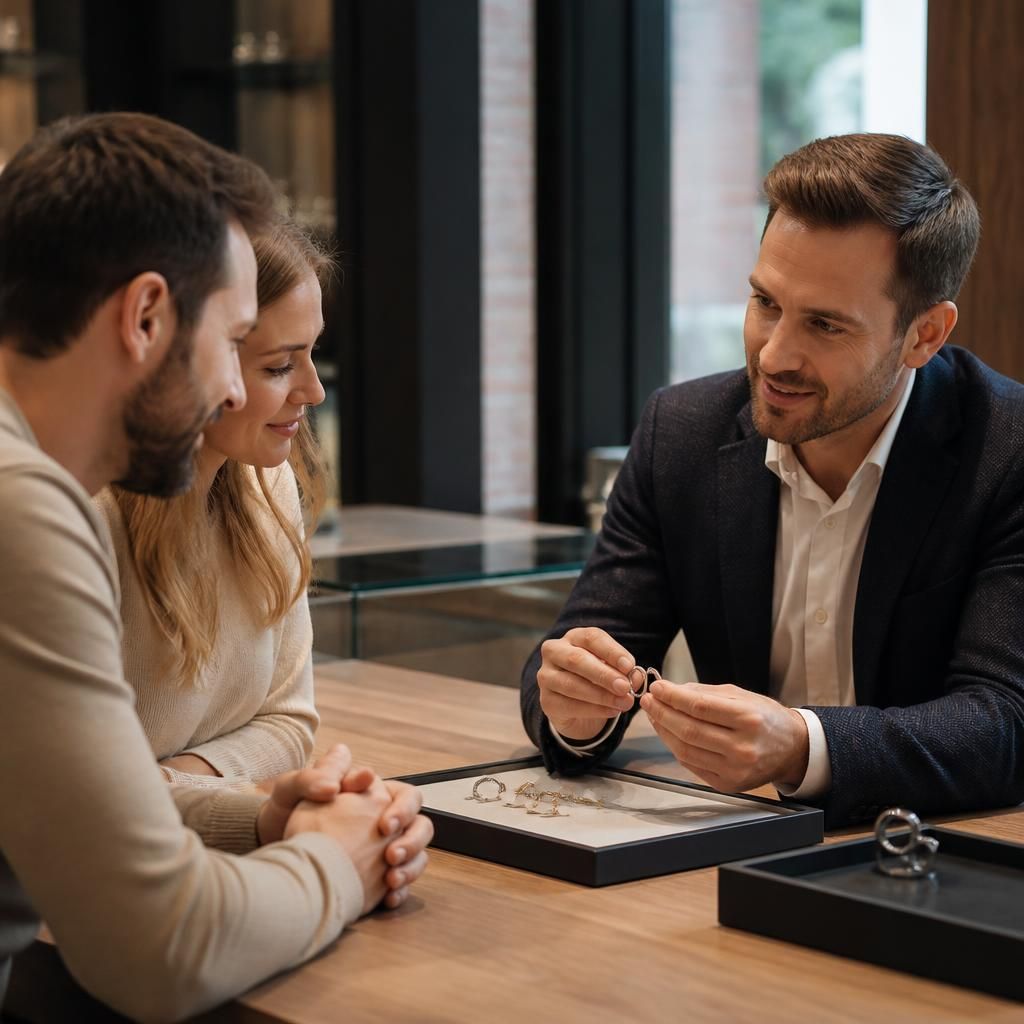
Discuss your his and hers wedding band set with Steven Charles Quance to compare coordinated metals, profiles, finishes and personal details. A consultation can establish how the rings will suit each wearer while maintaining a considered connection between them.