What is the process of getting a ring valued professionally?
A professional ring valuation involves examining the ring’s materials, gemstones, craftsmanship, condition and supporting documentation before assessing its value for the stated purpose, such as insurance, resale or probate. The valuer records the findings in a written report, including identifying details and any relevant limitations.
A professional ring valuation is a structured assessment of the ring’s materials, gemstones, workmanship, condition, provenance and intended use. The valuer examines the piece in person, records its identifying features and prepares a written report stating an appropriate value for the purpose requested, such as insurance, resale, probate or family division.
The valuation process normally includes the following stages:
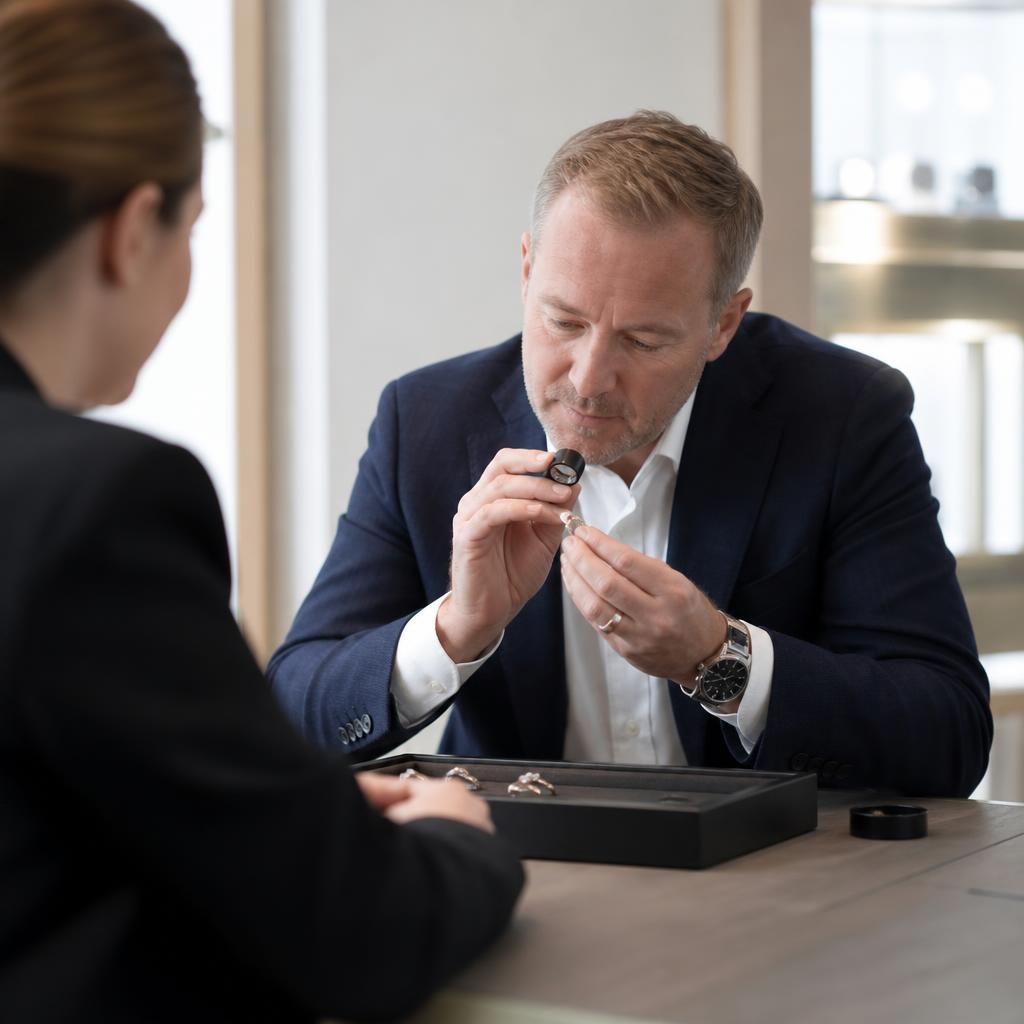
During an appointment, the ring may be examined with magnification and specialist testing equipment. This helps identify metal fineness and gemstone characteristics without relying solely on appearance. Testing is selected according to the piece and should be carried out with appropriate care. Some features, such as a gemstone’s precise origin or treatment history, cannot be confirmed reliably without examination by a specialist laboratory; a professional report should make that limitation clear rather than present an uncertain conclusion as fact.
To help the appointment run efficiently, bring the ring in its current condition along with any relevant paperwork. Useful documents include the original receipt, previous valuation, insurance schedule, gemstone report, warranty, service record and information about repairs or remodelling. If the ring forms part of an inherited estate, probate or insurance claim, provide the relevant instructions so the report is prepared on the correct basis. Avoid cleaning away evidence of damage before an insurance or claim-related assessment, although the ring should be transported securely and discreetly.
The report is not simply a statement of the ring’s purchase price. Retail prices, replacement costs, auction results and second-hand offers represent different measures of value. A ring bought several years ago may require a different replacement figure today because metal prices, labour costs, gemstone availability and retail conditions have changed. Conversely, a high retail price does not guarantee an equivalent resale value. The purpose and date shown on the report are therefore essential when interpreting the result.
Once the valuation has been completed, check that the report describes the ring accurately, including the metal, stone details, measurements, identifying marks and condition. Keep the report and photographs with your household or jewellery records, and provide a copy to your insurer where appropriate. If the ring is subsequently repaired, resized, remodelled or altered, the existing valuation may no longer describe it accurately and a review may be necessary.
A professional valuation is an assessment at a particular date and for a particular purpose, not a permanent guarantee of future value. Maintaining the ring, keeping its documentation and arranging updated valuations when circumstances change will help ensure that the written record continues to reflect the jewellery you own and the protection you need.
The valuation purpose determines how your ring is assessed and what figure appears in the report. An insurance valuation considers the likely cost of replacing the ring with an equivalent piece, while a resale valuation reflects current second-hand market conditions. Probate, matrimonial and family-division valuations may require a different basis of value.
Tell the valuer the intended use before the appointment and bring any relevant documents, such as the purchase receipt, previous valuation, gemstone report, insurance schedule or repair records. These documents help confirm the ring’s history and specification, but the valuer will still examine its present materials, gemstones, workmanship and condition independently.
- Assessing condition and wear. Everyday wear can affect a ring’s value and its replacement requirements. Scratches, worn claws, loose stones, distortion, damage, previous repairs and evidence of resizing are recorded. Condition does not necessarily prevent a valuation, but significant wear or damage may affect the stated value and should be addressed to reduce the risk of further loss.
Arrange Your Professional Ring Valuation
Arrange a professional ring valuation with Steven Charles Quance and receive a written assessment prepared for your intended purpose, whether insurance, resale, probate or another requirement.