
How do I customise a lab diamond engagement ring to suit my personal style?
Customise a lab diamond engagement ring by choosing the diamond shape, setting, precious metal and personal design details that suit your style and lifestyle. A bespoke consultation can refine these choices into a balanced design, from a minimalist solitaire to a vintage-inspired ring with milgrain, engraving or contrasting stones.
Customise a lab diamond engagement ring by selecting the diamond’s shape and proportions, the setting, precious metal, band profile and personal design details as a coordinated whole. Your lifestyle, existing jewellery and preferred level of detail should guide the design as much as your aesthetic preferences. A bespoke consultation can then refine these choices into a practical ring, whether your taste is minimalist, contemporary, vintage-inspired or highly distinctive.
Start with the overall character of the ring. Before choosing individual features, consider the impression you want the finished design to create. A clean solitaire with a plain band gives the lab-grown diamond visual prominence and suits a restrained, timeless style. A halo, shoulder stones or a more sculptural setting creates greater presence. Beaded edges, milgrain detailing, engraved shoulders and an antique-style setting can introduce a vintage influence, while asymmetry, unusual stone placement or mixed metals can give the ring a more modern character.
It can help to collect examples of jewellery you genuinely wear rather than focusing only on designs that look appealing in photographs. Note whether you prefer fine or substantial bands, polished or textured surfaces, discreet or prominent stones, and simple or decorative settings. This provides a more reliable starting point for a bespoke design than choosing features individually without considering how they will work together.
Choose a lab-grown diamond shape that suits your style and hand. The shape has a significant effect on the ring’s appearance. Round brilliant diamonds are associated with balanced, classic designs, while oval, pear and marquise shapes can create a more elongated appearance. Cushion and radiant shapes offer softer or more contemporary outlines, and emerald-cut diamonds are recognised for their broad, step-cut facets and understated look.
Shape is separate from cut quality. Cut describes how effectively the diamond’s facets are proportioned and finished to interact with light. For shapes other than round, visual preferences can vary considerably, so review the actual stone rather than relying solely on a grading description or photograph. Consider the diamond’s length-to-width proportion, how its outline sits within the setting and whether its corners or points require additional protection.
Select the setting according to both appearance and wear. A claw or prong setting exposes more of the diamond and can create a lighter, more open appearance. A bezel setting surrounds the edge of the stone with metal, producing a defined outline and additional protection. A halo places smaller diamonds around the centre stone, making the design more detailed and increasing its apparent scale without changing the centre diamond itself. A cluster setting can create a distinctive floral or vintage effect, while a flush or low-profile design may be more practical for active daily wear.
Ask how the proposed setting will affect cleaning, snagging and maintenance. Higher settings may allow more light around the stone but can be more noticeable when worn. Lower settings can feel secure and practical, although they may need to be checked against the shape of any wedding band you plan to wear. The setting should hold the stone securely while allowing appropriate access for inspection and cleaning.
Use precious metal to reinforce the intended style. Platinum offers a naturally white appearance and is commonly chosen for its durability and suitability for secure diamond settings. White gold creates a similar visual effect, while yellow gold gives the ring a warmer, traditional appearance. Rose gold adds a softer, pink-toned contrast. The choice can be based on colour preference, existing jewellery, skin tone and the way you want the lab-grown diamond to appear.
Mixed-metal details can provide contrast without making the design overly elaborate. For example, a white-metal setting can emphasise the brightness of the diamond while a yellow- or rose-gold band adds warmth. If you prefer a consistent appearance, using the same metal throughout creates a more unified result. The metal choice should also take account of your preferred aftercare and any known sensitivities to particular alloys.
Personalise the band and setting details. Bespoke design allows you to adjust features that are often fixed in a mass-produced ring. These can include:
Personal details are most effective when they remain consistent with the ring’s proportions. A fine band may not suit heavy engraving or numerous accent stones, while a wider band can accommodate more visible texture and lettering. Concealed details are useful if you want the ring to feel personal without changing its outward appearance.
Consider how the ring will work with a wedding band. A straight wedding band may sit neatly against a traditional solitaire, whereas a halo or low-set design may require a shaped, curved or fitted band. If you already have a wedding band in mind, it should be considered during the engagement ring design rather than afterwards. The gallery, claws and underside of the setting can be planned to reduce unwanted gaps and allow both rings to sit comfortably.
Also consider how the ring will fit into your daily routine. If you work with your hands, play sport or regularly wear gloves, a secure lower-profile setting and a smooth band may be preferable to prominent claws or sharp decorative edges. If the ring is intended for occasional wear, there may be more scope for a larger setting or intricate detail. Comfort, balance and ease of cleaning are essential parts of successful customisation.
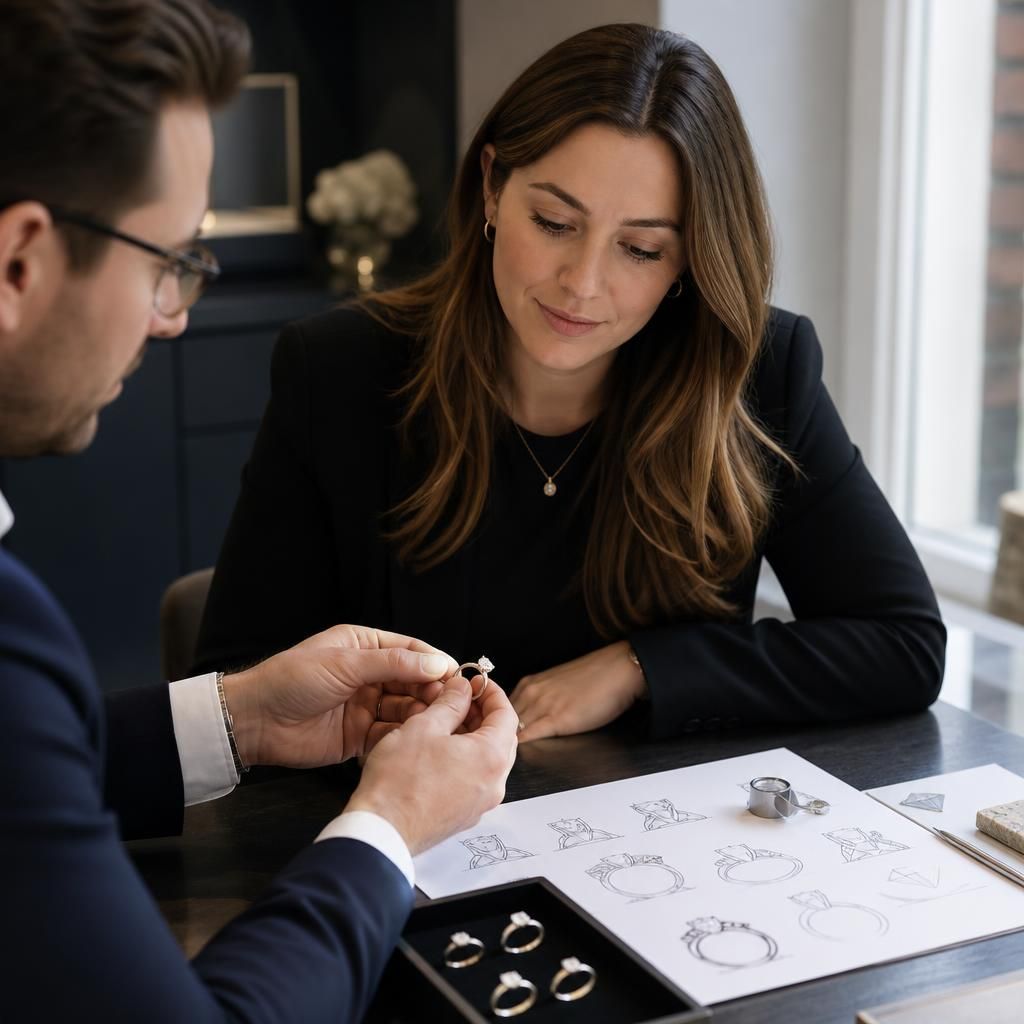
Use the design process to check the details before manufacture. A bespoke consultation should establish your preferred style, budget, ring size, metal, lab-grown diamond shape and any practical requirements. The design can then be developed through sketches, computer-aided design or other visual references, depending on the project. Review the setting from the top, side and underside, as the profile and gallery can be as important as the face of the ring.
Before approving the design, confirm the lab-grown diamond’s grading documentation, measurements and setting compatibility. Check that the proposed band dimensions are comfortable, that the stone is suitably protected and that any engraving or textured detail can be produced clearly. It is also sensible to discuss future resizing, cleaning, inspections and repairs at this stage, particularly where the ring includes delicate details or multiple stones.
The best customised lab diamond engagement rings combine a clear personal style with sound practical decisions. Begin with the features you consistently prefer, choose a diamond shape and setting that support that style, and use metal, texture, engraving and accent stones to add individuality. Expert guidance can help balance appearance, durability, comfort and future wear so the finished ring is distinctive without becoming difficult to live with.
Customising a lab diamond engagement ring means balancing your preferred appearance with the way you intend to wear it. The setting, band profile and metal should suit your personal style while providing appropriate security, comfort and ease of maintenance.
For active daily wear, a lower-profile bezel or carefully designed claw setting with a smooth band may reduce snagging and protect the stone. If you prefer a more traditional or delicate appearance, an elevated solitaire can display the diamond prominently, while a halo, shoulder stones or milgrain detailing can add visual interest. Consider your wedding band at the same time, as a halo or shaped setting may require a fitted band to sit comfortably alongside the engagement ring.
Personal details such as engraving, mixed metals, concealed gemstones and textured finishes can then be added without compromising the ring’s proportions. Reviewing the design from the top, side and underside helps confirm that the finished piece reflects your style and remains practical for everyday wear.
- Band width, thickness and shape, from a fine rounded profile to a broader, flatter or softly tapered design.
- Shoulder stones, including diamonds or other ethically sourced gemstones, positioned along part of the band.
- Milgrain, engraving, hand-applied texture or a combination of polished and satin finishes.
- Open, split or sculpted shoulders that alter the way the centre stone is framed.
- A concealed halo, hidden gemstone or subtle detail beneath the setting.
- An inscription inside the band, such as initials, a date or wording with personal significance.
Start designing your bespoke lab diamond engagement ring
Arrange a consultation to start designing your bespoke lab diamond engagement ring, with expert guidance on the diamond, setting, metal and personal details. We can help you refine your ideas into a practical design that suits your style and everyday wear.