
Have you considered the ethical implications of choosing diamonds, specifically focusing on options like lab-grown versus natural stones, and how they influence the overall narrative of your engagement ring?
Considering the ethical implications of choosing diamonds involves evaluating both lab-grown and natural stones. Lab-grown diamonds offer a sustainable and environmentally friendly option, produced with fewer resources and without the ethical concerns often linked to mining. In contrast, natural diamonds carry a unique allure and historical significance, with ethical sourcing increasingly important to ensure they meet today’s standards. Deciding between the two can shape the ethical narrative of your engagement ring, aligning with personal values and contributing to the meaningful story of your commitment.
The choice between lab-grown and natural diamonds primarily hinges on ethical considerations that can significantly shape the narrative of your engagement ring. Lab-grown diamonds are created in controlled environments using advanced technological processes, which replicate the natural formation of diamonds. This method is notably eco-friendly, consuming fewer natural resources and minimising the impact on ecosystems, making it a sustainable choice for those concerned about their environmental footprint. Moreover, lab-grown diamonds are free from the ethical concerns associated with traditional mining, such as labour exploitation and conflict funding, offering peace of mind to ethically minded consumers.
On the other hand, natural diamonds have been cherished for their unique geological journey, each stone encapsulating millions of years of Earth’s history. For many, the allure of a natural diamond lies in its rarity and the stories that accompany its formation process. However, the ethical implications of natural stones are paramount. It is crucial to choose natural diamonds that are sourced responsibly, ensuring they adhere to standards such as the Kimberley Process, which aims to prevent conflict diamonds from entering the market. By doing so, you support responsible mining practices that advocate for fair labour conditions and community development.
When deciding between these options, it is essential to weigh personal values against practical considerations. Lab-grown diamonds typically offer a more accessible price point, allowing for larger stones or higher quality grades within the same budget as a smaller or lower quality natural diamond. Conversely, for those who value tradition and the rarity of natural gems, ethically sourced natural diamonds remain a compelling choice.
Ultimately, your decision will contribute to the story your engagement ring tells, reflecting commitments not only to each other but also to wider ethical considerations. The selection of either a lab-grown or natural diamond should align with your personal beliefs and the narrative you wish to create. At Steven Charles Quance, we are committed to guiding you through these choices with transparency and expertise, ensuring that your engagement ring embodies both your love story and ethical values.
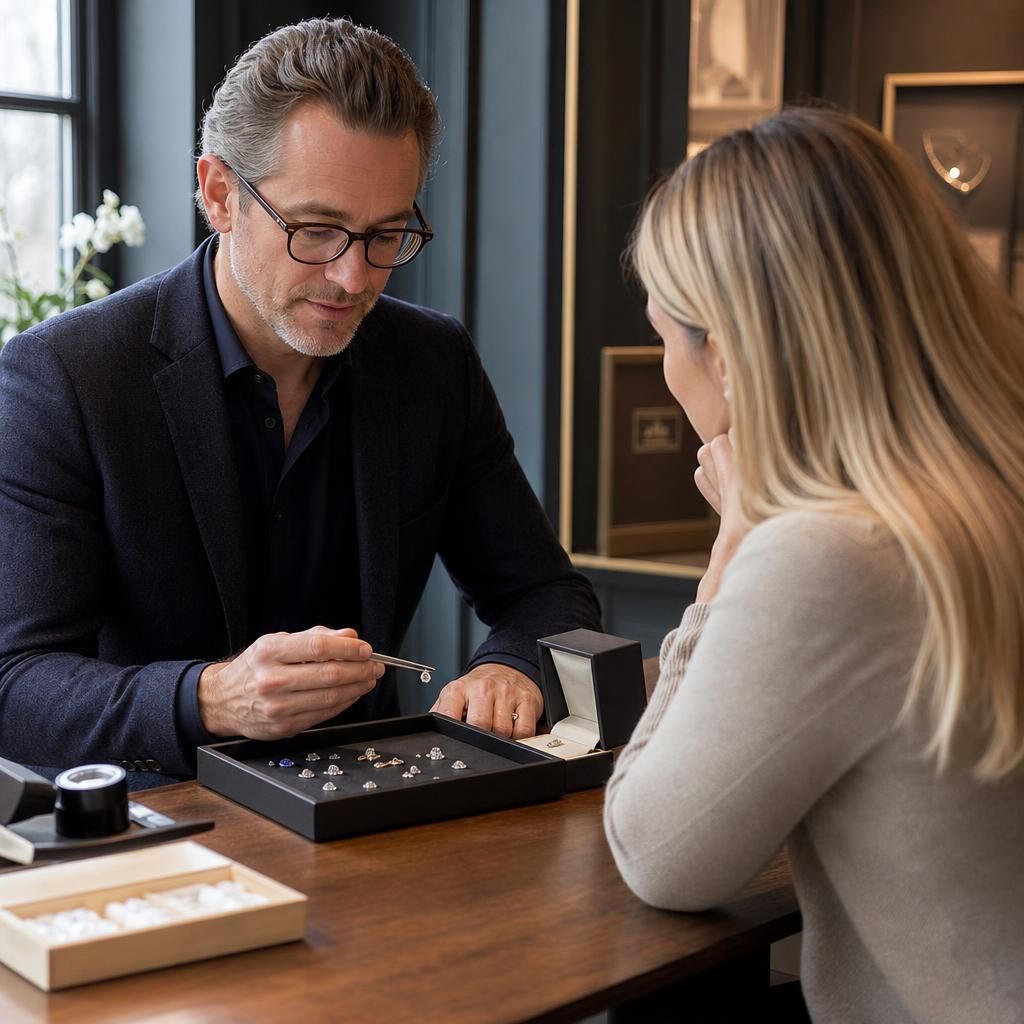
Understanding the environmental and ethical implications of choosing between lab-grown and natural diamonds can substantially influence the narrative of your engagement ring. Lab-grown diamonds are created using advanced technological processes that simulate the natural conditions required for diamond formation. This approach not only reduces environmental impact by consuming fewer natural resources but also eliminates the ethical concerns often tied to mining, such as labour exploitation and funding conflicts. As a result, lab-grown diamonds present a strong case for sustainability and ethical sourcing, appealing to those who wish to minimise their ecological footprint.
In contrast, the allure of natural diamonds lies in their geological rarity and the deep historical journey each stone represents. Although more traditional, the ethical ramifications are significant for consumers prioritising responsible sourcing. Ensuring that natural diamonds adhere to ethical standards, such as the Kimberley Process, is essential in supporting fair mining practices and promoting community development. This choice echoes a commitment to sustaining ethical traditions while preserving the intrinsic value associated with natural gems.
Your decision between these diamonds should harmonise with your ethical stance and the narrative you wish your ring to convey. At Steven Charles Quance, we are dedicated to providing expert guidance, ensuring that every piece we craft embodies personal values and ethical consideration.