
What materials are available for personalised lockets?
Personalised lockets are commonly available in precious metals such as yellow gold, white gold, rose gold, platinum and sterling silver, with the choice affecting appearance, durability and care requirements. You can also personalise the design with finishes, gemstones or enamel details, subject to the locket’s construction and engraving requirements.
Personalised lockets are available in precious metals including yellow gold, white gold, rose gold, platinum and sterling silver. The material affects the locket’s colour, weight, durability, maintenance requirements and suitability for engraving, so the best choice depends on how often it will be worn and the finish you prefer.
Yellow gold provides the traditional warm gold appearance and is available in different levels of purity. Higher-purity gold has a richer colour but can be more susceptible to marks, while gold alloyed with other metals can offer increased strength for everyday wear. Yellow gold is suitable for classic lockets and works well with engraved lettering, initials, dates and small motifs.
White gold has a bright, silvery appearance created by combining gold with pale alloy metals. It is commonly finished with rhodium to produce a reflective white surface. This finish can wear gradually with regular use, particularly on areas that rub against clothing or skin, and may need professional attention over time. White gold is a practical option if you prefer a contemporary look while retaining the value and character of a gold locket.
Rose gold gets its pink or blush tone from the metals alloyed with the gold, particularly copper. Its colour can range from subtle to more pronounced depending on the alloy. Rose gold suits both vintage-inspired and modern designs, and provides a clear contrast for certain engraving styles. As with other gold alloys, the purity and construction of the locket will influence its resistance to scratching and general wear.
Platinum is a naturally white precious metal valued for its density and durability. It is well suited to a locket intended for frequent wear, although its greater weight and cost may make it less suitable for every design or budget. Rather than losing material quickly when marked, platinum can develop a soft patina over time. This can be retained as part of its character or professionally polished when a brighter finish is preferred.
Sterling silver offers a bright, versatile finish and is often selected for its accessibility and suitability for detailed designs. Silver is softer than platinum and some gold alloys, so a frequently worn locket may acquire surface marks more readily. It can also tarnish when exposed to air, moisture, cosmetics or household chemicals. Regular cleaning with an appropriate silver cloth and careful storage can help maintain its appearance.
Some lockets are also made with gold plating, vermeil or other coated finishes . These can provide the appearance of a precious metal over a different base metal, but the surface layer may wear through with repeated contact, polishing or exposure to chemicals. For a keepsake intended to be worn regularly, solid precious metal is generally the more durable long-term choice. The exact construction should be confirmed before selecting a design.
The metal is only one part of the material choice. Personalisation may also include:
When choosing a material, consider whether the locket will be worn daily, the level of surface maintenance you are comfortable with, any known sensitivity to particular alloy metals and whether the piece needs to coordinate with existing jewellery. The thickness of the locket is also important: a substantial design is more likely to support deeper engraving and repeated opening than a very delicate one.
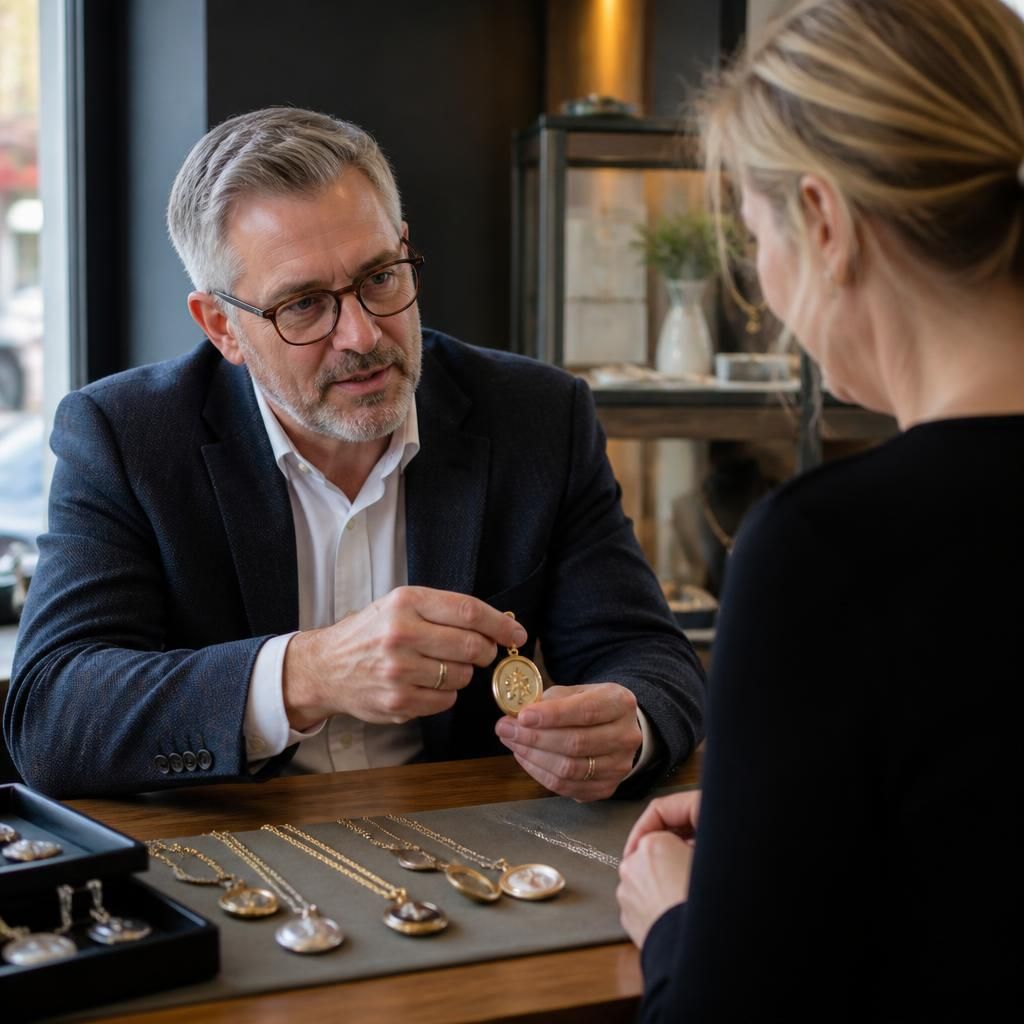
For a bespoke personalised locket, the proposed metal, purity, finish and engraving method should be agreed before production. At Steven Charles Quance, we can discuss how these choices affect the appearance, construction and aftercare of the finished piece, helping you select a material that is appropriate for both the design and its intended use.
The material of a personalised locket affects its appearance, durability, maintenance and suitability for everyday wear. Solid gold, platinum and sterling silver are established choices, while the best option depends on the finish you prefer, how often the locket will be worn and the level of care it will receive.
For frequent wear, platinum and durable gold alloys offer good resistance to general use, although all precious metals can develop surface marks. Sterling silver provides a versatile and accessible option but may tarnish and show scratches more readily. Gold-plated or coated finishes can create a particular colour or appearance, but the surface layer may wear with repeated contact. The locket’s thickness, hinge and engraving depth should also be considered, as these construction details affect how well it withstands opening, handling and personalisation.
- Gemstones: birthstones, diamonds or other gems can add colour and provide a further personal detail, subject to the locket’s size and setting.
- Enamel: coloured enamel can be used for decorative details, although it should be protected from impact and harsh cleaning products.
- Finishes: polished, brushed, satin, hammered or oxidised effects alter how the surface reflects light and how visible small marks may be.
- Interior fittings: the locket may include a picture compartment, glass protection, a removable insert or a secure hinge, all of which need to be compatible with the chosen metal and engraving.
Discuss Your Personalised Locket Materials
Discuss your preferred metal, finish and personalisation requirements with Steven Charles Quance to determine which materials suit the locket’s design and intended wear. We can also advise on construction, engraving and ongoing care.
Speak to your personal jeweller
Every commission begins with a conversation. Arrange an appointment in the Birmingham Jewellery Quarter or talk it through by phone.