What are the typical steps involved in creating a personalised engraved necklace?
Creating a personalised engraved necklace typically involves choosing the necklace style and metal, confirming the chain and pendant details, selecting the wording or symbols, approving the engraving layout, and completing the engraving and final quality checks. The finished piece is then cleaned, inspected and prepared for collection or delivery.
Creating a personalised engraved necklace usually involves a consultation, design selection, confirmation of the inscription, engraving, and a final quality check. The exact process can vary according to the pendant style, metal, engraving method and complexity of the design, but each stage is important for ensuring the finished necklace is accurate, wearable and suitable for its intended purpose.
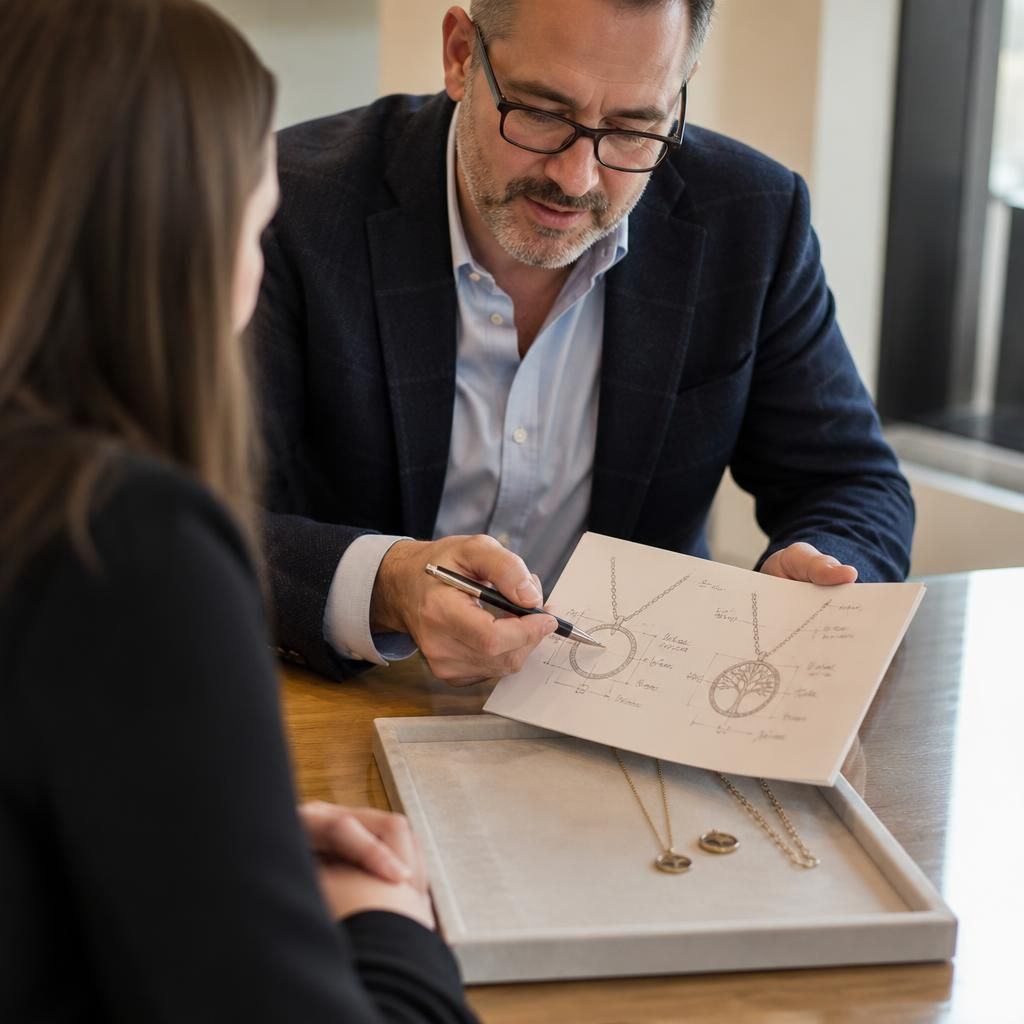
Discuss the design and purpose. The process begins by establishing what the necklace is intended to represent and how it will be worn. This may include a name, initials, date, short message, coordinates, symbol or a combination of details. The intended wearer, occasion and preferred style can help determine whether a discreet pendant, layered design or more prominent engraved plaque is most appropriate.
Choose the pendant style and metal. You can select the shape, size and finish of the pendant, along with the most suitable precious metal. Common options include yellow gold, white gold, rose gold, platinum and sterling silver, depending on the design and budget. The metal affects the necklace’s colour, weight, durability and appearance, while the pendant’s available surface determines how much wording or detail can be engraved clearly.
Confirm the chain and necklace dimensions. The chain style and length are checked alongside the pendant so that the finished piece sits as intended. A delicate chain may suit a small, minimal pendant, whereas a heavier pendant may require a stronger chain and an appropriate clasp. If the necklace is a gift, it is worth considering the recipient’s usual jewellery style and whether they prefer a shorter or longer fit.
Finalise the inscription. The wording must be supplied exactly as it should appear, including capital letters, punctuation, spaces, dates and any symbols. Names and dates should be checked carefully before production because an engraving is permanent or difficult to alter once completed. Where a message is lengthy, it may be necessary to shorten it or use more than one engraved surface.
Select the engraving style and placement. Engraving may be created in a range of styles, such as clean machine engraving, a traditional serif font, a flowing script or a hand-engraved finish. The choice should reflect the available space and the character of the necklace. The engraver will also consider whether the inscription should be centred, aligned, curved around the pendant or placed on the reverse.
Approve the layout or design proof. Before engraving, the proposed wording, font, scale and position should be reviewed. A design proof provides an opportunity to identify spelling errors, confirm the orientation of the pendant and check that the inscription is legible at the intended size. It is important to approve the final details only after checking them carefully, particularly for names in unfamiliar spellings or inscriptions in another language.
Prepare the pendant for engraving. The pendant is examined and securely positioned so that it remains stable during the engraving process. The chosen technique may be carried out by hand or using precision equipment, depending on the required finish, the metal and the complexity of the design. The surface must be clean and suitable for engraving to achieve a consistent result.
Complete the engraving. The inscription is applied to the agreed area using the approved layout. The depth and finish are controlled to produce clear lettering without compromising the pendant. Very fine details, small symbols and tightly spaced wording require particular care, as excessive detail on a small surface can reduce readability.
Clean and finish the necklace. After engraving, the pendant is cleaned to remove any residue from production. Depending on the design, it may also be polished or given the specified surface finish. This stage helps ensure that the engraved lines and the surrounding metal have the intended contrast and appearance.
Carry out quality checks. The completed necklace is checked against the approved design. This includes verifying the spelling, positioning, orientation, clarity of the engraving, condition of the pendant, chain, clasp and any setting. If the necklace includes gemstones or additional components, these are also examined for security and finish.
Prepare the piece for collection or delivery. Once the necklace has passed its checks, it is packaged appropriately and the final details are confirmed. Any care guidance, valuation documentation or relevant information about the metal and gemstones can be provided at this stage. The necklace should be inspected again on receipt, especially if it has been delivered, and any concern should be raised promptly.
The most important decisions are made before engraving begins: the exact inscription, the available engraving space, the font or engraving style and the position on the pendant. Taking time to confirm these details reduces the risk of errors and ensures the finished personalised necklace has the intended appearance. If you are unsure how much wording will fit or which metal and engraving style will work best, a jewellery consultation can help you compare practical options before the design is approved.
The design proof is the main approval stage before a personalised engraved necklace is produced. It shows the exact wording, font, scale, alignment and position of the engraving, allowing you to check how the finished inscription should appear on the pendant.
Check names, initials, dates, punctuation and symbols carefully, including capitalisation and spacing. It is also important to confirm which side of the pendant will be engraved and that the wording is legible at the proposed size. If the message is too long for the available surface, it may need to be shortened, rearranged or engraved across more than one area.
Once the proof has been approved, the pendant can be prepared and engraved to the agreed specification. Reviewing these details before production helps prevent permanent errors and ensures the finished necklace is clear, balanced and suitable for its intended wearer.
- Finalise the inscription. The wording must be supplied exactly as it should appear, including capital letters, punctuation, spaces, dates and any symbols. Names and dates should be checked carefully before production because an engraving is permanent or difficult to alter once completed. Where a message is lengthy, it may be necessary to shorten it or use more than one engraved surface.
- Prepare the pendant for engraving. The pendant is examined and securely positioned so that it remains stable during the engraving process. The chosen technique may be carried out by hand or using precision equipment, depending on the required finish, the metal and the complexity of the design. The surface must be clean and suitable for engraving to achieve a consistent result.
- Complete the engraving. The inscription is applied to the agreed area using the approved layout. The depth and finish are controlled to produce clear lettering without compromising the pendant. Very fine details, small symbols and tightly spaced wording require particular care, as excessive detail on a small surface can reduce readability.
- Clean and finish the necklace. After engraving, the pendant is cleaned to remove any residue from production. Depending on the design, it may also be polished or given the specified surface finish. This stage helps ensure that the engraved lines and the surrounding metal have the intended contrast and appearance.
- Carry out quality checks. The completed necklace is checked against the approved design. This includes verifying the spelling, positioning, orientation, clarity of the engraving, condition of the pendant, chain, clasp and any setting. If the necklace includes gemstones or additional components, these are also examined for security and finish.
Discuss Your Personalised Necklace Design
Discuss your personalised necklace design with our jewellery team to review the pendant, metal, inscription, engraving style and layout before production. We can help you confirm the practical details and create a necklace suited to its intended wearer.