
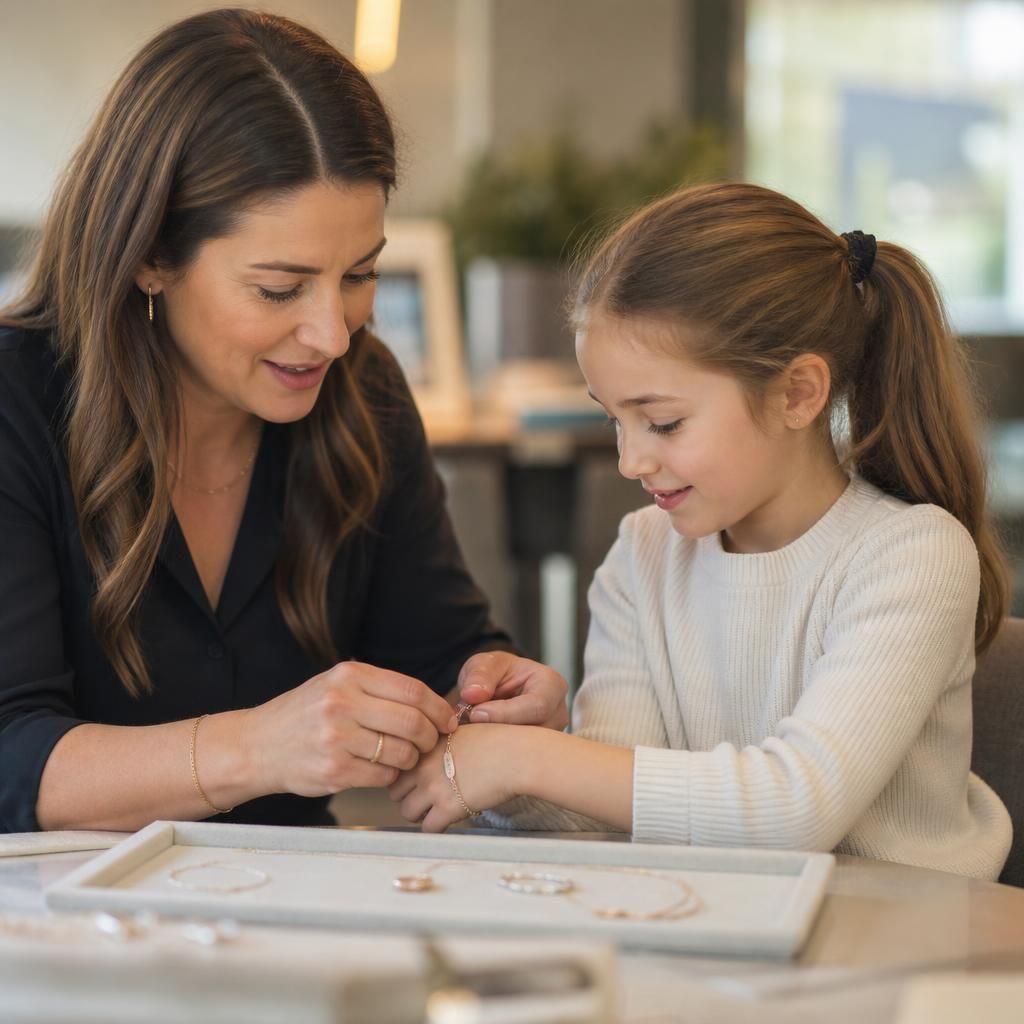
What are the ethical considerations when selecting personalised children's bracelets?
When selecting personalised children’s bracelets, consider responsibly sourced materials, safe construction, durable workmanship and personalisation that does not expose unnecessary information about the child. Choose a bracelet made from skin-friendly precious metals or other clearly specified materials, with a secure, age-appropriate fastening and guidance on supervision, care and responsible aftercare.
Ethical selection of a personalised children’s bracelet involves considering how the materials were sourced, how the bracelet was made, whether it is safe and appropriate for the child, and what will happen to it when it needs repairing or is no longer wanted. A responsible choice should offer clear information about the metal and stones, avoid unnecessary personal data, use secure construction and provide realistic guidance on supervision, care and aftercare.
Material sourcing and traceability
Ask what the bracelet is made from and whether the supplier can explain the origin of the materials. Precious metals should be sourced through established supply chains that address labour practices, environmental impact and the risk of conflict minerals. Where a bracelet includes diamonds or coloured gemstones, request information about responsible sourcing and whether the stones have been selected from suppliers with appropriate due-diligence procedures.
In the UK, precious-metal jewellery may be subject to hallmarking requirements depending on its type and weight. A hallmark helps confirm the metal standard and identifies the registered party responsible for the item. It does not, by itself, prove that every part of the supply chain is ethical, so it is still reasonable to ask about sourcing and manufacturing practices.
Material descriptions should be precise rather than relying on terms such as “hypoallergenic” without explanation. Gold, silver, platinum and other metals can have different compositions, and some children may react to particular alloys, plating or base metals. If the child has sensitive skin or a known allergy, discuss the metal specification before ordering and avoid choosing a finish solely for its appearance.
Labour and manufacturing standards
Ethical jewellery should be made under conditions that respect workers’ health, safety, pay and legal rights. A retailer should be able to provide meaningful information about where an item is manufactured and how its suppliers are selected. This does not require every component to come from one location, but the supply chain should not be presented in a misleadingly vague way.
Handcrafted or bespoke production can reduce unnecessary stock and allow the design to be made for a particular child, but “handmade” is not automatically evidence of ethical manufacture. Consider the quality of the workmanship, the transparency of the maker and whether the design can be repaired rather than discarded if a component fails.
Safety is an ethical consideration
A bracelet intended for a child should be assessed for more than its visual appeal. The fastening should be suitable for the child’s age, dexterity and level of supervision. Edges, engraved areas, links and decorative elements should be smooth and securely finished. Small detachable parts, loose charms and long extensions may present risks, particularly for younger children.
Personalised jewellery should not be treated as a toy or worn in situations where it could catch on equipment, clothing or other objects. Remove it for sleeping, bathing, swimming, contact sport and active play unless the manufacturer or jeweller has specifically confirmed that it is suitable. Children should be supervised according to their age and the design, and the bracelet should be inspected regularly for stretched links, damaged solder joints, loose stones or a weakening clasp.
Responsible advice includes explaining these limitations rather than implying that any bracelet is suitable for uninterrupted daily wear. If the item becomes damaged, stop using it until it has been examined and repaired. A child’s bracelet should never be modified in a way that compromises the fastening or creates sharp edges.
Privacy and the type of personalisation
Personalisation should be meaningful without revealing information that could identify or locate the child. A first name, initials, a significant date or a short private message may be preferable to a full name, address, school name, telephone number or social media handle. The choice depends on the circumstances, but any engraving that would help a stranger identify the child or contact the family deserves careful consideration.
Think about who may see the bracelet in public, at school or online. A discreet inscription on the inside may offer a more private alternative to prominent engraving. If contact information is being considered for medical or emergency reasons, use only information that is genuinely necessary and discuss whether a recognised medical-identification product would be more appropriate.
Age, consent and appropriateness
The child’s age, maturity and ability to understand how to wear and care for the bracelet should influence the design. A very delicate chain, protruding charm or complex clasp may be unsuitable for an active child, while a more robust, simple design may be easier to supervise. The child’s preferences also matter: involving them in choosing the colour, finish or message can make the item more meaningful without requiring excessive decoration.
Parents or guardians should make the final decision about safety, personal information and suitability. Personalisation should not pressure a child to wear jewellery they dislike or make them responsible for preventing loss or damage beyond their understanding.
Durability, repair and waste
Buying a well-made bracelet that can be resized, repaired or remodelled is generally more responsible than choosing an item that is likely to be discarded after a minor fault or as the child grows. Ask whether the bracelet can be adjusted, whether replacement clasps or links are available, and whether the inscription or design will restrict future alterations.
Care instructions should be practical and proportionate. Keeping jewellery away from chemicals, removing it for vigorous activities and storing it safely can extend its useful life. If the bracelet is no longer worn, consider resizing it for another stage of the child’s life, remodelling it into a different piece or asking about responsible recycling or recovery of precious metals and stones.
Questions to ask before ordering
There is rarely a single material or design that is ethically perfect in every respect. The most responsible decision is based on transparent information, safe and age-appropriate construction, restrained personalisation, durable workmanship and a clear plan for repair and future use. If a supplier cannot answer basic questions about materials, safety or aftercare, choose a different design or request further information before proceeding.
Ethical personalisation should add meaning without revealing unnecessary information about the child. A first name, initials or a private message is usually preferable to engraving a full name, address, school, telephone number or social media details on a bracelet that may be seen in public.
Consider who could read the inscription at school, in public places or in photographs shared online. If the bracelet is intended to carry medical or emergency information, include only what is essential and consider whether a recognised medical-identification product would be more suitable. Parents or guardians should make the final decision, while involving the child in choosing an appropriate message or finish.
- What is the exact metal composition, and is it hallmarked where applicable?
- Where were the metal, gemstones and other significant components sourced?
- What information is available about manufacturing conditions and supplier standards?
- Is the design suitable for the child’s age and intended activities?
- Are the clasp, links, charms and engraved surfaces securely and smoothly finished?
- Could the chosen personalisation disclose unnecessary information about the child?
- Can the bracelet be resized, repaired, remodelled or responsibly recycled?
- What care, supervision and aftercare guidance should be followed?
Discuss an Ethical Personalised Children’s Bracelet
Discuss your child’s bracelet requirements with our team, including responsibly sourced materials, age-appropriate safety features, discreet personalisation and future repair or resizing options. We can help you assess the design and materials before you order.