
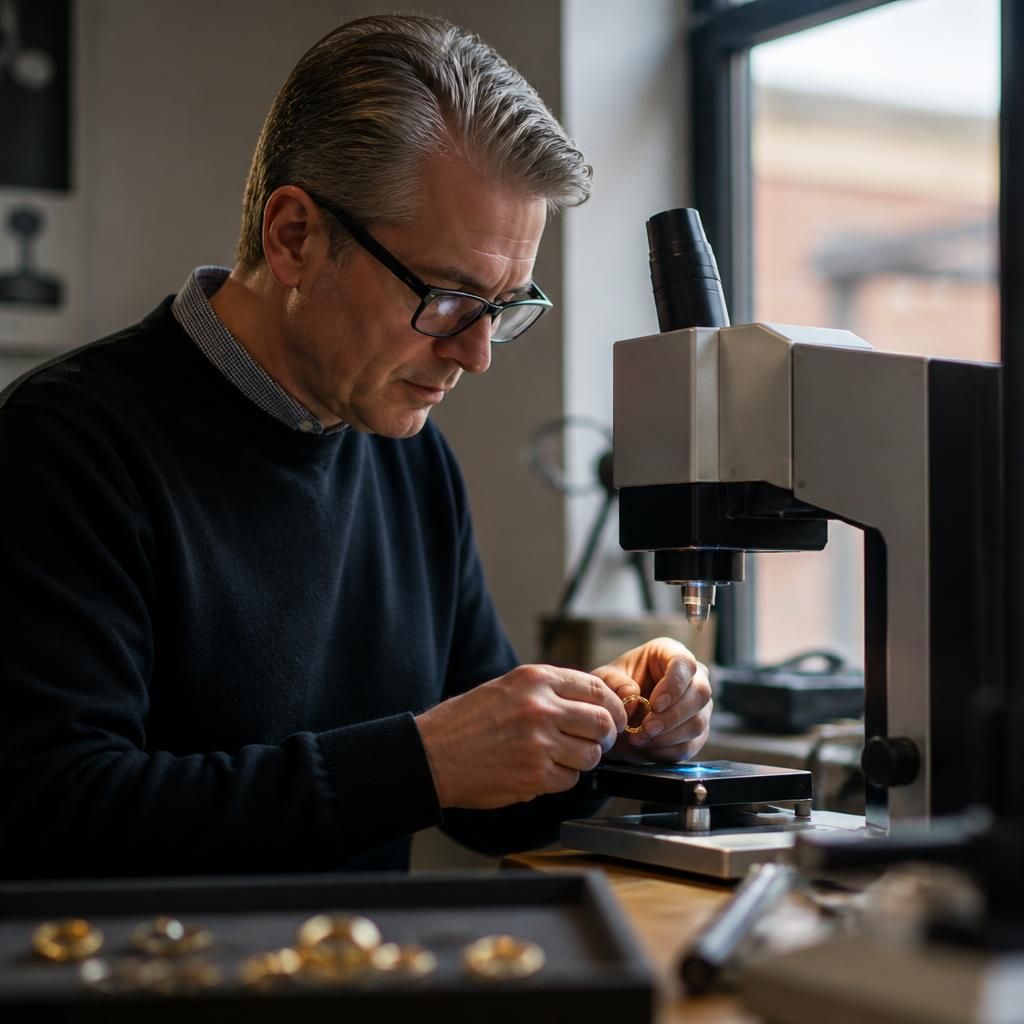
What are the benefits of laser engraving for personalised jewellery?
Laser engraving gives personalised jewellery exceptionally precise, durable detailing, allowing names, dates, messages, symbols and even intricate designs to be applied to suitable surfaces. It offers greater design flexibility and consistency than many traditional methods, making it ideal for creating distinctive pieces with lasting sentimental value.
Laser engraving is a computer-controlled process that uses a focused laser beam to remove or alter a very small area of a jewellery surface. For personalised jewellery, this allows names, dates, handwriting, messages, symbols and detailed artwork to be applied with a high level of accuracy and repeatability.
Precise and highly controlled detail
The narrow, concentrated laser beam can produce fine lines and small details that may be difficult to achieve by hand, particularly on compact areas such as the inside of a ring, the back of a pendant or the surface of a bracelet plate. Lettering can be carefully positioned and scaled to suit the available space, helping the finished engraving remain balanced and legible.
This precision is useful for more than simple text. Suitable designs can include fine initials, coordinates, fingerprints, personal sketches, dates written in a particular style and other line-based artwork. The final result depends on the quality of the original design, the size of the jewellery and the properties of the material.
Greater design flexibility
Traditional engraving is often associated with names, dates and established lettering styles. Laser engraving can accommodate a wider range of digital artwork and typefaces, making it easier to create a piece that reflects an individual message or design preference. A handwritten note or drawing may also be converted into a suitable file, provided the original artwork is clear enough to reproduce.
It is possible to personalise different areas of a piece, including a discreet inner surface or a more visible outer surface. Before work begins, the proposed placement should be checked against the jewellery’s shape, curvature, finish and construction. This helps ensure that the design is appropriate for the available area rather than overcrowded or difficult to read.
Consistent results
Because the laser follows a prepared digital design, each line and character can be reproduced consistently. This is particularly helpful when matching engraving across a pair of wedding rings, adding the same wording to several gifts or creating a design that needs an exact layout.
Digital preparation also makes it easier to review the proposed wording, font, scale and positioning before engraving. Checking these details is important because personalised work is made specifically for the individual piece and cannot always be altered once completed.
Suitable for detailed personal messages
Laser engraving can make use of areas that may not be suitable for a larger decorative design. Short messages, initials, personal dates and meaningful symbols can often be placed discreetly on the inside of a ring or on the reverse of a pendant. This provides a way to add significance without changing the visible character of the jewellery.
For gifts, the engraving can identify the occasion or relationship without relying on a standard design. For wedding and commitment rings, it may record a date, phrase or private message. The wording should be checked carefully, including spelling, punctuation and date format, before approval.
Durable personalisation when correctly specified
Laser engraving creates a mark in, or alters, the surface rather than applying a separate printed decoration. When the depth, technique and material are suitable, the personalisation can remain clear through normal wear. Its longevity still depends on the jewellery metal, surface finish, engraving depth, location and how the item is worn and maintained.
Engraving on a frequently contacted surface may show signs of wear sooner than engraving in a protected area, such as the inside of a ring. Highly polished, plated or coated finishes may also require particular care because engraving can change the appearance of the surface or expose the material beneath it.
A contactless process
The laser does not need to press a cutting tool directly against the jewellery. This reduces the risk of the piece moving under a conventional cutting force and is useful when working with fine artwork or carefully finished surfaces. It does not remove the need for secure preparation and inspection: the jewellery must still be assessed and positioned accurately before engraving.
Important material and design considerations
Laser engraving is not identical on every material. Gold, platinum, silver, stainless steel and other jewellery materials can respond differently, while plating, coatings, gemstones and surface treatments may affect the available options. Some materials produce a contrasting mark, whereas others create a subtler change in texture or tone.
Very curved, narrow, delicate or uneven surfaces can restrict the size and placement of a design. Gemstones, hollow construction, articulated sections and existing damage may also affect whether engraving is advisable. A professional assessment can confirm the safest technique and explain how the selected material and finish are likely to appear.
Overall, the main benefits of laser engraving for personalised jewellery are accurate detail, flexible design options, consistent reproduction and durable, considered personalisation. The best result comes from matching the design and engraving method to the jewellery itself, then checking the artwork and placement carefully before the work is carried out.
One of the main benefits of laser engraving for personalised jewellery is its ability to reproduce fine, individual details accurately. A focused laser can apply names, dates, handwriting, symbols and other line-based artwork to suitable areas such as the inside of a ring, the back of a pendant or a bracelet plate.
The design can be prepared digitally before engraving, allowing the wording, font, scale and placement to be checked in advance. This is particularly useful for matching engravings across wedding rings or ensuring that a personal message remains clear within a small space. The finished mark is integrated into the jewellery’s surface rather than applied as a separate decoration, although its long-term appearance will depend on the material, finish, location and normal wear.
Discuss Your Personalised Jewellery Engraving
Discuss your personalised jewellery engraving with us to review the design, wording, placement and suitability of the metal or finish. We can advise on the most appropriate laser engraving approach before work begins.
Speak to your personal jeweller
Every commission begins with a conversation. Arrange an appointment in the Birmingham Jewellery Quarter or talk it through by phone.