
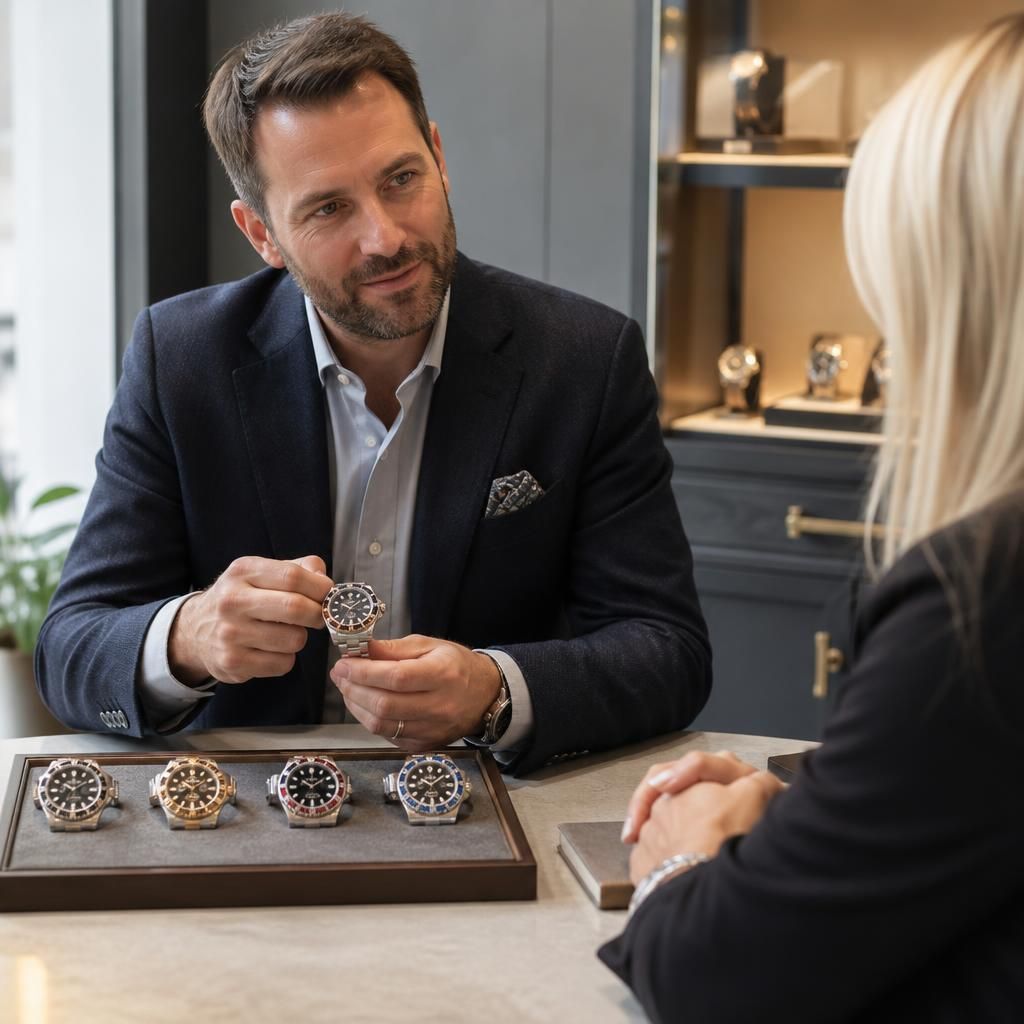
What are the price differences between the various used Rolex GMT Master II models?
Used Rolex GMT-Master II prices vary by reference, production year, condition, metal, bezel, dial configuration and whether the original box and papers are included. Older or discontinued models with sought-after features can command premiums, while more recent stainless-steel examples are generally priced differently from two-tone or solid-gold versions; an up-to-date valuation is therefore essential when comparing specific watches.
Used Rolex GMT-Master II prices differ chiefly according to the reference, metal, bezel, production period, condition, and availability. Stainless-steel models are often highly sought after and can command strong prices, while two-tone and solid-gold watches usually have a higher overall value because of their material content. Discontinued references, unusual configurations and complete, well-preserved sets may also attract a premium.
Prices change with the market, so there is no single fixed value for each model. Two watches with the same reference can be priced differently if one has sharper case and bracelet condition, an earlier or more desirable bezel, its original documentation, or a stronger service history. The following comparisons provide a useful guide to the main differences.
The bezel is one of the most visible differences between used GMT-Master II models. Aluminium inserts can show age-related fading or marks, which may appeal to collectors when the change is natural and the watch remains original. Ceramic bezels are highly resistant to fading but can be costly to replace if damaged. The colour combination also matters: a red-and-blue bezel, for example, may be valued differently from a black or blue-and-black bezel, depending on the reference and current demand.
Movement generation can create another price difference. Older references use earlier GMT mechanisms, while newer models use more recent movements with updated power-reserve and magnetic-resistance features. This does not automatically make a newer watch the better purchase for every buyer: collectors may prefer the proportions or character of an older reference, whereas someone buying for regular travel may prioritise a newer movement, remaining warranty and reduced wear.
Condition should be considered alongside age rather than separately from it. A pre-owned watch that has been lightly worn, retains clear case geometry and has a clean, correctly fitting bracelet can be more desirable than an older example that has been heavily polished or poorly repaired. Examine the clasp, bracelet stretch, bezel edges, crystal, crown, case-back and movement performance. Original parts are normally preferable, and any replacement bezel, dial or hands should be disclosed because it can affect collectability and value.
Original accessories can also widen the price difference between otherwise similar watches. Box, warranty card or original papers, instruction material, swing tags and service records help establish provenance and may improve resale appeal. Their absence does not necessarily indicate a problem, but it should be reflected in the valuation and considered alongside the watch’s serial details, service history and authenticity checks.
When comparing specific used Rolex GMT-Master II models, compare like with like: the exact reference, bezel and dial, metal combination, production period, condition, completeness and service status. Advertised prices are not always directly comparable, particularly where one watch includes a recent authorised service, warranty coverage or uncommon original accessories. A professional inspection and current valuation can confirm whether the asking price is appropriate and identify costs that may affect the watch’s true ownership value.
For an accurate comparison, provide the reference and serial information, clear photographs, details of any servicing or replacement parts, and the available box and papers. This allows the watch to be assessed on its actual specification rather than on the broad model name alone.
Used Rolex GMT-Master II prices are most meaningfully compared by matching the exact reference, metal, bezel, condition and included accessories. The model name alone does not establish a fair value.
For example, two stainless-steel watches may differ substantially if one has its original bezel, sharp case lines, a correctly fitting bracelet, service records and box and papers, while the other has heavy polishing, replacement parts or no documented history. Discontinued aluminium-bezel references may also attract collector interest, whereas newer ceramic-bezel models can appeal to buyers prioritising modern movements and warranty coverage.
When reviewing a specific watch, assess its specification and condition together rather than relying on a general online price range. A professional inspection can confirm originality, identify servicing requirements and establish whether the asking price reflects the watch’s true condition.
Request an Expert Valuation of Your Used Rolex GMT-Master II
Request an expert valuation of your used Rolex GMT-Master II to confirm its specification, condition and fair market position. Share the reference, photographs and available service records for a considered assessment.