
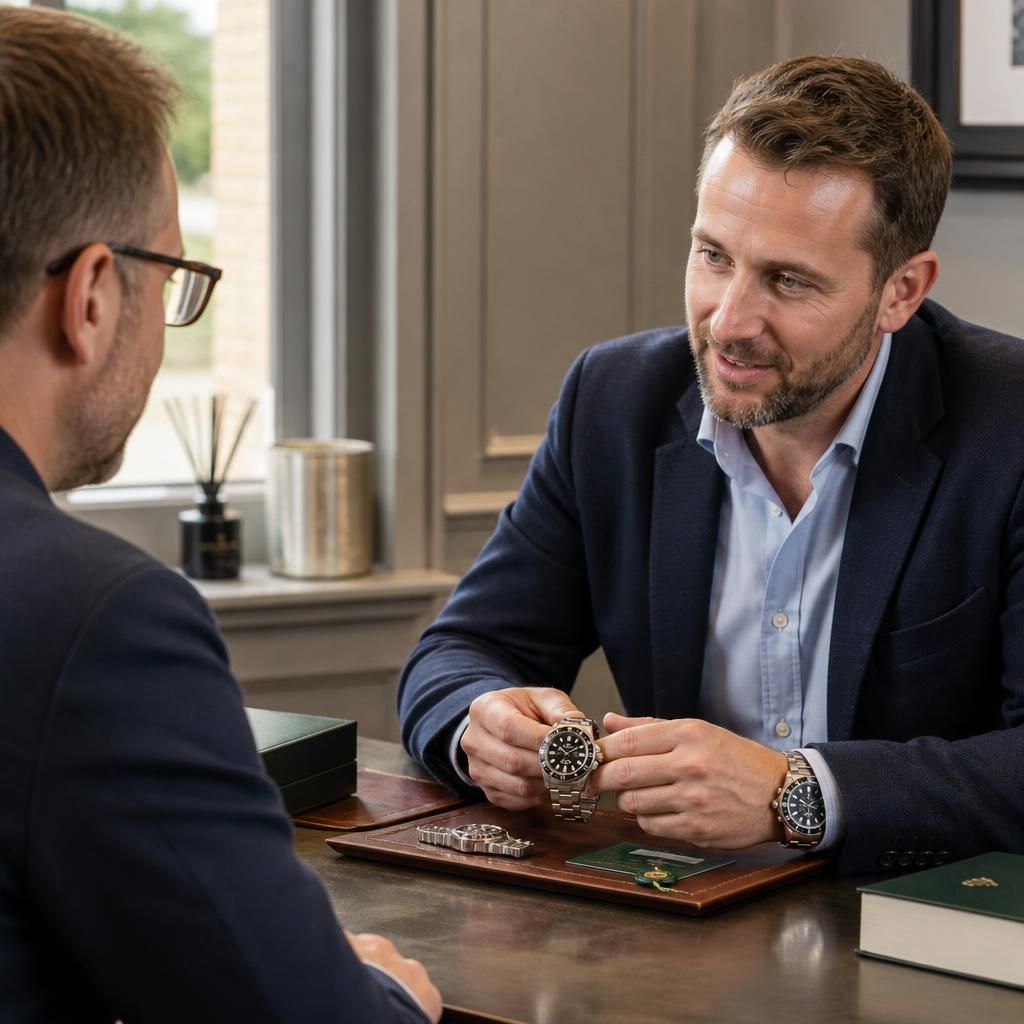
Are there any hidden costs when purchasing a pre-owned Rolex GMT Master II?
Yes, a pre-owned Rolex GMT-Master II can involve costs beyond the purchase price, including servicing, repairs, insurance, valuation, delivery and any bracelet or strap adjustments. A trusted specialist should explain the watch’s condition, included documentation and likely aftercare requirements clearly before you buy.
Yes. The purchase price of a pre-owned Rolex GMT-Master II is not always the total cost of ownership. Additional costs can include servicing, repairs, insurance, valuation, delivery, taxes or import charges, and bracelet adjustments. These costs are not necessarily hidden in a misleading sense, but they should be identified and explained before you commit to the purchase.
Check what is included in the advertised price
Start by confirming exactly what the quoted price covers. A reputable specialist should be able to explain whether the watch has been inspected, whether its functions have been tested, and whether any warranty or aftercare is included. You should also establish whether the price includes the original box, papers, warranty card, swing tags, spare links and any other accessories described in the listing.
Documentation can affect the value of a pre-owned GMT-Master II, but it should not be treated as proof that no further expenditure will be required. A watch may be supplied as a full set and still need servicing or adjustment, particularly if its service history is unclear.
Servicing and mechanical repairs
The most important potential cost is future servicing. A GMT-Master II contains a complex automatic movement with an additional GMT function, so its condition cannot be judged solely by its appearance. Accuracy, power reserve, winding, date change and the operation of the independently adjustable hour hand should be assessed by a suitably qualified watchmaker.
A service may involve cleaning, lubrication, regulation, replacement of worn components and pressure testing. The cost depends on the movement’s condition, the parts required and the level of work recommended. If the watch has suffered moisture ingress, impact damage or poor previous workmanship, the repair may be more extensive than a routine service.
Ask whether a recent service has been independently documented, when it was completed and what work was carried out. If no reliable service evidence is available, allow for the possibility of servicing during your ownership rather than assuming that the watch is ready for many years without attention.
Water-resistance testing and seal replacement
Water resistance is not permanent. Gaskets can age, and the case may have been opened during servicing or repair. A pressure test and replacement of seals may therefore be recommended, especially if you intend to wear the watch regularly around water. Water resistance should not be inferred from the model’s specification or from the presence of a screw-down crown.
Any signs of condensation beneath the crystal require prompt attention. Continuing to wear a watch with suspected moisture inside can increase the eventual repair cost considerably.
Bracelet, clasp and strap-related costs
A pre-owned GMT-Master II may require bracelet adjustment to fit comfortably. If links are missing, damaged or difficult to source, obtaining suitable replacements can add to the cost. Clasp wear, stretched links and damaged screws should also be checked, as these are functional concerns rather than merely cosmetic issues.
If you plan to use an alternative strap, confirm that it is compatible with the case and that fitting it will not damage the lugs or bracelet. Original components generally provide the most appropriate fit and may help preserve the watch’s long-term desirability.
Insurance and valuation
Insurance is an ongoing ownership cost that is often overlooked when comparing pre-owned and new watches. A specialist watch may need to be added to a home insurance policy or covered under a separate valuable-items policy. Check whether the policy covers accidental damage, loss, theft outside the home and travel, as cover varies significantly.
An insurer may request a current valuation rather than relying on the purchase receipt. The valuation should accurately describe the model, reference, serial details where appropriate and replacement value. Keep the valuation, photographs, invoice and supporting documentation securely, and review the insured value if market prices or your watch’s condition change.
Taxes, delivery and buying from abroad
For a UK purchase, ask whether the advertised price is inclusive of VAT and how the transaction will be shown on the invoice. The VAT treatment of pre-owned goods can vary depending on the seller and transaction, so the seller should explain the position clearly rather than leaving you to interpret the price.
Buying from outside the UK can introduce import VAT, customs charges, handling fees, currency conversion costs and possible delays. Delivery insurance and secure carriage should also be confirmed. A lower overseas price may cease to be lower once all charges are included, and resolving a return or warranty issue across borders can be more complicated.
Authentication, inspection and additional checks
If a seller charges separately for authentication, a detailed condition report or a valuation, include those fees in your overall budget. These checks can be worthwhile, particularly where the seller’s description is limited, but you should understand what each service actually covers.
Authentication is not the same as a mechanical inspection. A watch can contain genuine Rolex components but still have replacement, non-original or worn parts, an undisclosed service history or a case that has been heavily polished. Ask for a clear explanation of originality, condition, modifications and any known repairs.
Returns, finance and aftercare
Check the seller’s returns policy before paying, including who pays return delivery and whether any conditions apply. If you use finance, review the total amount repayable rather than considering only the regular payment. Interest or administration charges can materially increase the effective cost.
Before purchase, ask for a written summary covering the watch’s condition, included accessories, warranty or guarantee, delivery arrangements, return terms and any recommended work. A specialist should be willing to distinguish between costs that are already included and costs that might arise later.
The best way to avoid unexpected expenditure is to assess the complete ownership picture, not simply the sticker price. Allow for servicing, protection, documentation and any work needed to make the bracelet and watch suitable for your use. With a clear condition assessment, transparent invoice and realistic aftercare plan, a pre-owned Rolex GMT-Master II can be purchased with a much more accurate understanding of its true cost.
The advertised price of a pre-owned Rolex GMT-Master II may not include every cost associated with ownership. Before purchase, confirm whether inspection, servicing, bracelet adjustment, delivery, insurance valuation and any warranty or guarantee are included.
Ask for a written description of the watch’s condition, service history and included accessories. If the service history is unclear, allow for possible servicing or seal replacement. Where the watch is bought from outside the UK, also check for import VAT, customs charges, delivery insurance and currency conversion costs before comparing prices.
Discuss Your Pre-Owned Rolex GMT-Master II Purchase
Discuss your pre-owned Rolex GMT-Master II purchase with Steven Charles Quance and receive clear guidance on its condition, documentation, included costs and likely aftercare.
Speak to your personal jeweller
Every commission begins with a conversation. Arrange an appointment in the Birmingham Jewellery Quarter or talk it through by phone.