
What are the options for selling a second hand Rolex watch?
You can sell a second-hand Rolex through a specialist jeweller, a private sale, an auction house or an online marketplace. A professional valuation and dealer sale usually provide a more straightforward, secure process, while private and auction sales may require more preparation and carry greater risks around payment, authenticity and buyer protection.
The main options for selling a second-hand Rolex watch are a specialist jeweller, a private sale, an auction house, an online marketplace or a specialist watch-buying service. Each route differs in the price you may achieve, the time involved, the level of security and the support available with valuation, authenticity checks and payment.
Using a specialist jeweller
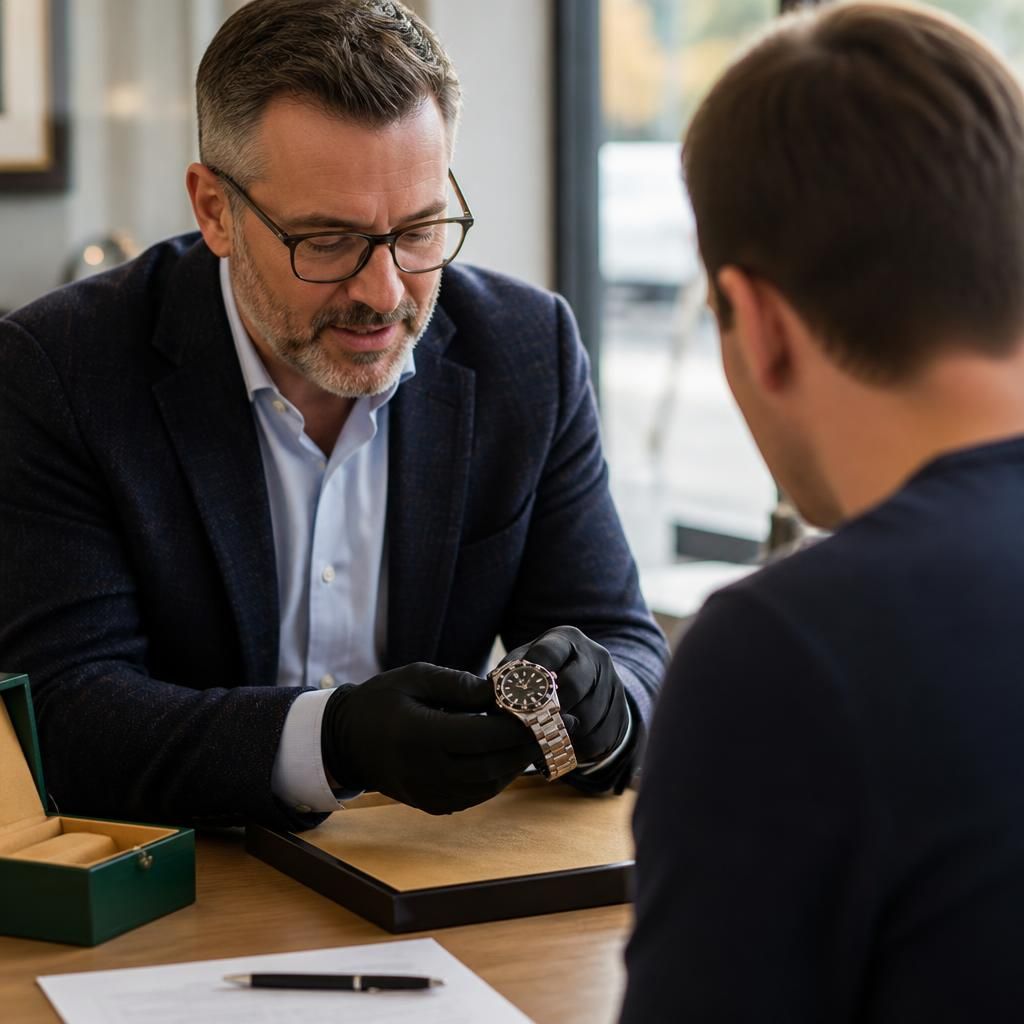
Selling to an established jeweller is usually the most straightforward option. The watch can be inspected by someone familiar with Rolex references, movements, condition, originality and current demand. A professional valuation should consider the exact model and reference, serial details, age, dial and bracelet configuration, service history, provenance, accessories and any alterations or replacement parts.
A jeweller may offer to buy the watch outright, or may discuss another arrangement depending on the business and the watch. An outright purchase normally provides a clearer and quicker transaction, although the offer will reflect the fact that the jeweller must authenticate, service, insure, market and resell the watch. This means it may be lower than the price achieved through a successful private sale, but it generally involves less uncertainty and fewer responsibilities for you.
Before accepting an offer, ask what is included in the valuation, whether any deductions are anticipated and when payment will be made. You should also receive a clear record of the watch being sold and retain evidence of the transaction.
Private sale
A private sale can allow you to set an asking price closer to the potential retail value, particularly if you find a buyer looking for your specific model. However, it usually requires more preparation and carries greater responsibility. You will need to advertise the watch accurately, answer questions, arrange viewings or secure delivery, verify payment and deal with any dispute after the sale.
Never rely solely on photographs or a buyer’s assurances when arranging payment. Meet in a suitably secure location, avoid sending the watch until cleared funds have been confirmed independently, and do not disclose unnecessary personal or security information. A written description should disclose known damage, polishing, replacement components, service work and missing accessories.
Private buyers may also expect a lower price if the watch has no original box, warranty card, service papers or clear ownership history. These items do not establish authenticity by themselves, but they can support provenance and make the watch easier to assess.
Auction house
An auction may be appropriate for a rare, vintage or particularly desirable Rolex, especially where specialist buyers are likely to compete. The auctioneer will normally assess the watch, agree an estimate and explain the sale terms. However, the estimate is not a guarantee of the final result. The watch may sell below expectations, remain unsold or incur charges that affect the amount you receive.
Check the seller’s commission, photography or cataloguing charges, insurance arrangements, reserve terms, collection dates and payment timetable before committing. You should also establish what happens if the successful bidder does not complete the purchase.
Online marketplace
Online marketplaces provide access to a wide audience and may suit a modern, well-documented watch with strong demand. They also place much of the work and risk with the seller. Listing fees, payment charges, postage insurance and returns can reduce the net amount received. Fraudulent payment notifications, account takeovers, chargebacks and disputes about condition are risks that need to be considered.
If you use this route, provide detailed photographs and an accurate description, keep copies of all communication, use tracked and fully insured delivery, and follow the platform’s payment and buyer-protection rules. Do not alter photographs or omit imperfections, as misleading information can create a dispute and damage the sale.
Specialist watch-buying service or trade-in
A specialist buyer may offer a quick purchase after checking the watch and its documentation. The convenience can be useful when a prompt sale is more important than achieving the highest possible price. A trade-in may also be considered when you are buying another watch or item of jewellery, although the value offered can depend on the replacement item, stock requirements and the buyer’s resale costs.
Compare the net amount offered rather than focusing only on the headline valuation. Ask whether the figure is subject to inspection, whether it can change after authentication and whether there are any administration, shipping or valuation charges.
Preparing for any selling route
Which option is most suitable?
A specialist jeweller is generally the best choice when you want a controlled process, expert assessment and a clear offer without managing advertising, viewings and payment risk. A private sale may be worth considering if you are prepared to spend more time managing the transaction. An auction can suit rare or collectible examples, while an online marketplace may provide reach but requires careful handling of security, shipping and buyer disputes.
At Steven Charles Quance, the practical starting point is a professional assessment of the watch and its supporting documentation. This establishes the model, condition, originality and market position before you decide whether a direct sale or another route is appropriate. A transparent valuation helps you compare options on the amount you are likely to receive, the time involved and the level of risk, rather than on an advertised price alone.
A specialist jeweller offers a controlled way to sell a second-hand Rolex, combining authentication, condition assessment and a clear purchase offer. The valuation should consider the exact reference, originality, movement, dial, bracelet, service history, provenance and supporting documentation, rather than relying on the model name alone.
An outright dealer purchase may produce less than a successful private sale because the jeweller must account for authentication, insurance, servicing, marketing and resale. In return, you avoid advertising, viewings, payment disputes and arranging secure delivery. Before accepting an offer, ask whether it is subject to further inspection, whether any deductions apply and when cleared payment will be made.
- Gather the original box, warranty card, receipts, service records, valuation documents and any spare links.
- Record the reference and serial details, but avoid publishing sensitive information unnecessarily in a public listing.
- Make a note of the watch’s condition, including scratches, dents, bracelet stretch, inaccurate running, missing parts and signs of polishing.
- Keep evidence of ownership and be prepared to provide identification where required for legal and anti-money-laundering checks.
- Obtain an independent or specialist valuation before making a decision, particularly if you are comparing a dealer offer with a private or auction sale.
- Do not arrange expensive repairs simply to increase the sale price without first discussing whether the work is likely to add more value than it costs.
Arrange a Professional Rolex Valuation
Arrange a professional Rolex valuation to establish your watch’s condition, originality and current market position before choosing how to sell it. Steven Charles Quance can provide expert guidance on the available options and the information needed for a fair assessment.
Speak to your personal jeweller
Every commission begins with a conversation. Arrange an appointment in the Birmingham Jewellery Quarter or talk it through by phone.