
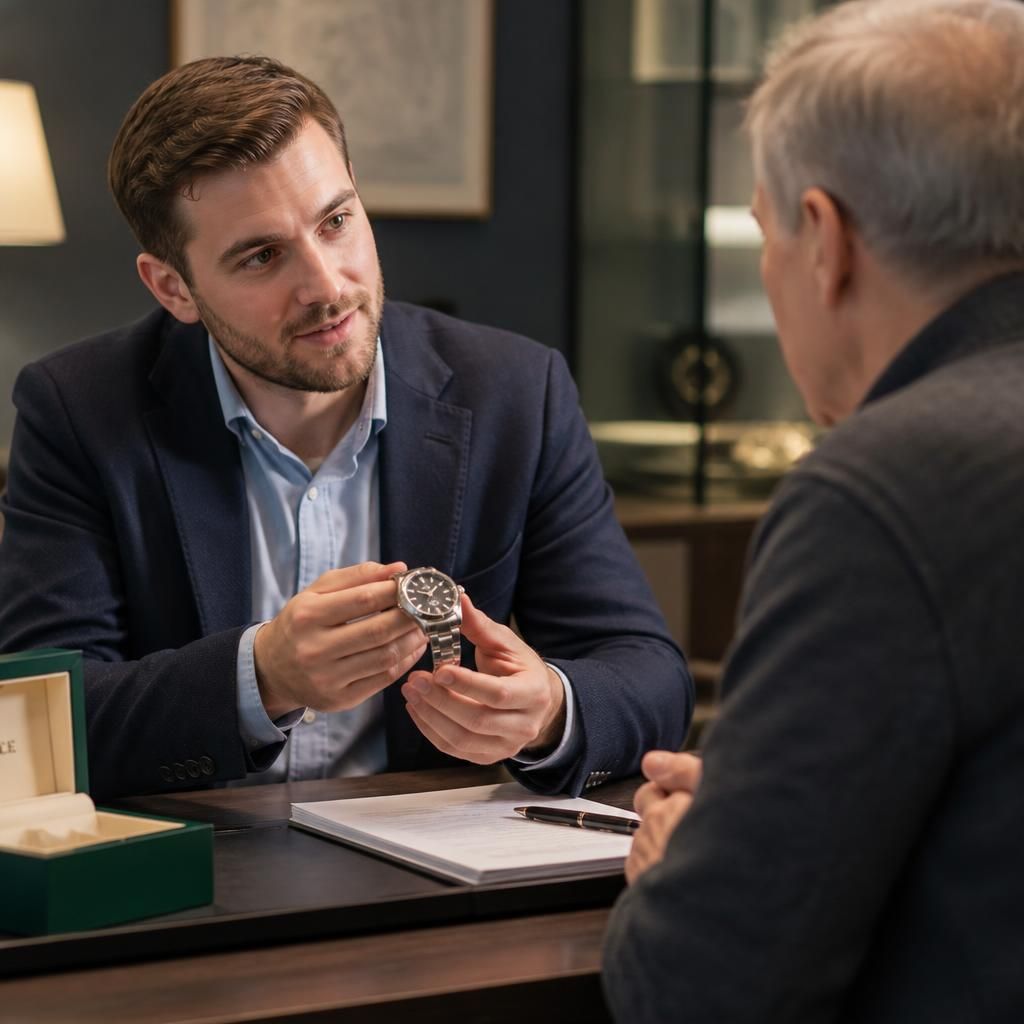
How do I ensure a seamless and secure selling process for my second hand Rolex?
To sell your second-hand Rolex securely, use a trusted specialist who can verify its authenticity, assess its condition and provenance, provide a clear valuation, and explain the sale terms before you commit. Keep all available documentation, arrange a secure handover, and ensure payment is confirmed through an agreed, traceable method.
The safest way to sell a second-hand Rolex is to use an established specialist who can authenticate the watch, assess its condition and provenance, provide a transparent valuation and confirm the sale terms before you commit. A secure process should also include a documented handover, careful handling of your personal information and payment through an agreed, traceable method.
At Steven Charles Quance, the process is designed to give you clear advice at each stage. The value of a Rolex depends on more than the name on the dial. The reference, model, age, condition, originality, service history, box, papers and current demand can all influence the offer. A proper assessment should therefore be based on the individual watch rather than a general online estimate.
Start with an initial discussion
Before bringing your watch in, provide any information you have about the model and its history. Useful details may include the reference number, approximate purchase date, service records and whether the watch has been repaired, polished or modified. Photographs can help with an initial conversation, but a firm valuation normally requires the watch to be inspected in person.
Be open about anything you know about the watch. Previous repairs, replacement parts, water exposure or damage do not necessarily prevent a sale, but they can affect the valuation and may need to be considered when assessing authenticity and condition. Accurate information helps avoid delays and ensures that the offer reflects the watch presented.
Bring all available documentation
Take the watch’s original box, warranty card or papers, service documentation, receipts, spare links, tags and other accessories to the appointment where possible. These items can help establish provenance and confirm the specification of the watch. They may also support its resale value, although their presence does not replace a professional examination.
If you no longer have the paperwork, explain this at the outset. A missing box or card does not automatically make a Rolex unsellable, but the watch may require additional checks and the absence of documentation can affect the valuation. Do not attempt to recreate, alter or source documents that do not belong to the watch.
Choose a controlled valuation process
A secure valuation should include examination of the case, bracelet, clasp, dial, hands, movement and serial or identifying details, together with checks for non-original or replacement components. The specialist should also consider the watch’s condition, service history and market position. Where appropriate, further inspection may be needed before a final offer can be confirmed.
Ask for the valuation and sale terms to be explained clearly. You should understand:
You should never feel pressured to accept an offer immediately. A reputable specialist will give you enough information to make an informed decision and will answer reasonable questions about how the valuation was reached.
Protect the watch during transport and handover
If you are bringing the Rolex to an appointment, keep it in a secure case and avoid unnecessary public handling. Do not post a valuable watch without first agreeing the delivery method, insurance arrangements and responsibility for loss or damage. If a courier is used, retain the tracking information and any proof of collection.
At handover, make sure the watch and any accompanying items are recorded accurately. A written receipt or acknowledgement should identify what has been received and note any relevant condition details. If the watch is being left for further examination, confirm that it has been logged and ask when you can expect an update.
Use a traceable payment method
Agree the payment method before completing the sale. Payment should be made through a recognised, traceable channel and the amount should match the final written agreement. Do not rely solely on a screenshot, email or verbal confirmation of a transfer. Confirm that cleared funds have been received before releasing the watch, unless the agreed terms state otherwise.
For your own protection, check that correspondence comes from the correct business contact and be cautious of requests to send the watch to an unrelated address or to make payments through unusual channels. A specialist should not need your online banking password, card security code or other unnecessary sensitive information.
Check ownership and personal security
You may be asked for identification and information confirming that you are entitled to sell the watch. This is a normal part of responsible high-value transactions and helps protect both parties. Only provide information through an appropriate, secure channel and ask how your details will be handled if you are unsure.
Keep copies of the valuation, correspondence, receipt, identification of the items handed over and payment confirmation. If you are selling a watch on behalf of someone else, or if it forms part of an estate, confirm what evidence of authority is required before arranging the sale.
Recognise warning signs
If any part of the process is unclear, pause the transaction and request written clarification. A seamless sale is not simply one that is completed quickly; it is one where authentication, valuation, documentation, handover and payment are all properly recorded. Bringing your Rolex and its supporting items to Steven Charles Quance for a professional assessment allows these stages to be handled in a controlled and transparent way.
A secure second-hand Rolex sale should have clearly documented terms before the watch changes hands. Confirm whether the figure is a purchase offer or part-exchange allowance, whether it depends on authentication or further inspection, when ownership transfers and how payment will be made.
When you bring your Rolex to Steven Charles Quance, ask for a written record of the watch and any accompanying items left for assessment. Keep the receipt and correspondence, and only release the watch once the agreed payment arrangements are clear. Use a recognised, traceable payment method and confirm that funds have cleared before completing the handover, unless different terms have been agreed in writing.
- Whether the figure is a purchase offer, a part-exchange allowance or an estimated resale value.
- Whether the offer is subject to authentication, condition checks or verification of ownership.
- Whether any costs, adjustments or deductions could apply and under what circumstances.
- When ownership transfers and when payment will be made.
- What happens if you decide not to proceed.
- A valuation that is given without examining the watch or asking about its history.
- Pressure to make an immediate decision or send the watch before terms are agreed.
- Unclear deductions, changing prices or requests for unexplained upfront fees.
- Payment instructions that differ from the agreed business details.
- A refusal to provide a receipt or explain when ownership and risk transfer.
Arrange Your Secure Rolex Valuation
Arrange a secure second-hand Rolex valuation with Steven Charles Quance for expert authentication, a clear assessment and transparent sale terms.
Speak to your personal jeweller
Every commission begins with a conversation. Arrange an appointment in the Birmingham Jewellery Quarter or talk it through by phone.