
How can I ensure my used Rolex receives a fair valuation?
To ensure your used Rolex receives a fair valuation, use a reputable luxury jeweller who will assess its reference, condition, originality, service history, provenance, and current market demand. Provide the original box, papers and service records where available, and request a clear explanation of how the valuation was reached.
A fair valuation for your used Rolex comes from a documented assessment of the watch’s identity, originality, condition, service history and current resale demand. Use an established luxury jeweller with experience in pre-owned Rolex watches, provide all available paperwork and accessories, and ask for a clear explanation of how the proposed value has been reached.
Start with an accurate identification. The exact reference, model, year or production period, dial configuration, case material, bezel, bracelet and clasp all influence value. Small differences between apparently similar watches can have a substantial effect on desirability. A professional valuation should therefore record the watch’s reference and serial details where appropriate, rather than relying on a broad description such as “used Rolex” or “stainless steel Rolex”.
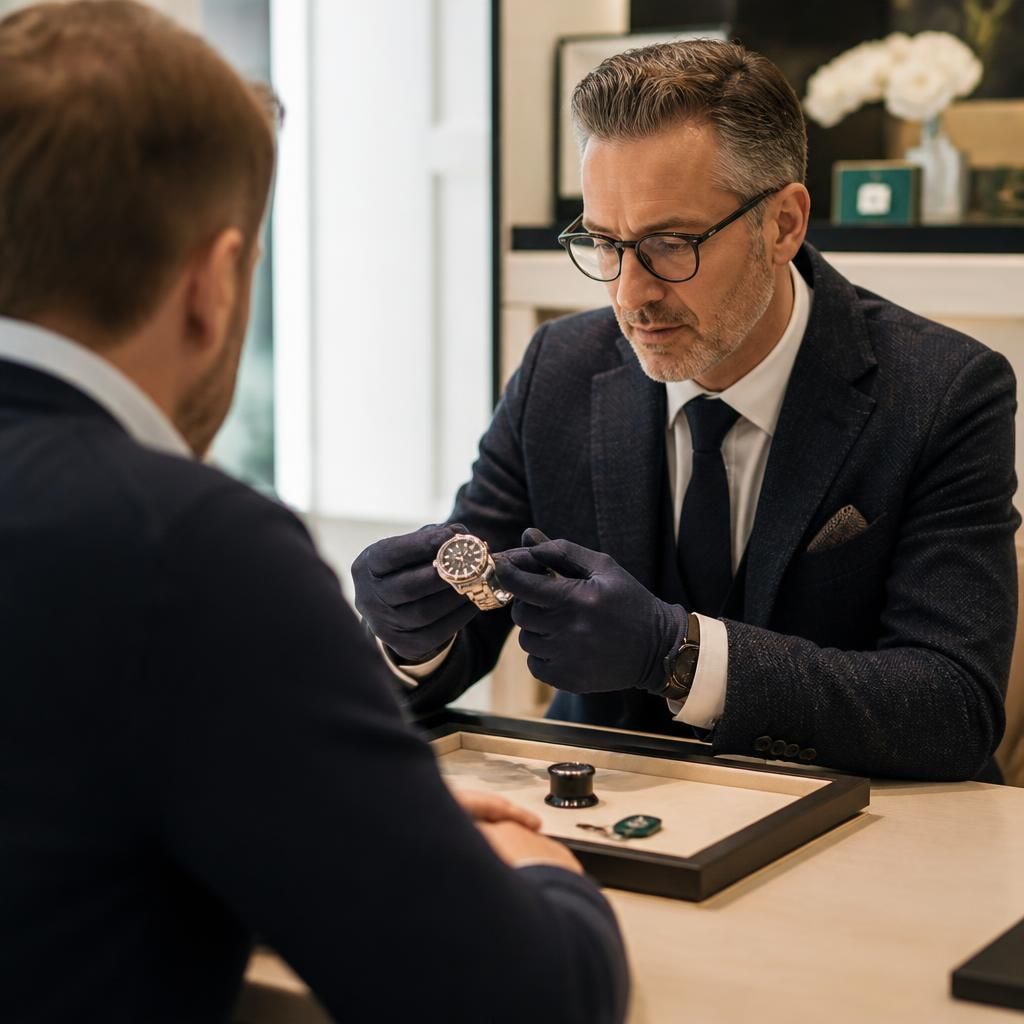
Ensure the watch is examined in person. Photographs can help with an initial discussion, but they cannot reliably show movement condition, case proportions, polishing, bracelet wear or signs of replacement. A proper assessment should consider:
Originality matters because a watch containing non-original or aftermarket components may have a different market value from an otherwise similar example. Replacement parts are not automatically a defect, particularly where they were fitted during authorised servicing, but they should be identified and taken into account. Be open about any known repairs, modifications or parts changes so the valuation is based on the watch as it actually is.
Gather the supporting items before the appointment. Bring the original box, guarantee or warranty documents, instruction booklets, swing tags, receipts, service records and any previous valuation documents that relate to the watch. These items can help establish provenance, confirm the reference and demonstrate how the watch has been maintained. They do not guarantee a particular price, and missing papers do not make a watch valueless, but a complete and coherent set may make the watch easier to verify and more appealing to a future buyer.
Provenance should be considered carefully. A purchase receipt, service history or documented ownership record can support confidence in the watch’s background. However, personal information should be handled securely, and unrelated documents should not be provided unnecessarily. If the watch was inherited or purchased privately, explain what you know about its history without making assumptions that cannot be supported.
Separate the valuation type from the expected selling price. An insurance valuation is generally intended to estimate replacement cost and is not the same as the amount a jeweller may offer to purchase the watch. Likewise, an auction estimate, private-sale asking price and dealer buying price can all differ because they reflect different costs, risks, timescales and sales methods. Ask whether the figure provided is:
If you are selling directly, confirm whether the proposed amount is the net sum you would receive. Ask about any deductions for servicing, authentication, payment processing, insurance, shipping or other necessary work. A higher headline estimate may not produce a higher final return if substantial costs are deducted later.
Consider current market demand as well as condition. Values change according to the model, configuration, availability, season, broader luxury-watch demand and the prices achieved for comparable examples. A fair assessment should reflect relevant, recent market evidence rather than an old purchase price or an advertised asking price that may not represent a completed sale. The original retail price is also not, by itself, a reliable guide to the present resale value.
When discussing comparable watches, make sure they genuinely match yours. Compare the same reference and material where possible, with similar condition, bracelet configuration, production period, accessories and service position. A rare dial, an unusual but original configuration or strong overall condition may affect desirability, while heavy wear, missing links or uncertain originality may reduce it.
Ask for the reasoning behind the valuation. A trustworthy assessment should explain the principal positives and deductions, identify any uncertainties and distinguish confirmed facts from opinion. You should be able to ask whether the watch needs further testing, whether a service is recommended, and how that work would affect the likely sale value. A jeweller should not suggest unnecessary repairs merely to create a higher-value service package; any proposed work should be considered against its cost, purpose and likely effect on marketability.
It can be sensible to obtain more than one professional opinion, particularly where the watch is rare, modified, heavily worn or accompanied by incomplete documentation. Compare like with like: check whether each figure is a purchase offer or an estimate, whether it is conditional on inspection, and whether fees or servicing costs are included. Treat an unusually high figure with caution if it is not supported by a written assessment or later changes substantially after inspection.
Prepare the watch without altering it before assessment. Keep the watch together with its bracelet, spare links and accessories, and avoid aggressive polishing or unapproved repairs. Cleaning the exterior carefully may improve presentation, but refinishing can remove material and affect the case shape. Do not attempt to open the case or test water resistance yourself. If the watch is not running correctly, disclose this and allow the jeweller to assess whether a repair or service is appropriate.
Finally, use a secure process. Confirm how the watch will be examined, where it will be stored, what identification or ownership information is required, when the offer expires and how payment will be made. Keep a written record of the watch description and included items, and retain copies of any receipt or agreement. At Steven Charles Quance, we can discuss the reference, condition, documentation, originality and current market position with you so that you understand the basis of the valuation before deciding whether to proceed.
A fair valuation for your used Rolex should clearly state whether it is an outright purchase offer, a trade-in allowance, an auction estimate or an insurance valuation. These figures serve different purposes and are not directly comparable.
If you are selling to a jeweller, ask whether the quoted amount is the net sum you will receive . Confirm whether any deductions may apply for authentication, servicing, repairs, shipping or payment processing. A written explanation should also identify the watch’s reference, condition, originality, documentation and current market position.
This allows you to compare professional assessments accurately and understand how the offer was reached before deciding whether to proceed.
- the condition of the case, lugs, bezel, crystal, dial, hands and bracelet;
- whether the dial, hands, bezel and bracelet appear original and appropriate to the watch;
- scratches, dents, stretched links, corrosion, moisture ingress or other damage;
- the operation of the movement, winding system, date function and other complications;
- water-resistance indicators and whether a specialist examination or service is advisable; and
- evidence of polishing, aftermarket components or replaced parts.
- an outright purchase offer;
- a trade-in allowance against another purchase;
- an estimated private-sale price;
- an auction estimate before fees; or
- an insurance or replacement valuation.
Arrange Your Used Rolex Valuation
Arrange a used Rolex valuation with Steven Charles Quance for an expert assessment of its reference, condition, originality, documentation and current market position. Bring the watch and any available box, papers and service records so we can explain the valuation clearly before you decide how to proceed.
Speak to your personal jeweller
Every commission begins with a conversation. Arrange an appointment in the Birmingham Jewellery Quarter or talk it through by phone.