
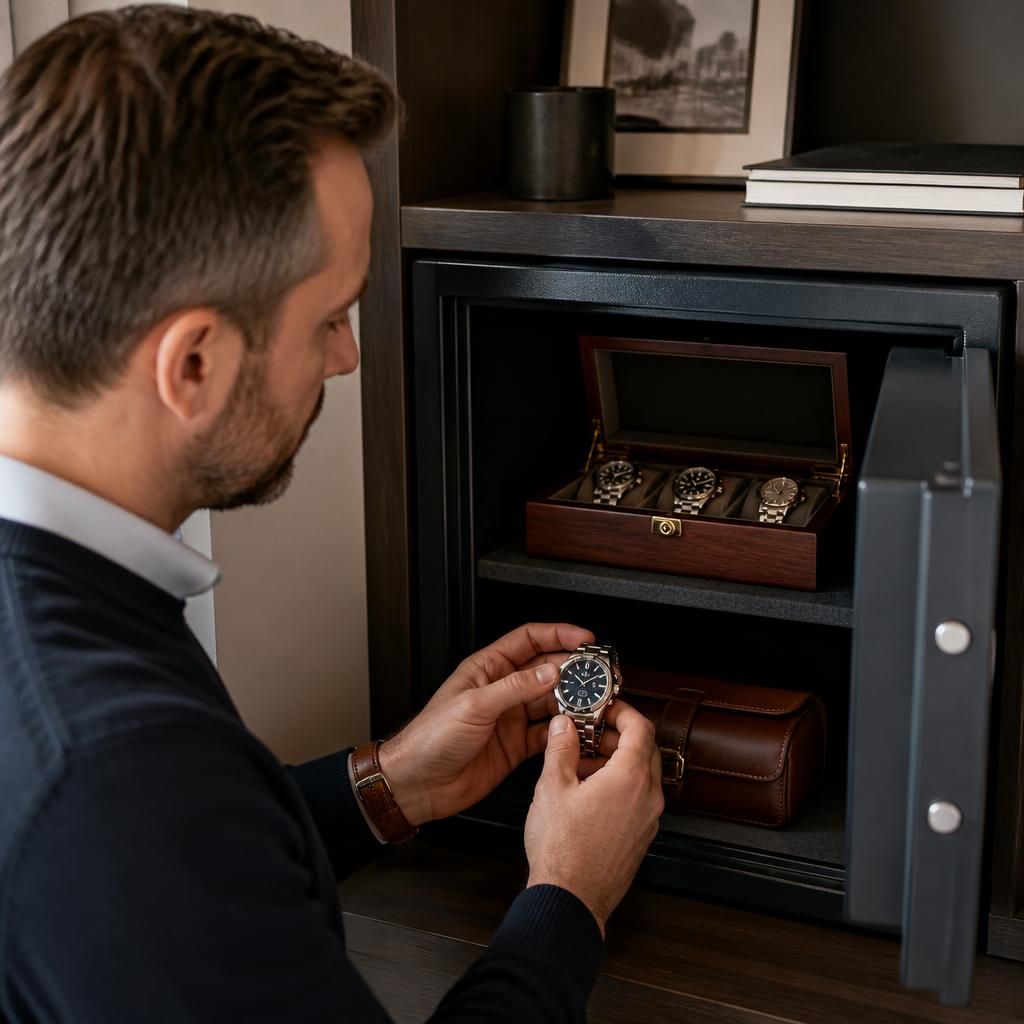
How can I safely store my luxury watch to prevent damage or theft?
Store your luxury watch in a clean, dry, temperature-stable place, ideally inside a purpose-made watch box or pouch with a soft, non-abrasive lining. Keep it secured out of sight in a locked safe when it is not being worn, and protect it from moisture, magnets, direct sunlight, impact and extreme temperature changes.
Safely storing a luxury watch means protecting it from moisture, dust, impact, magnetism, temperature changes and unauthorised access. When it is not being worn, keep the watch clean and fully dry in a purpose-made watch box or pouch, then place it somewhere secure and discreet—ideally a locked safe that is suitable for valuable items.
Use suitable storage materials. Choose a watch box, travel case or pouch with a soft, non-abrasive lining and a correctly sized cushion. The watch should be supported without being tightly compressed. Avoid loose storage with keys, coins, other jewellery or anything with sharp edges, as these can scratch the case, crystal or bracelet. If you retain the original presentation box, keep it in good condition, but do not assume that a decorative box provides meaningful protection against theft.
Control moisture and temperature. Store the watch in a dry, temperature-stable room away from bathrooms, kitchens, radiators, windows and areas prone to condensation. Moisture can affect the movement, dial, hands and seals, even where no water is visible externally. Do not place a damp watch straight into a closed case. Dry the exterior with a soft lint-free cloth and have it checked if it has been exposed to water beyond its rated resistance, submerged unexpectedly or developed condensation beneath the crystal.
Silica-gel products may help reduce humidity in a storage container, but they do not replace proper water-resistance checks or servicing. Do not use loose powders, household dehumidifiers or chemicals in direct contact with the watch. Replace desiccant products as directed and keep them away from children and pets.
Keep the watch away from magnets. Speakers, magnetic clasps, tablet covers, certain handbags, induction equipment and some electronic devices can magnetise components in a mechanical movement. This may cause the watch to gain or lose time. Store it separately from devices containing strong magnets and arrange professional demagnetisation if its timekeeping changes noticeably after suspected exposure.
Prevent physical damage.
Decide whether a watch winder is appropriate. A winder is not essential for every automatic watch. It can keep a complicated calendar or other setting-sensitive watch running, but continuous operation may add wear and it must rotate in a manner suitable for that movement. If you use one, choose a stable, well-made unit with a soft interior, reliable settings and no unnecessary magnetic components. For many watches, allowing the movement to stop and setting it when next worn is perfectly reasonable. Follow the manufacturer’s guidance for any particular model.
Make theft more difficult. Keep the watch out of sight and avoid storing its box, papers and valuables where they can be seen through windows or easily accessed by visitors. For higher-value pieces, use a properly installed, securely anchored safe in a discreet location rather than a portable cash box. Check that the safe, locks and access arrangements are maintained, and limit knowledge of where the watch is kept. Do not leave it in an unattended car, even temporarily, and avoid posting identifiable details of your collection or storage arrangements online.
Review your home insurance and any specialist watch cover before relying on it. Insurers may require a valuation, evidence of ownership, specified security measures or notification when the value of an item exceeds a policy limit. Keep records of the watch’s reference and serial details, purchase documentation, warranty information, service records and clear photographs in a secure location separate from the watch. Do not publish serial numbers publicly.
Take extra care when travelling. Use a discreet, rigid travel case with a secure closure and keep the watch in your hand luggage rather than checked baggage. Avoid leaving it in a hotel room unless it is secured in the room safe and the insurance conditions allow this. When passing through security, place the watch in a tray only when required and collect it promptly; a closed travel pouch can reduce scratching and unwanted attention.
Before putting the watch away, wipe away perspiration, sunscreen and surface dirt with a clean, soft cloth. If the watch is designed for water exposure, rinse away salt or chlorine with fresh water only where the manufacturer permits this, then dry it thoroughly. Do not use household cleaners, abrasive cloths, compressed air or a hairdryer. If the case, crystal, crown or bracelet has been damaged, stop using the watch until it has been assessed.
Storage does not replace routine maintenance. Water resistance depends on gaskets and seals that can age, while a mechanical movement may eventually require servicing regardless of how carefully it is stored. Have the watch inspected if it shows condensation, unexplained timekeeping changes, a loose crown, damaged crystal, unusual sounds or reduced power reserve. For advice on storage, valuation, repairs or servicing, contact Steven Charles Quance before a small issue develops into avoidable damage.
The safest place for a luxury watch is a dry, temperature-stable location inside a soft-lined watch pouch or box, then secured in a discreet, properly anchored safe. A presentation box may protect against scratches and dust, but it is not a meaningful theft deterrent on its own.
- Place the watch gently into its cushion rather than dropping it into a box.
- Keep the crown pushed in and, where applicable, screwed down in accordance with the manufacturer’s instructions. Never force a crown or operate it while wet.
- Do not store a watch beneath heavy objects or where it could fall from a shelf.
- Keep bracelets and clasps closed where this prevents them catching, but avoid bending or forcing the bracelet around a cushion that is too large.
- Store watches separately if their cases, bracelets or buckles could rub against one another.
- Keep leather straps away from damp conditions and allow them to air after wear. Leather can absorb perspiration and deteriorate more quickly in a sealed, humid case.
- Keep the watch away from bathrooms, radiators, direct sunlight, condensation and strong magnets.
- Store it on a correctly sized cushion without compressing the bracelet or strap.
- Keep the crown pushed in and screwed down where the manufacturer specifies, and never operate it while wet.
- Record photographs, serial details, purchase documents and service records separately from the watch, and check that your insurance accepts the storage arrangements.
Speak to Steven Charles Quance About Watch Storage
If you would like advice on storing, insuring or maintaining your luxury watch, speak to Steven Charles Quance for practical guidance tailored to your timepiece.
Speak to your personal jeweller
Every commission begins with a conversation. Arrange an appointment in the Birmingham Jewellery Quarter or talk it through by phone.