
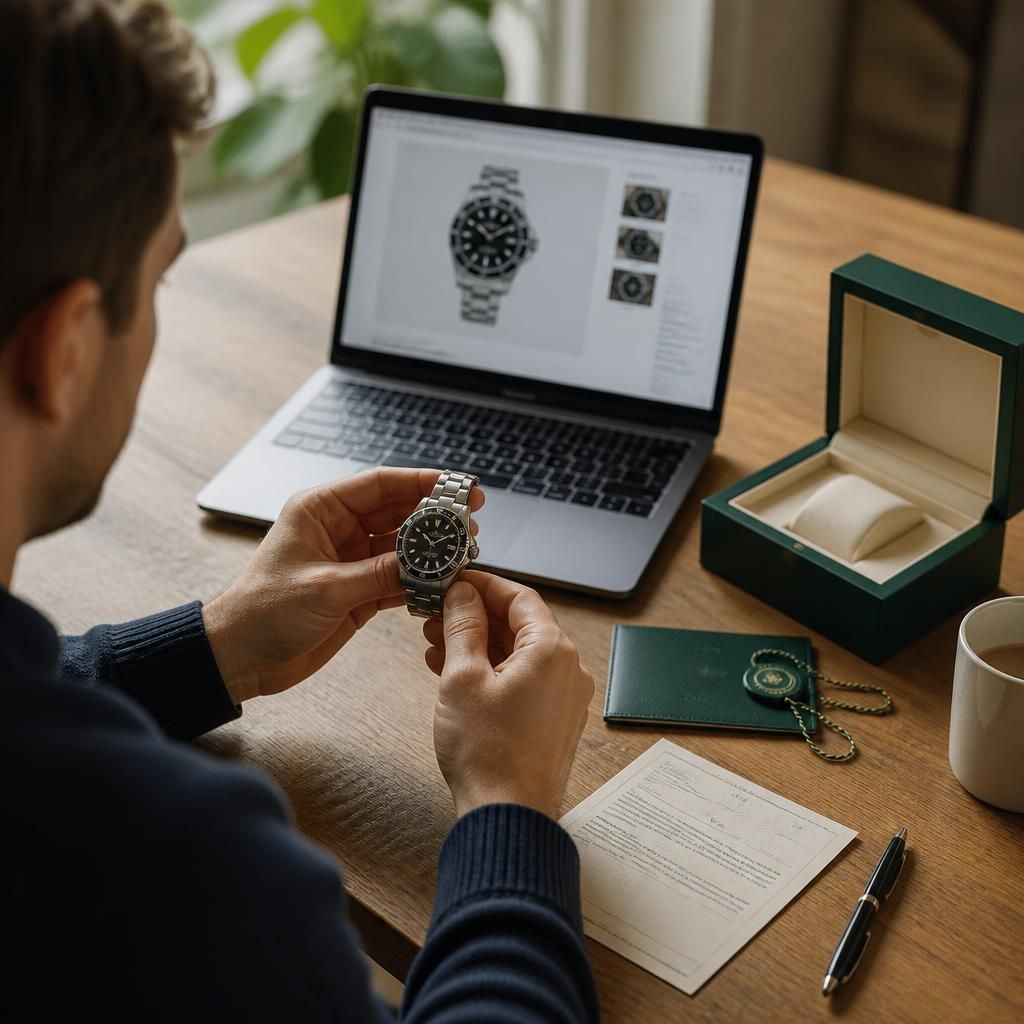
How can I ensure a safe transaction when purchasing a luxury watch online?
Ensure a safe online luxury watch transaction by buying from a reputable, verifiable seller, confirming the watch’s authenticity and provenance, and reviewing the written condition, warranty, returns and delivery terms. Use a secure payment method with appropriate buyer protection, and require insured, trackable delivery before completing the purchase.
A safe online luxury watch transaction depends on verifying the seller, confirming the watch’s authenticity and ownership history, understanding its condition and paperwork, and using payment and delivery methods that provide appropriate protection. Do not rely solely on photographs, a low price or a professional-looking website; assess the seller and the individual watch before committing funds.
Verify who you are buying from. Check the business’s registered name, physical address, telephone number, customer service details and trading history. These details should be consistent across the website, invoices, correspondence and any independent business records. A reputable seller should be willing to answer specific questions about the watch, provide a written invoice and explain its returns, warranty and delivery procedures.
Be cautious if communication is moved quickly to a personal messaging account, if the seller refuses a telephone or video discussion, or if the payment recipient is a different person or business without a clear explanation. A website with polished images is not, by itself, proof that the seller is genuine. Look for established customer feedback from independent sources, while recognising that reviews can be fabricated or selectively presented.
Assess the price realistically. Compare the asking price with similar watches in equivalent condition, with comparable age, model details, accessories and service history. A substantial discount without a convincing explanation may indicate a counterfeit, undisclosed damage, stolen property, missing paperwork or an attempted payment scam. Pressure to pay immediately, claims that another buyer is waiting, or requests to continue outside the seller’s normal process are warning signs.
Ask for watch-specific evidence. Request clear, recent photographs of the actual watch rather than catalogue images. These should show the dial, case, bracelet, clasp, crown, case back and any visible marks. Where appropriate, ask for a photograph or video made specifically for your enquiry, such as the watch beside a handwritten reference. This helps establish that the seller has possession of the item, although it does not prove authenticity.
Check that the reference and serial details shown in the photographs, invoice and accompanying documents are consistent. Some details may be deliberately obscured online for security reasons, but the seller should be prepared to verify them securely before payment. Never publish or share serial information unnecessarily, as it can be misused in fraudulent listings.
Confirm authenticity and provenance. Ask how the watch was authenticated, whether it has been inspected by a suitably qualified watch professional and whether any parts have been replaced. A genuine watch may contain non-original components, refinished surfaces or later replacement parts, so authenticity and originality are separate considerations. The written description should identify relevant service parts, modifications, refinishing and any uncertainty.
Request available ownership and service records, such as the original warranty card, purchase receipt, service documentation, valuation or previous invoices. Documents can support the history of a watch but can also be forged or paired with another item. They must be checked against the watch itself. Ask the seller to confirm that the watch is not subject to finance, a dispute, an insurance claim or a theft report, and retain that confirmation with your transaction records.
Read the condition description carefully. Ask about dents, scratches, polishing, stretched bracelets, damaged threads, moisture ingress, timing performance, loose components and the condition of the movement where known. Clarify whether the watch has been pressure tested or serviced, when that work was completed and whether the service was carried out by an appropriately qualified professional. Product photographs may not show fine marks, so ask for close-ups and a written assessment rather than assuming that “excellent” means unworn or fully original.
Check the complete terms before paying. The invoice should identify the seller, buyer, watch, reference and serial details where appropriate, price, taxes, included accessories, condition, warranty and delivery arrangements. Read the returns policy, including the return period, inspection conditions, refund method and responsibility for return postage and insurance. For a private sale, consumer protections may differ from those applying when buying from a business, so establish the seller’s legal status before proceeding.
Ask what the warranty covers and excludes. A seller’s warranty may not cover water damage, accidental damage, magnetism, normal wear, unauthorised opening or problems caused by an incorrect crown position. Confirm how a fault must be reported, who pays for assessment and whether any repair affects your rights. Keep the listing, photographs, messages, invoice, payment confirmation and delivery records in case the watch does not match its description.
Use a payment method with appropriate protection. Pay through the seller’s verified checkout or another established method that identifies the recipient and provides a clear transaction record. For a high-value purchase, understand the protection offered by your card provider or payment service before paying, including any limits, exclusions or requirements to use the service correctly. Do not assume that a payment marked as “goods and services” is automatically recoverable in every dispute.
Avoid sending money to an unrelated personal account, paying by cryptocurrency or using an irreversible transfer merely because the seller offers a discount. Do not rely on screenshots showing that funds have been received; confirm the transaction through your own bank or payment account. Never share one-time passcodes, full card details, online banking credentials or identity documents through an unverified message.
Make sure delivery is secure. The watch should be properly packaged, sent to the agreed address and delivered using a tracked, signed and insured service suitable for its value. Confirm when responsibility for loss or damage passes to you and whether the insurance covers the full purchase price. A tracking number alone is not sufficient if the parcel is uninsured or the tracking information has not been independently verified.
Record the parcel’s condition when it arrives. If the packaging is damaged or appears to have been opened, photograph it before accepting or opening it where possible and report the issue to the carrier and seller promptly. Film or photograph the unboxing, retain all packaging and check the watch against the description, invoice, serial details and accessories without removing protective materials unnecessarily. Arrange an independent inspection quickly if the purchase terms allow it, and notify the seller in writing if anything is missing or inconsistent.
Take extra care with international purchases. Establish where the watch is being dispatched from, who is responsible for import duties, VAT, customs charges and clearance, and whether the quoted price includes these costs. Confirm that the courier’s customs declaration is accurate. An unusually low declared value can create legal, insurance and delivery problems, as well as leaving you responsible for unexpected charges.
Common warning signs include stock photographs, copied descriptions, inconsistent reference numbers, an unexplained change of bank details, refusal to provide a current photograph, poor-quality or incomplete paperwork, urgency to pay, a price that is difficult to justify and reluctance to provide a written invoice. Several warning signs together should be treated as a reason to stop the transaction rather than as points to negotiate around.
If anything remains uncertain, pause the purchase and obtain an independent opinion from a qualified watchmaker or established luxury jeweller. For a particularly valuable watch, an inspection before payment or a clearly documented inspection and return process offers stronger protection than relying on photographs alone. Careful verification at the outset is usually simpler and safer than trying to resolve authenticity, payment or ownership problems after the watch has been delivered.
A safe online luxury watch purchase starts with verifying the seller before sending any payment. Confirm the business name, physical address, telephone details and trading history, then ensure these details match the invoice and payment recipient. Ask for recent photographs of the actual watch, a clear condition description, relevant service records and written confirmation of the returns, warranty and delivery terms.
Use a payment method that provides an identifiable transaction record and appropriate buyer protection. Avoid cryptocurrency, irreversible bank transfers to unrelated accounts and last-minute changes to payment details. The watch should be delivered in suitable packaging by a tracked, signed and insured service covering its full value. Keep the listing, correspondence, invoice, payment confirmation and delivery records until the watch has been checked against its description.
Discuss your luxury watch purchase with our experts
Discuss the watch, seller documentation, condition and purchase terms with our experts before completing an online transaction. We can help you identify the key checks and arrange appropriate advice for a high-value purchase.
Speak to your personal jeweller
Every commission begins with a conversation. Arrange an appointment in the Birmingham Jewellery Quarter or talk it through by phone.