
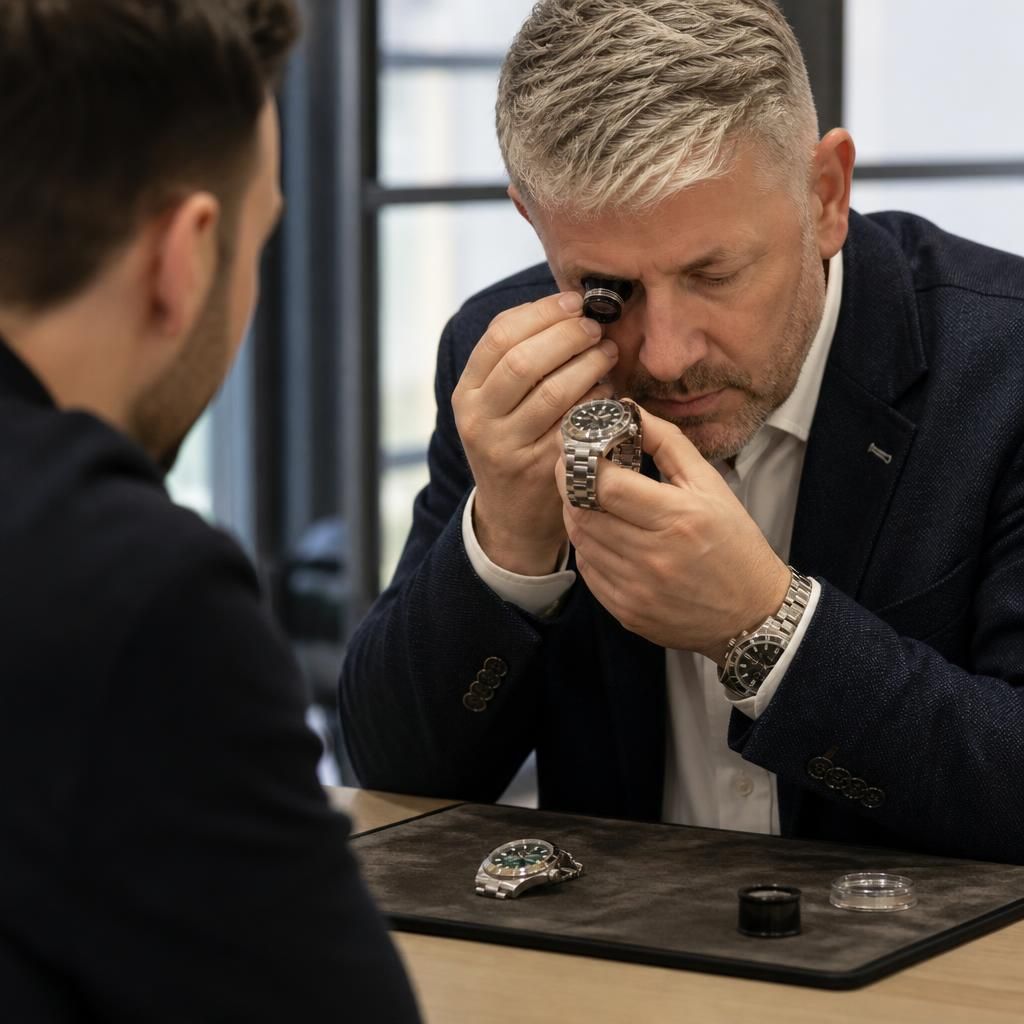
What should I consider when evaluating the condition of a used Rolex?
When evaluating a used Rolex, inspect the case, bezel, crystal, dial, hands and bracelet for excessive wear, damage, polishing or non-original replacement parts, then confirm that the movement runs correctly and the watch has suitable service documentation. A professional assessment should also verify water resistance where relevant, originality, serial details and whether the condition is consistent with the asking price.
The condition of a used Rolex should be assessed by examining its external components, movement performance, originality, service history and supporting documentation together. Look for excessive wear, damage, over-polishing, replacement parts and signs of moisture, then consider whether the watch’s condition is consistent with its age, model, provenance and asking price. A professional inspection is advisable before purchase because some important faults cannot be confirmed from photographs or a brief visual check.
Start with the case and lugs. Examine the case for dents, deep scratches, corrosion and uneven edges. Rolex cases are designed with defined lines and transitions, so excessive polishing can soften the shape of the lugs, remove the original bevels or make the case appear thinner than intended. Polishing is not automatically a fault, particularly on an older watch, but heavy or poorly executed polishing can affect originality, collectability and value. Check that the lugs are even and that the case back is not excessively marked or damaged.
The reference and serial details should be clear and consistent with the watch and its documentation. On some models, these markings are located between the lugs and may require bracelet removal for proper inspection. This should be carried out by someone with the appropriate tools and experience, as an incorrect approach can mark the case or damage the bracelet.
Inspect the bezel and crystal. The bezel should sit securely and operate as intended for the particular model. On a rotating dive watch, check that it turns correctly and that the alignment is suitable. A fluted, smooth or gem-set bezel should be checked for damage, excessive wear and signs that it may have been replaced. If the watch has an original gem-set bezel, the stones should be secure, evenly set and appropriate to the model.
Look at the crystal under good lighting. Scratches, chips, cracks and chips around the edge can compromise appearance and, in some cases, water resistance. A small surface mark may be relatively straightforward to address, whereas a cracked crystal requires prompt attention. Confirm whether the crystal is the correct type for the watch and whether any cyclops magnification is properly positioned over the date.
Assess the dial and hands carefully. The dial is one of the most important parts of a Rolex from both a visual and originality perspective. Check that the printing is sharp, the hour markers are secure and the hands match the dial and model. Look for spotting, discolouration, bubbling, corrosion, moisture staining or evidence that the dial has been refinished. A refinished dial may look attractive but can reduce originality and may not be appropriate for the reference.
Replacement dials and hands are not necessarily evidence of a poor-quality watch. They may have been fitted during an authorised service or to replace damaged components. However, the buyer should know what has been changed and whether the replacement is correct for that model and period. Originality is particularly important when assessing vintage or unusual examples, where seemingly minor component changes can materially affect desirability and value.
Check the bracelet, clasp and end links. Bracelet wear is common on used Rolex watches, but the extent of the wear matters. Look for stretched links, loose or rattling connections, damaged screws, bent links and gaps between the bracelet and case. Excessive stretch can indicate long-term wear and may require specialist refurbishment or replacement parts. Check that the clasp closes securely, the coronet is correctly formed and the safety mechanism operates properly.
End links should fit the case neatly without conspicuous gaps or movement. Confirm that the bracelet and clasp are suitable for the reference rather than simply compatible with it. An incorrect or later replacement bracelet can affect originality, although a period-correct replacement may still be a practical and acceptable choice depending on the buyer’s priorities.
Evaluate the movement’s performance. A Rolex movement should be examined by a qualified watchmaker rather than judged solely by whether the seconds hand is moving. The important checks include timekeeping, amplitude, beat error, winding performance, power reserve, date operation and the condition of the movement itself. Excessive magnetism, inconsistent running, a rough winding action or difficulty setting the hands can indicate that servicing is required.
The movement should also be checked for corrosion, dust, incorrect components, damaged screws and signs of previous poor servicing. A movement that is running does not necessarily mean it is healthy; old or dried lubricants can allow a watch to function while increasing wear. If the watch has recently been serviced, request a service receipt or report explaining what work was completed and which parts were replaced.
Consider water resistance separately from general condition. Water resistance is not permanent and can be affected by ageing seals, impact, incorrect case assembly or previous repairs. A watch may appear clean externally while failing a pressure test. If the model is intended for use around water, ask for evidence of a recent water-resistance test and avoid exposing the watch to water until its seals have been checked. A pressure test is not a substitute for a full service, but it is an important part of assessing suitability for everyday wear.
Review service history and provenance. Service documentation can help establish how the watch has been maintained and whether important work has been carried out. Look for records relating to movement servicing, replacement seals, crystal or bracelet work, water-resistance testing and the supply of replacement components. A complete service history is useful but not always available, especially for older watches. The absence of paperwork does not automatically mean the watch is defective; it does mean that its current condition should be verified independently and that possible servicing costs should be reflected in the assessment.
Compare the watch with its original specification and available records. The reference, serial details, dial configuration, bezel, bracelet and movement should form a coherent combination. Any discrepancy should be explained clearly. Common examples include a later service dial, replacement hands, a non-original bezel, an incorrect bracelet or aftermarket stones. These details may affect value and should not be overlooked simply because the watch is running well.
Distinguish wear from damage and originality from appearance. Light marks from normal use can be preferable to heavy polishing, particularly for a buyer who values original case lines. Conversely, an unpolished watch with deep dents, corrosion or damaged threads may need more work than a carefully refinished example. The right choice depends on whether the priority is daily wear, long-term ownership, collectability or the closest possible match to the original specification.
For vintage Rolex watches, patina, ageing and replaced parts require additional judgement. Natural dial ageing may be desirable to some collectors, while moisture damage or unstable deterioration is a concern. Tritium or other period-specific details, bracelet condition and the consistency of the components with the watch’s production period can all influence the assessment. These watches should be examined by someone familiar with the relevant reference rather than judged against the standards of a modern model.
Use the asking price as a final sense check. The price should reflect the model, specification, originality, service status, included accessories and actual condition. A watch requiring a full service, bracelet refurbishment, crystal replacement or correction of non-original parts may appear inexpensive but carry significant additional costs. Conversely, a well-documented watch in strong condition may command more because less immediate work is likely to be needed.
Before completing a purchase, ask for clear photographs of the case, dial, clasp and bracelet, but treat photographs as an initial check rather than proof of condition or authenticity. Inspect the watch in person where possible, confirm that the serial and reference details correspond with the paperwork, test the functions and request an independent or specialist assessment. At Steven Charles Quance, a detailed discussion of condition, originality, servicing and aftercare can help you understand exactly what you are buying and identify any work that may be appropriate after purchase.
Over-polishing is an important condition issue because it can alter the original shape and definition of a Rolex case. Examine the lugs, bevels and transitions between surfaces for softened edges, uneven symmetry or a noticeably thinner appearance. Light marks from normal wear are not necessarily a concern, while heavy polishing may reduce originality and affect value.
Do not assess polishing in isolation. A carefully refinished case with no structural damage may be preferable for everyday wear to an unpolished watch with deep dents, corrosion or damaged threads. The right choice depends on whether your priority is daily use, originality, collectability or minimising immediate repair costs. An in-person inspection by an experienced jeweller or watchmaker is the most reliable way to judge the difference.
Arrange a Used Rolex Condition Assessment
Arrange a professional used Rolex condition assessment with Steven Charles Quance to review its originality, wear, service history and movement performance before purchase. Contact us to discuss the watch and understand any recommended servicing or aftercare.
Speak to your personal jeweller
Every commission begins with a conversation. Arrange an appointment in the Birmingham Jewellery Quarter or talk it through by phone.