
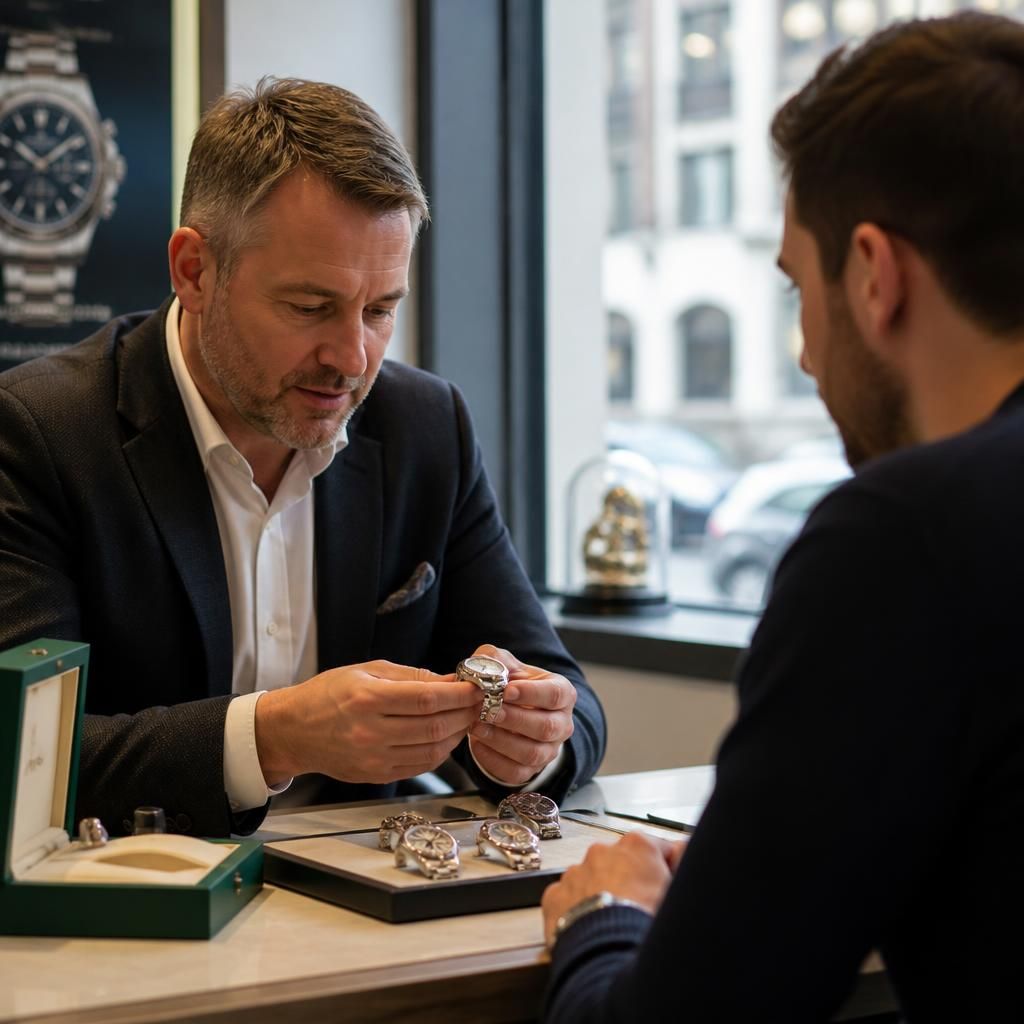
What are the costs associated with purchasing a used Rolex watch?
The cost of purchasing a used Rolex watch includes the timepiece itself, plus potential expenses for authentication, servicing, insurance, delivery and future maintenance. The price varies according to the model, materials, condition, age, original paperwork, service history and current market demand, so a specialist assessment is important before you buy.
The cost of purchasing a used Rolex watch is made up of the watch’s purchase price and any additional expenses associated with verification, servicing, insurance, delivery and future maintenance. The price of the timepiece itself varies according to the model, reference, metal, dial, age, condition, completeness, service history and current demand. A proper comparison should therefore consider the total cost of ownership rather than the advertised price alone.
The price of the watch
Rolex prices in the pre-owned market can differ considerably between models and individual examples. Professional models, precious-metal references and watches with particularly sought-after configurations generally command higher prices. Value may also be affected by whether the watch has its original box, warranty card, tags, booklets and service documentation.
Condition is equally important. A well-preserved case with clear factory finishing, an unmarred dial and a clean, correctly functioning movement is likely to be priced differently from a watch showing heavy wear or having been poorly polished. Originality matters too: replaced dials, bezels, hands or bracelets can affect both desirability and value, even where the watch remains genuine.
VAT and the seller’s pricing structure
Before agreeing a price, establish whether the advertised amount includes VAT and whether the seller is using the second-hand goods margin scheme. This can affect how the price is presented and the type of VAT documentation available. A reputable specialist should explain the pricing clearly and provide an appropriate receipt or invoice.
Authentication and assessment
Authentication may be included as part of a specialist jeweller’s service, whereas an independent purchase may require you to pay separately for an expert examination. A proper assessment should consider the serial and reference details, case, bracelet, clasp, dial, movement and any replacement components. It should also establish whether the watch is consistent with its stated model and whether it has signs of tampering.
Paying for professional verification can be worthwhile, particularly when buying privately, online or from an unfamiliar seller. The cost of an assessment is small compared with the potential loss associated with a counterfeit, misrepresented or substantially modified watch. Do not rely solely on photographs, packaging or a warranty card, as these items can be separated from the original watch.
Servicing and immediate repairs
A used Rolex may not require immediate servicing, but its service history should be taken into account. If there is no reliable evidence of a recent service, allow for the possibility of a full inspection and servicing after purchase. The cost depends on the movement, required parts, condition and whether cosmetic work is requested.
Additional work may include replacing worn seals, correcting bracelet stretch, repairing the clasp, refinishing damaged surfaces or replacing a crystal. Cosmetic restoration should be approached carefully: excessive polishing or the replacement of original parts can affect the watch’s character and value. Ask for a written assessment and quotation before authorising any work.
Insurance and valuation
Insurance is an ongoing cost rather than part of the purchase price. A valuable watch may need to be added to a home insurance policy or covered under a specialist policy, subject to conditions concerning storage, travel and wearing it outside the home. Check whether the policy covers accidental damage, loss, theft and travel.
An up-to-date valuation may be needed for insurance purposes. The valuation figure is not necessarily the same as the amount paid or the likely resale value; it may reflect the cost of replacing the watch with a comparable example at current market prices. Keep the purchase invoice, photographs, reference details and service records with your insurance documentation.
Bracelet sizing and personal adjustments
Bracelet sizing may be included by the seller, but confirm this before purchase. A watch may need links added or removed, a strap changed or a clasp adjusted. Retain any removed links and original components, as they contribute to completeness and can be important if the watch is sold or passed on later.
Delivery, collection and overseas purchases
Secure, insured delivery may be included or charged separately. For a high-value watch, confirm the delivery cover, packaging, tracking arrangements and signature requirements. If buying from outside the UK, also consider import VAT, customs duties, currency conversion charges and any handling fees. These costs can materially change the final price and may complicate returns or warranty support.
Warranty and aftercare
A specialist jeweller may provide a seller’s warranty or aftercare period, while a private seller usually offers less protection. Clarify what the warranty covers, how long it lasts, where work is carried out and whether it excludes wear, accidental damage or water ingress. Also ask about future bracelet adjustments, pressure testing, repairs, polishing and valuations.
Regular care can help prevent avoidable costs. Keep the crown properly secured, avoid exposing the watch to impacts or unsuitable chemicals, and have water resistance checked when appropriate. Mechanical watches also require periodic professional attention, although the correct service interval depends on the watch’s condition, use and manufacturer guidance rather than a fixed assumption.
Comparing the total cost
When comparing two used Rolex watches, consider:
A watch with a slightly higher purchase price may represent better value if it is authentic, properly assessed, well maintained and supplied with useful documentation. Conversely, a lower-priced example may become more expensive once servicing, missing components, repairs and insurance requirements are taken into account.
Used Rolex watches should not be treated as guaranteed investments. Market prices can change, and resale value depends on authenticity, condition, originality, provenance, demand and selling costs. The most reliable purchasing decision is based on a documented watch, a transparent total price and professional guidance on its condition and future requirements.
The true cost of a used Rolex is more than the advertised purchase price. Before committing, allow for any authentication, servicing, repairs, insurance, delivery and bracelet adjustments that may be required.
A lower-priced watch can represent poorer value if it has an uncertain service history, missing links, worn components or non-original parts. Compare each watch by its condition, originality, documentation and aftercare, then request a clear quotation for any recommended work. A properly assessed example with reliable records may offer greater value than a cheaper watch with unknown maintenance needs.
- the purchase price and whether VAT is included;
- the model, reference, materials and configuration;
- case, dial, bezel, bracelet and movement condition;
- original box, papers, links and service documentation;
- the time and cost of any required servicing or repairs;
- authentication, valuation, insurance and delivery charges;
- the seller’s warranty, return terms and aftercare support; and
- the likely cost of maintaining the watch in the future.
Arrange a used Rolex cost and condition consultation
Arrange a used Rolex cost and condition consultation with Steven Charles Quance to review the watch’s authenticity, condition, documentation and likely ownership costs. We can provide clear guidance before you proceed with your purchase.
Speak to your personal jeweller
Every commission begins with a conversation. Arrange an appointment in the Birmingham Jewellery Quarter or talk it through by phone.