
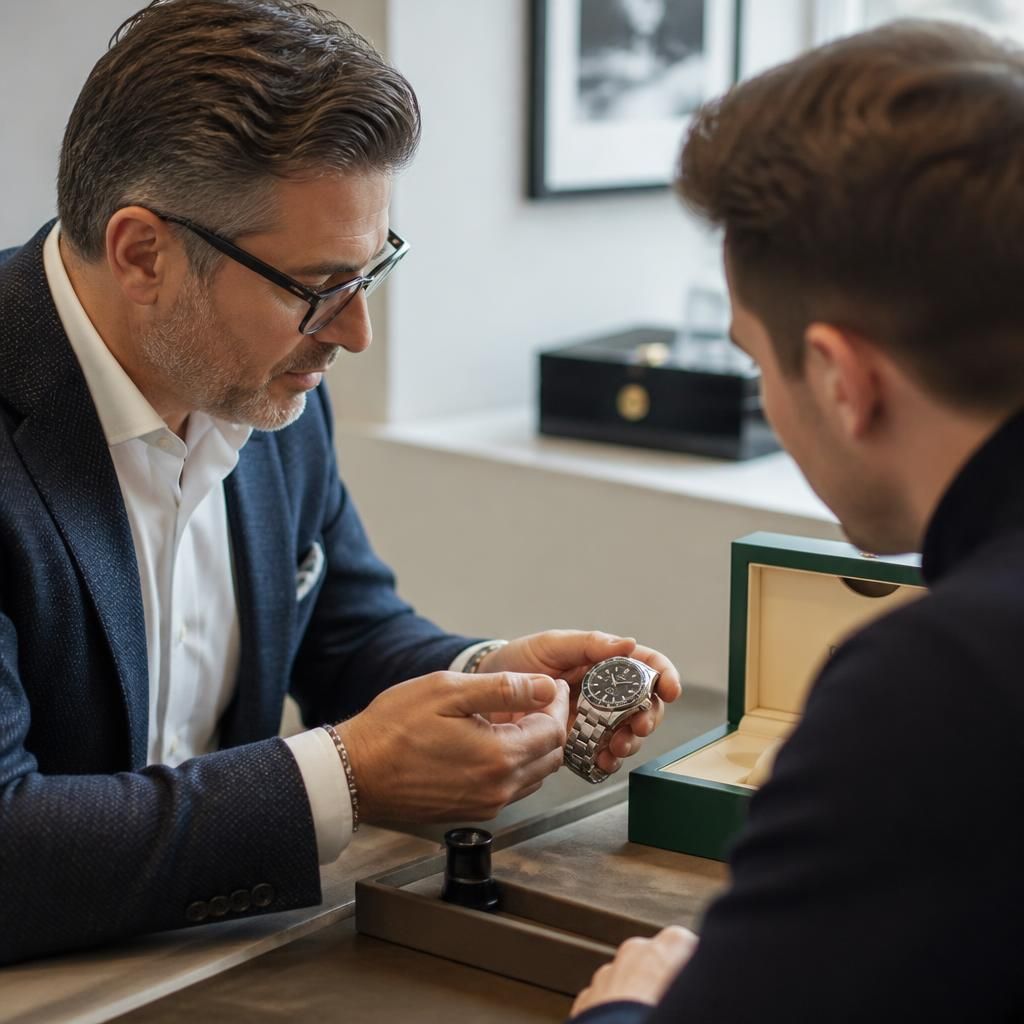
What are the key factors to consider when selecting a pre-owned Rolex for men?
When selecting a pre-owned Rolex for men, assess its authenticity and provenance, condition and service history, model and size, completeness of its box and papers, and whether the price reflects its current market value. A professional inspection and clear aftercare support can help confirm that the watch is genuine, suitable for your needs and responsibly priced.
Selecting a pre-owned Rolex for men involves more than choosing a model that looks appealing. The key considerations are authenticity and provenance, condition and service history, the model and fit, the completeness of the original accessories, and whether the price is appropriate for the watch’s specification and current market position. Reviewing these points with an experienced jeweller helps you choose a genuine timepiece that suits your requirements and is properly supported after purchase.
A pre-owned Rolex should be examined carefully to confirm that its movement, case, dial, hands, bracelet and reference details are consistent with one another. A professional inspection can identify signs of counterfeit components, replaced parts or modifications that may not be obvious from photographs.
Provenance is also important. Ask what information is available about the watch’s ownership and purchase history, and ensure that the serial and reference details are recorded accurately. The documentation should correspond with the watch rather than simply being supplied as a separate item. Where the history is incomplete, that does not automatically mean the watch is unsuitable, but it should be reflected in the assessment and price.
Condition affects both appearance and reliability. Inspect the case, bezel, crystal, dial, hands, bracelet and clasp for scratches, dents, excessive polishing or signs of repair. A polished watch is not necessarily a poor choice, but over-polishing can soften the original case lines and alter details that collectors value.
Ask whether the watch has been serviced, when this was carried out and whether any relevant work was documented. A service may involve cleaning, lubrication, regulation and replacement of worn components, but the precise work should be confirmed rather than assumed. Water resistance should also be treated carefully on a pre-owned watch: it depends on the condition of the seals and the results of appropriate testing, not simply on the model’s original specification.
Choose the model according to how and where you intend to wear it. A professional or tool-watch design may offer a robust, practical character, while a dressier model may be better suited to formal or business wear. Consider the dial layout, bezel, bracelet, metal and complications, as these affect both usability and long-term appeal.
The reference identifies the particular model configuration, while the serial information can help establish its production period. Check that the dial, bezel, bracelet and movement are appropriate for that reference. Fit matters just as much as specification: case diameter, thickness, bracelet adjustment and the shape of the lugs all influence how the watch sits on the wrist. Try it on where possible, particularly if you are moving from a smaller or larger watch.
Original packaging, warranty documentation, instruction booklets, service records and spare links can add useful context and may improve desirability. However, these items should not be treated as proof of authenticity on their own. Boxes and papers can be separated from watches, so the watch itself and the quality of the supporting checks remain the priority.
For practical ownership, confirm that the bracelet includes enough links for a comfortable fit and that any supplied accessories belong with the model. A clear written description of what is included avoids uncertainty and makes the watch’s condition and specification easier to compare with other examples.
The price should reflect the model, reference, age, materials, condition, service history, originality and completeness. Compare like with like rather than using the price of a different reference or a heavily modified example as a guide. A watch with a recent documented service, strong condition and complete accessories may command a different price from one requiring work or supplied without its original documentation.
Consider the total cost of ownership as well as the purchase price. Confirm what warranty or guarantee is provided, how servicing and repairs are handled, and whether resizing, cleaning, valuation or other aftercare is available. These services are particularly useful when the watch is being purchased as a long-term item or a significant gift. Any future valuation should be based on the watch’s condition and supporting evidence at the time, as market values can change.
Before completing the purchase, request a detailed description of the watch, including its reference, condition, included accessories and service information. Check that the bracelet fits, that the movement operates correctly and that the paperwork is consistent with the watch. If anything remains unclear, an independent or jeweller-led inspection is a sensible step. This process gives you a sound basis for selecting a pre-owned Rolex that is authentic, wearable, appropriately priced and supported by suitable aftercare.
Authenticity and provenance are essential checks when selecting a pre-owned Rolex for men. The watch’s reference, serial details, movement, case, dial, hands, bracelet and clasp should be consistent with one another, as counterfeit or replaced components may not be apparent from photographs alone.
Original box and papers can provide useful supporting evidence, but they do not prove authenticity by themselves because accessories can be separated from a watch. Ask for service records and any available ownership or purchase history, then have the watch examined by an experienced jeweller before purchase. A professional inspection can also identify excessive polishing, non-original parts or modifications that may affect the watch’s condition and value.
Discuss your pre-owned Rolex requirements with us
Discuss your pre-owned Rolex requirements with us for guidance on authenticity, condition, fit, provenance and value. We can help you assess suitable options and explain the aftercare available before you purchase.