
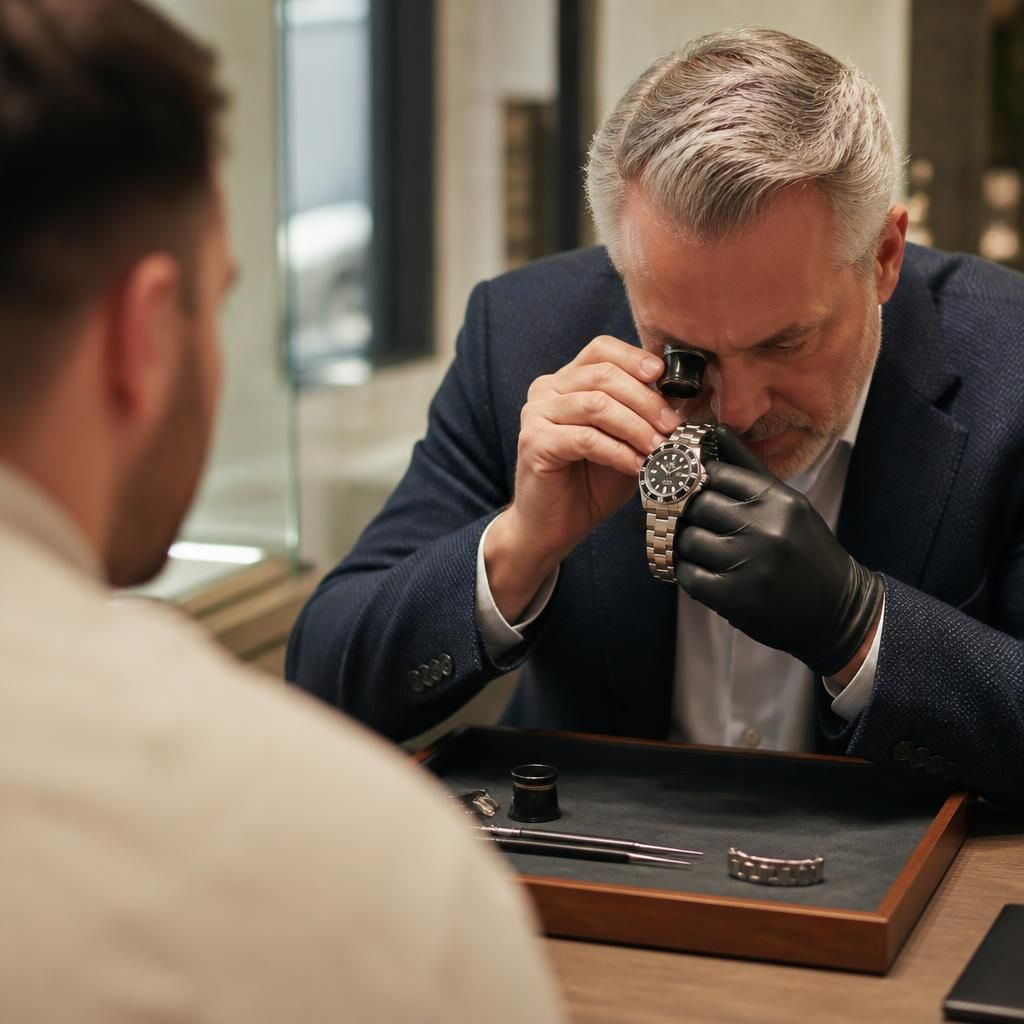
How can I ensure I'm getting a genuine Rolex when purchasing a used one?
To ensure a used Rolex is genuine, buy from a reputable specialist jeweller and have the watch examined by an experienced professional who can verify its movement, case, dial, serial details and documentation. Check that the serial and model information are consistent, assess the watch’s provenance and service history, and be cautious if the price, paperwork or seller’s assurances seem too good to be true.
The most reliable way to ensure a used Rolex is genuine is to buy through a reputable specialist jeweller and have the watch examined by an experienced professional before completing the purchase. Authenticity cannot be established from photographs, packaging or a warranty card alone. A proper assessment compares the watch’s reference, serial details, case, dial, bracelet, movement, paperwork and provenance, while also checking for replacement or counterfeit parts.
Rolex watches are frequently copied, and some counterfeit examples use genuine components alongside inaccurate or non-original parts. A watch may therefore look convincing externally while containing an incorrect movement, replacement dial or altered case. Professional inspection is particularly important when buying privately, through an online marketplace or from a seller who cannot explain the watch’s history.
Buy from a seller with a clear reputation and an appropriate returns policy. A specialist jeweller should be willing to explain how the watch was sourced, what checks have been carried out and whether the piece has been serviced, repaired or modified. You should receive a proper receipt identifying the watch, together with any available box, warranty card, service records and other supporting documents. Documentation is useful evidence, but it is not proof of authenticity by itself because papers and boxes can also be separated from their original watch or reproduced.
Check the reference and serial details. The reference number should correspond with the model, case material, bezel, dial configuration and bracelet fitted to the watch. The serial number should be present in the expected location for that model and should be clear, consistent and free from signs of alteration. A professional will also consider whether the age suggested by the serial details is compatible with the design and paperwork. Matching numbers are reassuring, but a copied or transplanted serial number can appear on a counterfeit watch, so this check must be combined with movement and construction checks.
Have the movement inspected. The movement is one of the strongest indicators of authenticity. An experienced watch specialist can assess its architecture, finishing, engravings, rotor, balance assembly and other details that differ between genuine Rolex calibres and replicas. The movement should also be consistent with the model and reference. Opening a watch without the correct tools and knowledge can damage the case or compromise water resistance, so this inspection should be carried out by a qualified professional rather than attempted at home.
Examine the case, dial and crystal carefully. Genuine Rolex components have precise finishing and proportions. Look for clean edges, even brushing or polishing, correctly formed engravings, accurate dial printing and properly aligned markers. On applicable models, features such as the coronet engraving in the crystal and markings around the rehaut may provide useful clues, but they should never be treated as a standalone authenticity test. Counterfeit watches can imitate visible details, and genuine watches may have had components replaced during servicing.
The date display and magnification should also be assessed against the model. The date should change correctly and the magnification should appear properly aligned and proportioned. A misaligned cyclops lens, uneven printing, poor lume application or a date window that does not match the reference can indicate an incorrect component. These signs are not conclusive on their own, particularly where a watch has been repaired or modified, but they justify further investigation.
Inspect the bracelet and clasp. Check the quality of the links, screws, end pieces, clasp construction, coronet markings and overall fit. Excessive looseness may indicate wear, while poor finishing, incorrect markings or mismatched components may indicate non-original parts. A genuine watch can legitimately have a replacement bracelet, clasp or other component, so the key issue is whether the seller has disclosed this and priced the watch accordingly. “Genuine Rolex” and “all-original” are not necessarily the same claim.
Consider the watch’s condition and service history. A service receipt from an appropriate professional can help establish what work has been completed and which parts may have been replaced. Ask whether the watch has been polished, whether the dial or hands have been changed, and whether the movement has been inspected. Heavy polishing, aftermarket diamonds, refinished dials or non-original bezels can affect desirability and value even when the underlying watch is genuine. A condition report should distinguish normal wear from damage and should identify modifications clearly.
Check provenance and ownership records where available. The seller should be able to provide a reasonable account of how the watch was acquired. A receipt, previous service documentation or other ownership record can support its history. It is also sensible for the seller to carry out appropriate checks for lost or stolen property. If the provenance is vague, the serial number appears altered or the seller is unwilling to provide basic information, do not proceed until the concerns have been resolved.
Be cautious about price and pressure. A price that is substantially below comparable examples may reflect condition, missing documentation or a non-original component, but it can also be a warning sign. Urgent payment demands, refusal to allow inspection, unusual payment methods, incomplete descriptions and claims that professional checks are unnecessary should all be treated cautiously. Never rely on a discount as evidence that a watch is genuine.
Before purchase, ask for the following:
If you already own the watch and are uncertain, do not wear it in water or arrange an informal inspection that could affect its condition. Take it to a suitably qualified watch specialist for a movement examination and written assessment. The most useful report should state whether the watch is consistent with the claimed model, identify any non-original parts and note issues affecting condition or value.
In practice, authenticity is established through the combined evidence rather than one visual feature. A genuine-looking dial, matching paperwork or a serial number that appears correct cannot replace examination of the movement and construction. Buying through a trusted specialist jeweller, receiving a transparent condition report and ensuring the watch comes with appropriate purchase protection provides the strongest basis for confidence when purchasing a pre-owned Rolex in Birmingham or elsewhere in the UK.
The most dependable way to confirm a used Rolex is genuine is to have its movement and construction examined by a qualified watch specialist. Exterior details, packaging and paperwork can be copied or mismatched, whereas the movement, case and model reference must work together consistently.
An inspection should compare the movement with the claimed Rolex reference and assess its architecture, finishing, engravings, rotor and other technical details. The specialist should also check the serial and reference markings, dial, crystal, bracelet and clasp for alterations, replacement parts or signs of an aftermarket component. Any modifications should be recorded clearly, as a genuine Rolex is not necessarily an entirely original example.
Do not attempt to open the watch yourself, as incorrect tools can damage the case or compromise water resistance. Ask for a written condition and authenticity assessment, together with details of any servicing, replaced parts or polishing. This gives you considerably stronger evidence than relying on photographs or a matching warranty card alone.
- The exact model and reference details.
- Clear photographs of the watch from multiple angles, including the case, dial, clasp and any available markings.
- Information about the movement inspection and whether the watch has been opened or serviced.
- Details of replaced, aftermarket or modified components.
- Available warranty, service and ownership documentation.
- A written receipt and clear terms covering returns, faults and any agreed authenticity guarantee.
Speak to us about authenticating your used Rolex
Speak to us about authenticating your used Rolex. We can arrange a professional assessment of its movement, markings, construction, condition and documentation, with any non-original or replacement parts clearly identified.
Speak to your personal jeweller
Every commission begins with a conversation. Arrange an appointment in the Birmingham Jewellery Quarter or talk it through by phone.