
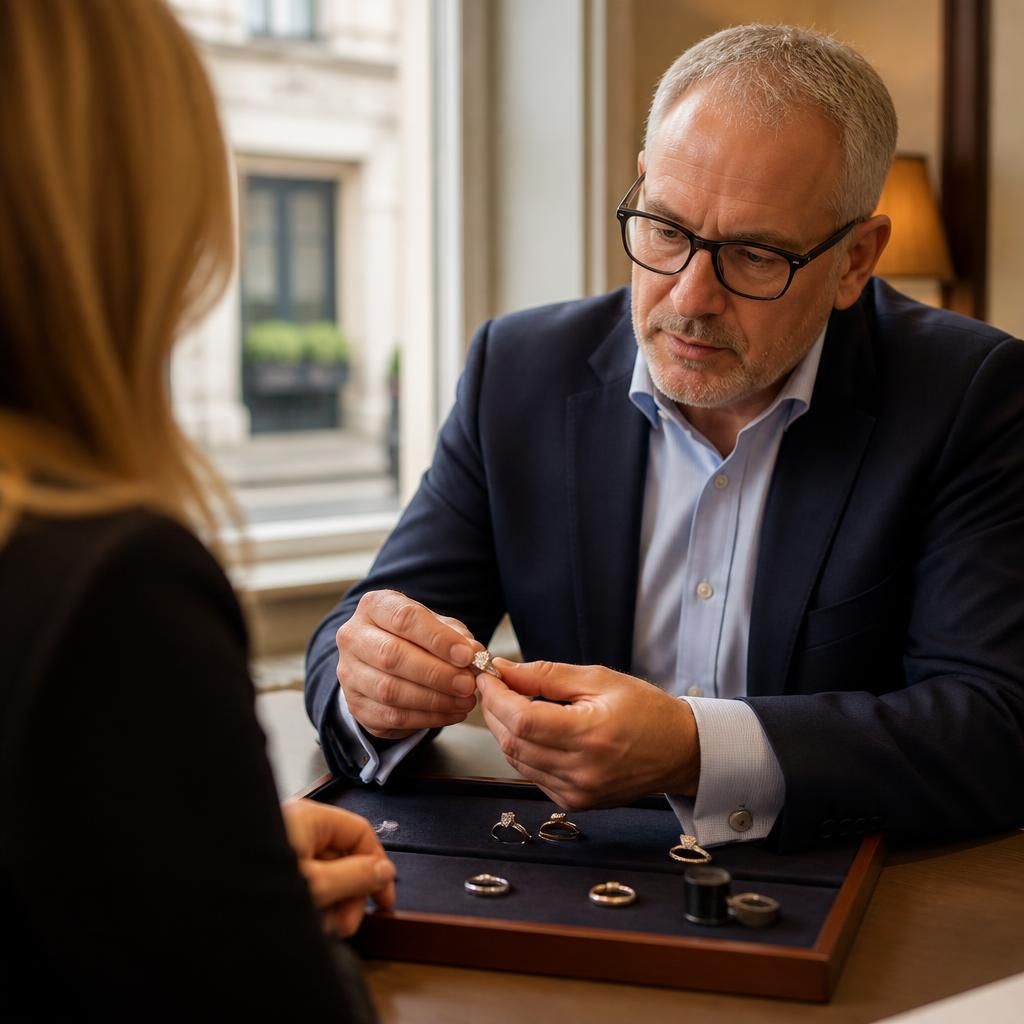
What should I do if I experience discomfort with my ring after resizing?
If your resized ring feels painful, tight, loose or causes redness, swelling or numbness, remove it if possible and contact Steven Charles Quance for an assessment rather than forcing it to remain on your finger. We can check the fit, identify whether further adjustment or repair is needed, and help protect the ring and your finger.
If your resized ring feels painful, tight, loose or otherwise uncomfortable, remove it if you can do so safely and contact Steven Charles Quance for an assessment. Do not force a ring over a swollen joint or continue wearing it if it causes persistent pain, redness, numbness or restricted circulation. Discomfort may indicate that the fit needs refining, but it can also result from swelling, an altered ring shape, a sharp edge or pressure from the setting.
Start by checking the type of discomfort. A correctly fitted ring should sit securely without causing pain. It should pass over the knuckle with gentle resistance, rest comfortably at the base of the finger and allow normal movement. A ring that feels tight throughout the day may be affected by heat, exercise or natural changes in finger size. However, pressure that remains uncomfortable, leaves deep marks or causes tingling should not be dismissed as a normal adjustment.
Remove the ring promptly if symptoms are significant. Swelling, numbness, colour changes, throbbing, severe pain or a finger that feels cold require particular care. If the ring cannot be removed without force, do not attempt to cut or twist it yourself; seek urgent professional or medical assistance, especially where circulation appears affected. If the skin is broken or the finger has been injured, arrange appropriate medical advice as well as contacting us about the ring.
Do not try to correct the fit at home. Squeezing, heating, filing or bending a resized ring can weaken the band, damage a setting or alter the alignment of its gemstones. Temporary ring adjusters may also trap moisture or put uneven pressure on a delicate design. Keep the ring safely aside, clean and dry, and bring it back for inspection with any resizing documentation or advice you were given.
During an assessment, we can examine how the ring sits on the finger, check the internal and external finish, inspect soldered or joined areas, and assess the security of the gemstones and setting. We can also consider whether the original measurement remains appropriate, whether the band has changed shape, and whether swelling or another temporary factor is affecting the fit. Trying the ring on at a suitable time can help us understand whether the problem occurs consistently or only under particular conditions.
The appropriate solution depends on the cause. A ring may need further resizing, a minor adjustment to its shape, smoothing and polishing, refinement of the inner surface or correction of a setting. In some cases, no alteration is advisable until swelling or skin irritation has settled. If the ring is loose but cannot safely be made smaller because of its design, a discreet sizing solution may be considered instead. Designs with gemstones, intricate shoulders, engraving or unusual metal combinations require particular care, as further work must preserve their balance and appearance.
Allow for normal variation, but do not ignore ongoing discomfort. Fingers naturally change size with temperature, activity and time of day, so a ring may feel different on separate occasions. This does not make persistent pain, numbness, sharp rubbing or difficulty removing the ring acceptable. If discomfort continues when your finger is at its usual size, the ring should be reviewed before you resume regular wear.
When you contact Steven Charles Quance, describe where the ring feels uncomfortable, when the problem occurs and whether you have noticed swelling, marks, movement or catching. Photographs can help provide initial context, but an in-person inspection is normally needed to judge the fit and protect the ring. We can explain whether a further adjustment is suitable and identify any repair or setting work required before the ring is worn again.
Discomfort after ring resizing usually means the fit, ring shape or finish needs checking rather than further adjustment at home. Remove the ring if you can do so safely, particularly if it causes persistent pain, deep marks, numbness, tingling, swelling or restricted circulation. Do not force it over a swollen knuckle or twist, file, heat or bend it yourself.
Keep the ring clean and dry and arrange an inspection. We can assess how it sits on your finger, check the resized section, inner edges and gemstone setting, then advise whether it needs further resizing, smoothing, reshaping or repair. If the finger is cold, changes colour or the ring cannot be removed safely, seek urgent professional or medical assistance before arranging further jewellery work.
- Too tight: the ring may be restricting movement, pressing into the skin or becoming difficult to remove.
- Too loose: it may rotate excessively, catch on clothing or feel at risk of slipping off.
- Uneven or sharp: an internal seam, rough edge or change in the shape of the band may be rubbing the finger.
- Setting-related: a gemstone, claw or other raised feature may now press against an adjacent finger or catch during everyday activities.
- Skin-related: redness, itching or irritation may be caused by trapped moisture, cleaning products or an existing skin sensitivity rather than the resizing itself.
Arrange an Expert Ring Fit Assessment
If your resized ring remains uncomfortable, arrange an expert fit assessment with Steven Charles Quance so we can check the fit, finish and setting and advise whether further adjustment or repair is appropriate.