
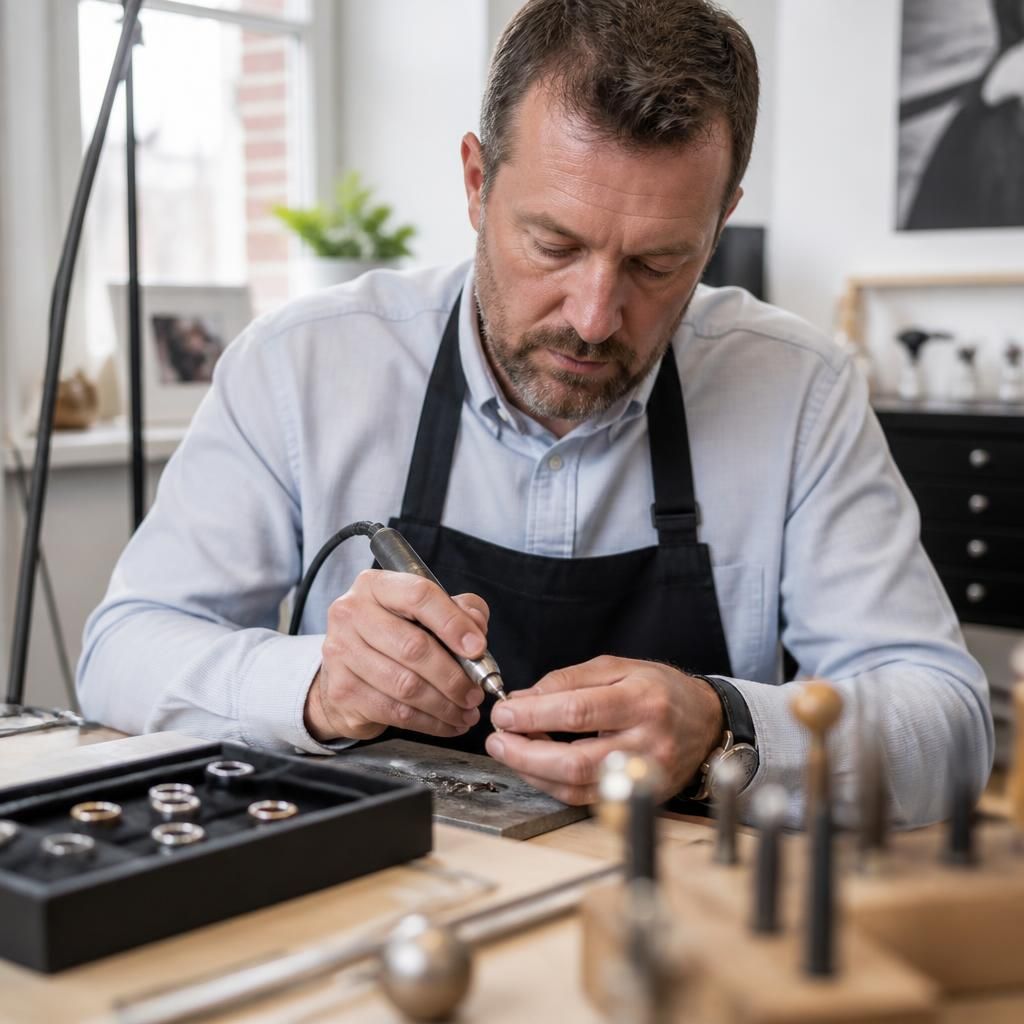
Is it necessary to resize rings differently based on their material composition?
Yes. Ring resizing methods and limitations vary according to the material, with gold, platinum, silver and alternative metals requiring different tools, techniques and levels of heat to achieve a secure, well-finished fit without damaging the ring.
Yes. A ring’s material composition directly affects how it can be resized, the tools and heat required, and whether a permanent adjustment is practical at all. Gold, platinum, silver and palladium can generally be resized by a skilled jeweller, but each behaves differently during cutting, soldering or laser work. Harder alternative materials, such as titanium, tungsten and ceramic, often have very limited or no conventional resizing options.
Gold rings are usually among the most adaptable. Yellow, white and rose gold can commonly be sized up by cutting the shank and inserting a matching section of metal, or sized down by removing a small section before the joint is carefully closed and finished. The gold alloy matters: rose gold, for example, can be less forgiving during work because its copper content affects its colour and working properties. White gold may need refinishing and rhodium plating after resizing so that the adjusted area matches the rest of the ring.
The karat and alloy should be identified before work begins. Adding a section of a different alloy can create a visible colour variation, while using unsuitable solder may affect the joint’s appearance or strength. A jeweller should match the replacement metal as closely as possible and inspect the ring after polishing, rather than treating all gold rings in the same way.
Platinum requires different handling from gold. It has a high melting point and should be worked with equipment and materials appropriate for platinum. Platinum resizing is often carried out using a matching platinum section or specialist laser techniques, depending on the design and the amount of adjustment required. Platinum tends to retain its metal during finishing rather than losing material in the same way as some other metals, but it can still develop heat-related issues if handled incorrectly. Platinum dust and filings should also be kept separate from gold during workshop processes to prevent contamination.
Silver can usually be resized , particularly where the ring has a plain, sufficiently substantial shank. It is relatively malleable, but it can be more susceptible to distortion, scratching and firestain during heating. Delicate silver rings, plated pieces or designs with extensive surface detailing may need additional care. If the ring has a surface coating, the finish may need to be restored after resizing, and polishing must be controlled so that engraved details or sharp edges are not softened.
Palladium can often be adjusted, but it is not worked identically to either gold or platinum. Its alloy composition, colour and response to heat need to be considered when selecting the resizing method. A suitable palladium solder or laser process may be required, particularly where the ring has a substantial setting or a carefully finished surface. Specialist assessment is important because an inappropriate technique can leave a visible seam or affect the metal’s appearance.
Alternative metals present greater limitations. Titanium is lightweight and durable but difficult to cut, join and refinish using traditional jewellery methods. Tungsten carbide is extremely hard and generally cannot be resized conventionally; attempting to cut or heat it may damage the ring. Ceramic and some stainless-steel rings may also be impractical to resize, depending on their construction. In these cases, exchanging the ring for a different size or commissioning a replacement may be safer than attempting an alteration.
The ring’s design is just as important as its material. A plain band normally provides more scope for adjustment than a full or half eternity ring, where gemstones continue around the shank. Channel-set stones, engraved patterns, milgrain edges, tension settings and intricate shoulders can all restrict where a jeweller can cut or add metal. Rings made from mixed metals may require separate treatment for each section, and a heavily worn or previously repaired shank may not have enough sound material for a straightforward resize.
Some rings can be adjusted by carefully compressing or expanding the metal, but this is not a universal solution. Stretching removes material from the band and may reduce its strength, while compressing can affect the roundness of the ring and place pressure on settings. These approaches are generally considered only where the construction and required adjustment make them appropriate. They should not replace a proper assessment of the ring’s condition, profile and gemstone settings.
Before resizing, the jeweller should identify the metal, examine previous joins and repairs, check the thickness and shape of the shank, and assess any gemstones or settings that could be affected by heat or pressure. The required fit should be confirmed using the finger on which the ring will be worn, taking account of seasonal changes, knuckle size and the ring’s width. After resizing, the joint should be inspected, the ring returned to a symmetrical shape, and the surface finish matched to the original design.
Material composition therefore determines both the available method and the realistic outcome. A professional assessment is especially important for platinum, palladium, mixed-metal rings, heavily detailed designs and alternative materials. If a ring cannot be resized safely, a reputable jeweller should explain the limitation clearly and discuss suitable alternatives rather than risking the structure, finish or setting.
A ring’s material determines which resizing methods are safe and whether a permanent adjustment is possible. Gold, platinum, palladium and many silver rings can usually be altered by cutting and joining the shank, provided the design and condition allow it.
Gold alloys require careful matching to prevent a visible change in colour, while white gold may need refinishing and rhodium plating after adjustment. Platinum must be worked with suitable equipment and platinum materials because it behaves differently from gold under heat. Silver can be resized, but delicate, plated or highly detailed designs may be more vulnerable to distortion or surface damage.
Rings made from titanium, tungsten carbide, ceramic or some forms of stainless steel may have little or no scope for conventional resizing. In these cases, replacing the ring or commissioning a new one may be safer than forcing an alteration. A professional assessment should also consider gemstone settings, mixed-metal construction, previous repairs and the thickness of the shank before a method is selected.
Arrange a Professional Ring Resizing Assessment
Arrange a professional ring resizing assessment with Steven Charles Quance so the metal, design, condition and required adjustment can be evaluated before any work begins. We will explain the suitable resizing options and any limitations clearly.