
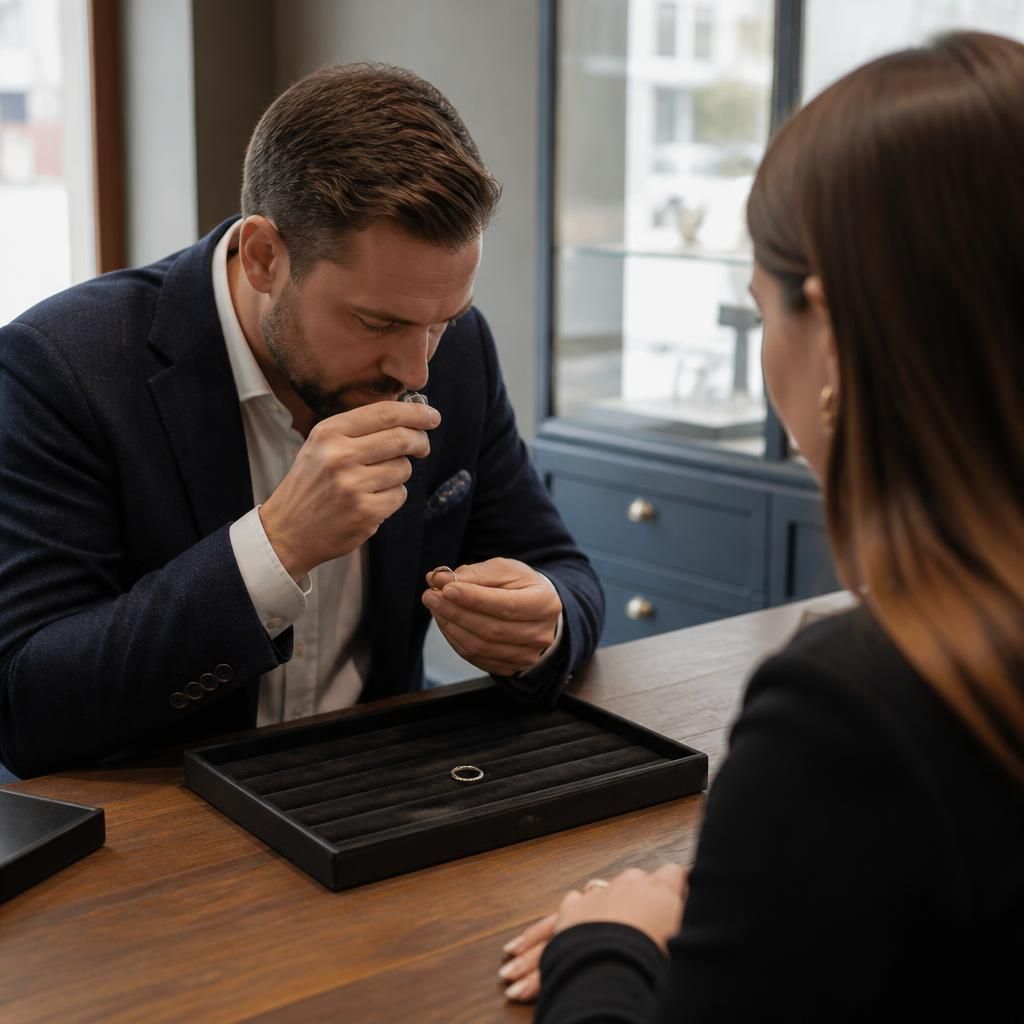
How do I choose the right jeweller for my ring resizing needs?
Choose a jeweller with proven experience in ring resizing, a clear assessment process and suitable workshop expertise for your ring’s metal, setting and design. They should explain the recommended method, confirm the finished size with you, protect the gemstones and provide clear aftercare if any further adjustment is needed.
The right jeweller for ring resizing is one who can assess the ring’s construction, recommend an appropriate method and confirm the finished size before carrying out precise workshop work. Their experience should cover the ring’s metal, setting, gemstones, engraving and overall design, with clear advice about any limitations, risks and aftercare.
Start with relevant experience
Ring resizing is not simply a matter of making a band larger or smaller. The jeweller must understand how removing, adding or redistributing metal can affect the ring’s shape, strength, setting and appearance. Ask whether they regularly resize rings similar to yours, particularly if it has a detailed shoulder, an unusual profile, a full or partial gemstone setting, delicate detailing or sentimental alterations.
A competent jeweller should inspect the ring before agreeing to the work rather than relying only on its stated size. This inspection should consider:
Choose a jeweller who measures carefully
Accurate measurement is essential, but the correct size is not determined by a ring gauge alone. Finger size can vary with temperature, time of day and other conditions, while the width and shape of the ring also affect how it feels. A reputable jeweller should discuss how the ring is intended to fit, whether it needs to pass over the knuckle comfortably and how it sits alongside other rings.
If the ring is being resized to replace a previous size or to match a different finger, explain how it has felt when worn. If possible, try a suitable sample or sizing aid and confirm the proposed size before workshop work begins. This is especially important where the ring has a wide band, a substantial setting or a pronounced internal shape.
Ask which resizing method is suitable
For a ring that needs to be made larger, a jeweller may add a carefully matched section of metal where the design permits. A modest reduction in size may involve removing a section and joining the remaining ends. In some designs, alternatives such as internal sizing elements may be more appropriate than cutting the main band. The correct method depends on the construction, the amount of adjustment and the need to preserve the original appearance.
The jeweller should explain the proposed method in plain language and tell you where any join will be made, how the surface will be finished and whether the alteration could affect engraving, patterning or stone settings. Be cautious if a service is offered without examining the ring or if the method is presented as suitable for every design.
Check the jeweller’s workshop standards
Ask who will carry out the work and whether the ring is assessed and finished by an appropriately skilled jewellery professional. The workshop should have the tools and expertise needed for soldering, shaping, polishing and checking settings without unnecessarily removing the ring’s character. Good workmanship should leave the band evenly shaped, the join secure and the finish consistent with the surrounding metal.
For rings with valuable or vulnerable gemstones, ask how the stones will be protected during resizing. Heat, pressure, vibration and polishing can create risks if the setting is not assessed properly. A careful jeweller will check for loose stones before work, identify any existing damage and inspect the setting again after the alteration. They should also advise if a stone needs separate attention before the resizing can safely proceed.
Look for clear communication and written details
Before authorising the work, make sure you understand:
These details should be recorded clearly, particularly where the ring has high monetary or sentimental value. If the jeweller finds unexpected damage or a problem with the setting during inspection, they should contact you before making additional alterations.
Consider security and handling
Your ring should be identified accurately when it is booked in, handled securely and returned with the relevant work recorded. Ask about the jeweller’s procedures for safeguarding items while they are in their care and whether a valuation or insurance documentation may need updating after a substantial alteration. You should also receive practical advice about cleaning, wearing and checking the ring after resizing.
Do not choose on price alone
The lowest quoted price may not represent the most suitable work if the ring needs specialist assessment, careful stone protection or detailed finishing. Compare the quality of the inspection, the explanation provided and the aftercare offered, rather than treating resizing as a standard alteration with the same process for every ring.
A jeweller is a suitable choice when they inspect the complete ring, take time to establish the correct fit, explain the technical options, identify risks honestly and provide a clear plan for finishing and aftercare. Once the resizing is complete, the ring should be checked for comfort, symmetry, a secure setting and a smooth, consistent finish before you accept it.
Choosing the right jeweller for ring resizing means selecting someone who will assess the complete ring before recommending any work. The jeweller should examine the metal, band profile, gemstones, settings, engraving and any previous repairs, then explain which resizing method will protect the ring’s structure and appearance.
Before authorising the alteration, confirm the finished size, expected fit, proposed method, estimated cost and aftercare arrangements. A careful jeweller will also record the ring’s condition, identify any existing damage and contact you before proceeding if additional work is needed. This approach helps ensure the resized ring remains secure, comfortable and consistent with its original design.
- the type and condition of the metal;
- the ring’s current shape, thickness and construction;
- the position and security of gemstones;
- wear, thinning, previous repairs or signs of damage;
- engraving, milgrain, patterned surfaces and other design details; and
- how much adjustment the design can accommodate safely.
- the agreed finished size and how it was established;
- the recommended resizing method;
- any limitations caused by the ring’s design or condition;
- the expected appearance of the finished alteration;
- how gemstones, engraving and existing marks will be treated;
- the estimated timescale and cost; and
- what happens if the fit needs reviewing after collection.
Discuss Your Ring Resizing Needs With Our Jewellers
Discuss your ring resizing needs with our jewellers for a careful assessment of the fit, metal, setting and design. We can explain the suitable alteration method, expected timescale and aftercare before any work begins.