
What types of jewellery repair services do you offer?
We offer professional repairs for rings, earrings, necklaces, bracelets and watches, including ring resizing, stone replacement, claw and setting repairs, soldering, chain and clasp repairs, and jewellery cleaning and restoration. We also provide jewellery remodelling, watch servicing and valuations, with each piece assessed carefully before suitable repair options are recommended.
We provide professional repair and restoration services for rings, earrings, necklaces, bracelets, watches and other precious pieces. Each item is assessed before work begins so that the repair method, likely result and any suitable alternatives can be explained clearly. Services include resizing, stone replacement, claw and setting repairs, soldering, chain and clasp repairs, cleaning, polishing, jewellery remodelling, watch servicing and valuations.
Ring repairs and alterations cover both everyday wear and more substantial damage. We can assess worn or broken claws, loose stones, damaged settings, split bands, worn shanks and broken shoulders. Depending on the condition of the ring, the work may involve rebuilding a section, replacing a setting, securing the stone or restoring the shape of the band. Ring resizing is also available where the design and metal allow it. Some rings, particularly those with complex settings, extensive engraving or continuous stonework, need a more carefully planned alteration to protect their appearance and structural integrity.
Stone and setting repairs are carried out where a gemstone is loose, chipped, missing or no longer properly supported. We inspect the stone, claws, bezel or other setting before recommending repair. A missing stone may be replaced with a suitable gemstone, while a damaged setting may need to be strengthened or rebuilt first. A repair is not always appropriate for a severely fractured or heavily worn stone, so we will explain the practical options, including replacement or redesign where necessary.
Claw, bezel and mount repairs help protect stones from becoming loose or lost. Claws can be retipped or replaced when wear is limited, while more extensive damage may require work to the surrounding mount. Settings are examined for thinning, distortion and movement around the stone. Prompt professional assessment is advisable if a stone rattles, catches on fabric or appears lower than it was previously.
Chain, necklace and bracelet repairs include broken links, stretched sections, damaged connectors and general wear. We can assess whether a link should be soldered, replaced or strengthened, taking account of the chain’s construction and metal. Where a chain has become thin through repeated wear, repairing the immediate break may not address the underlying weakness. In those cases, we can discuss whether further restoration, partial replacement or a different fastening would provide a more reliable result.
Clasp and fastening repairs are available for necklaces, bracelets, earrings and other items with worn or broken closures. A clasp may need cleaning, adjustment, replacement or reattachment. Safety catches, jump rings and connecting loops are also checked because these small components play an important role in keeping a piece secure. The replacement must be suitable for the item’s weight, design and frequency of use.
Earring repairs can include replacement or repair of posts, butterfly backs, hooks, hinges, catches and decorative fittings. We can also assess bent fittings, loose stones and damage to the main earring body. Matching a replacement component to the original metal and finish is important, particularly for earrings worn as a pair.
Soldering and structural repairs are used to join or reinforce suitable areas of precious metal. The appropriate technique depends on the metal, thickness, design and position of the damage. Heat-sensitive stones, intricate settings and previous repairs must be considered before soldering is undertaken. Careful preparation and finishing are needed to prevent visible marks and to retain the original proportions of the piece.
Cleaning, polishing and restoration can improve the presentation of jewellery affected by surface marks, tarnish or accumulated residue. Cleaning methods are selected according to the metal, gemstones, settings and any treatments the stones may have received. Polishing can reduce some surface scratches, but it removes a small amount of metal and is not suitable for every item. Antique, engraved, plated or deliberately textured pieces may require a more conservative approach to preserve their character.
Jewellery remodelling is available when a piece is no longer worn, no longer fits your style or contains stones and metal you would like to retain. Existing jewellery may be redesigned into a new ring, pendant, earrings or another bespoke piece, subject to the condition and suitability of the materials. Before remodelling, we consider the stones, metal, sentimental features, proportions and intended use, then explain which elements can realistically be preserved.
Watch repairs and servicing include assessment of mechanical and quartz watches, case and bracelet work, strap or clasp replacement, cleaning and servicing where appropriate. A watch may need attention if it is losing time, stopping, showing signs of moisture, has a damaged crystal or has a loose crown. Watch work requires different equipment and expertise from jewellery repair, so the service needed depends on the movement, model, condition and availability of suitable parts. Water resistance should not be assumed after repair unless it has been specifically tested and confirmed.
Valuations and repair advice can be provided when you need a written assessment for insurance, probate, division of assets or your own records. A valuation is distinct from a repair estimate: it describes the item and considers its relevant value, while a repair assessment considers condition, work required and the available options. We can also advise when repair is unsuitable, when a piece should be left untouched, or when redesign may be more practical than restoration.
Before accepting any work, we record the item’s condition and discuss the proposed repair, finish and any limitations. Please mention previous repairs, known damage, sentimental details and whether the piece has an insurance or valuation requirement. If a stone is loose, a clasp is failing or a ring has become badly distorted, stop wearing it until it has been professionally examined; continued wear can make a manageable repair more extensive.
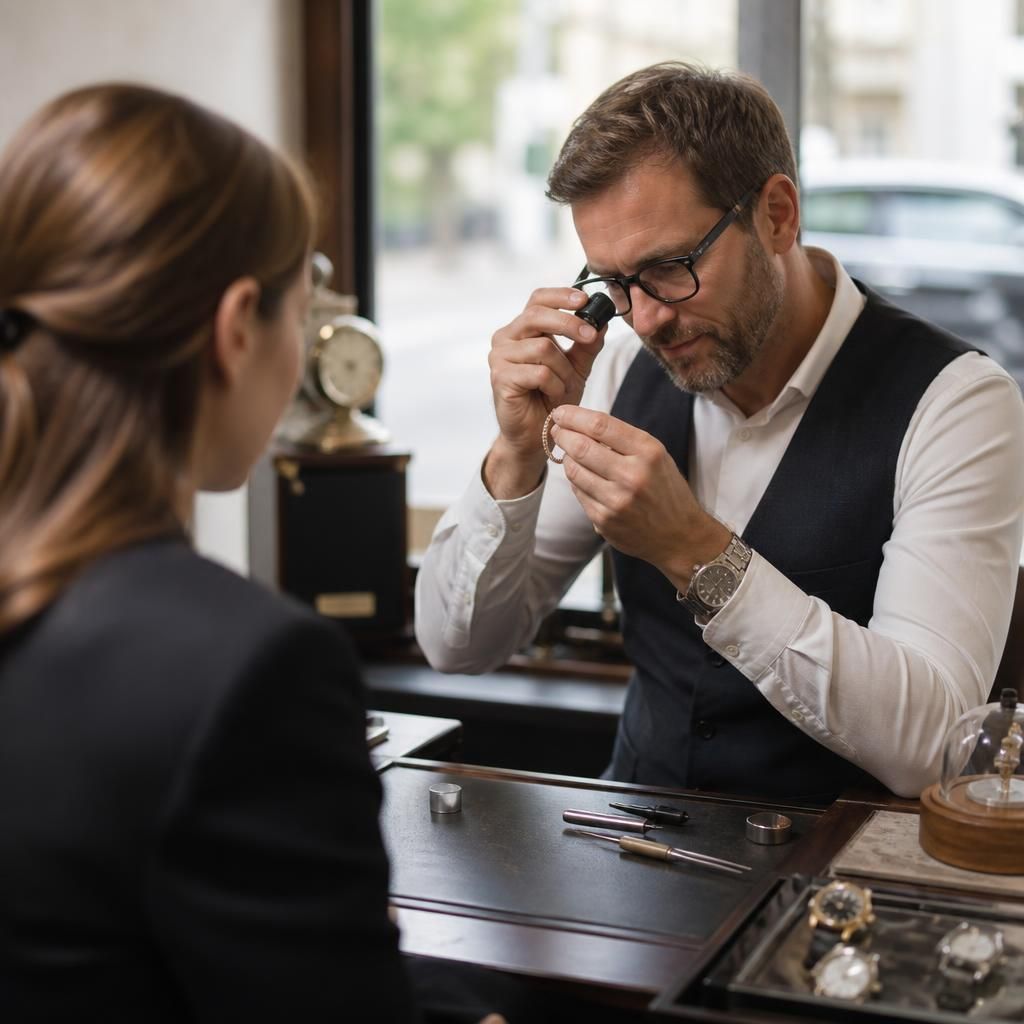
Jewellery repair begins with an assessment of the piece, its materials and the damage involved. This helps determine whether the item needs a straightforward repair, careful restoration, replacement components or a more suitable redesign.
We check the metal, settings, gemstones, previous repairs and areas affected by wear before recommending suitable work. For example, a loose stone may require a claw or setting repair, while a thin or distorted band may need strengthening before it can be resized. We explain the proposed method, likely finish and any limitations so you can make an informed decision before work starts.
Bring Your Jewellery In for Expert Repair Advice
Bring your jewellery or watch in for a careful assessment and clear advice on the most suitable repair, restoration or alteration. We will explain the available options before any work begins.
Speak to your personal jeweller
Every commission begins with a conversation. Arrange an appointment in the Birmingham Jewellery Quarter or talk it through by phone.