
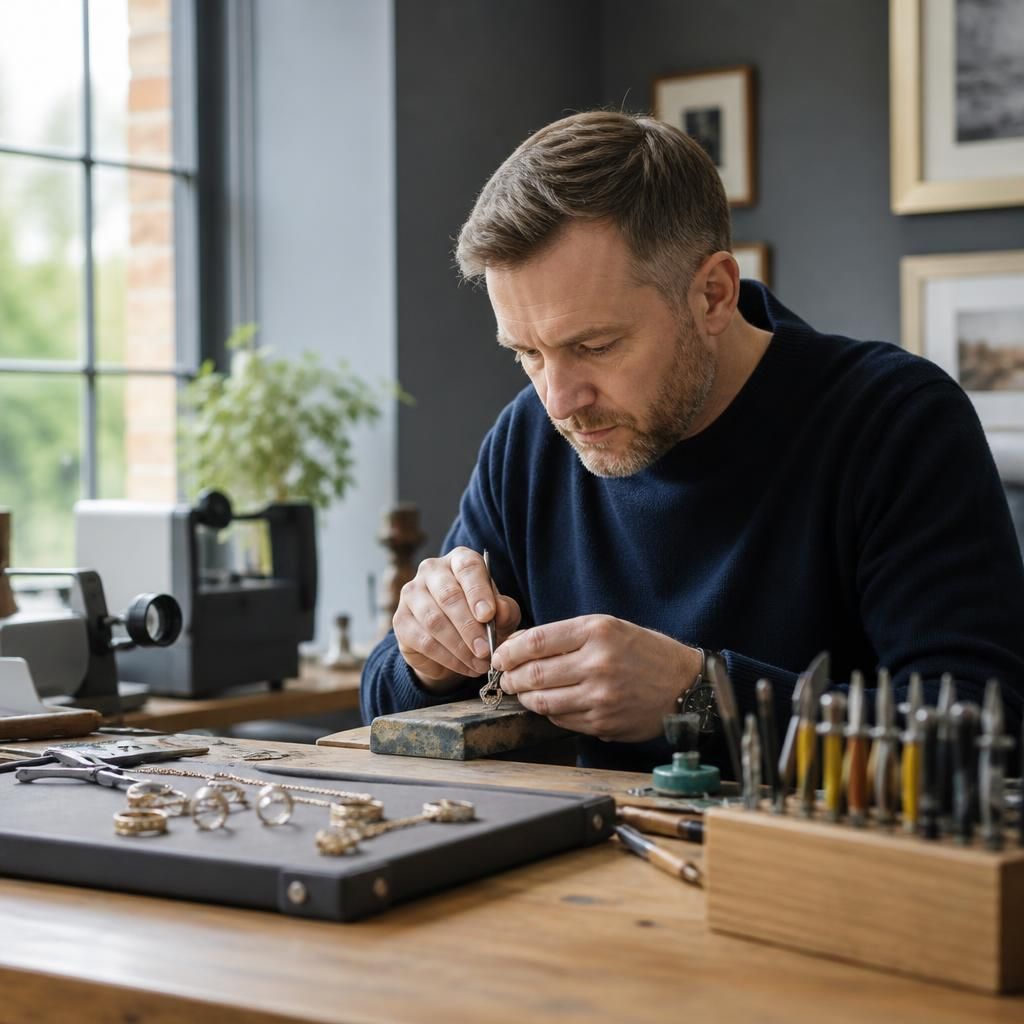
What types of jewellery can be repaired, and what limitations exist?
Most jewellery can be repaired, including gold, platinum and silver rings, earrings, bracelets, chains, settings and many gemstone pieces. Limitations arise when metal or gemstones are severely damaged, worn too thin, brittle, fractured, heavily included or of uncertain stability, as repair may be unsafe, impractical or unable to restore the original appearance completely.
Most jewellery can be repaired, restored or made secure, including rings, earrings, bracelets, necklaces, chains, brooches and pendants made from gold, platinum or silver. Common work includes replacing worn claws, rebuilding settings, soldering or laser-repairing broken joints, replacing damaged catches, reshaping bands, repairing links and resetting gemstones. The main limitations occur when the metal has become dangerously thin, the gemstone is fractured or unstable, the construction is too fragile to work on safely, or the original materials and methods cannot be identified with confidence.
A professional assessment is needed before confirming whether a repair is suitable. The condition of the whole item matters, not just the visible fault. A jeweller will normally examine the metal, joins, settings, gemstones, previous repairs and any areas affected by wear. They can then explain whether the piece can be repaired as it is, whether part of it should be replaced or rebuilt, and whether restoration can return it to its original appearance or only improve its security and usability.
Gold, platinum and silver jewellery
These metals are commonly repairable, although their condition and alloy affect the work required. Gold rings may be resized, reshaped, built up where they have worn thin, or repaired around a damaged setting. Platinum can be repaired and rebuilt by a jeweller with the appropriate equipment and experience. Silver chains, clasps, earrings and other items can often be soldered, reshaped or have worn components replaced.
Metal cannot always be restored indefinitely. Repeated soldering, previous resizing, corrosion, deep cracking and extensive thinning can leave a piece too weak for another conventional repair. A ring that has worn very thin at the base may need a section of metal replacing rather than simply being closed up. If the remaining structure cannot support the repair, rebuilding or remaking part of the item may be safer than preserving every original component.
Rings and settings
Rings are frequently repaired because their shanks, shoulders and claws are exposed to regular contact and impact. Depending on the damage, a repair may involve:
There are limitations with intricate, very thin or heavily worn settings. A stone may have moved because the surrounding metal has worn away, and tightening it without addressing that wear may provide only a temporary solution. Some designs also have limited scope for resizing because gemstones, engraving, continuous patterns or tension within the setting can be affected.
Chains, bracelets, earrings and clasps
Broken chains and bracelets can often be repaired by replacing or rebuilding a damaged link, joining a split section or fitting a new clasp. The replacement part must be appropriate for the item’s weight, design and metal. A very fine chain may be repairable but remain vulnerable if it has become thin throughout its length. In that situation, replacing one link may not address the underlying wear.
Clasps, hooks, posts, backs and hinged components can usually be replaced or repaired when the surrounding structure is sound. Hinges and catches that have been repaired repeatedly may eventually require a new component. Earrings with delicate settings or thin posts need particular care because heat and pressure can affect nearby gemstones or decorative details.
Gemstones and diamond jewellery
Many gemstone pieces can be repaired, including diamond, sapphire, ruby and other precious or ornamental stones. The work may involve resetting a stone, replacing a damaged setting, repairing the mount or polishing minor surface marks where the gemstone is suitable for that treatment.
Gemstones are not all equally resistant to heat, impact, chemicals or sudden temperature changes. A stone may be unsuitable for removal or heat-based repair if it has fractures, cavities, treatments, internal weaknesses or a history of instability. Some stones can be damaged by the pressure used to remove them from a setting, while others may be affected by heat during soldering. Where a stone is too vulnerable to work on safely, the repair may need to be completed without removing it, or the stone may need to be replaced.
Surface wear and scratches cannot always be removed without changing the shape or proportions of a gemstone. Polishing may reduce a mark, but it also removes a small amount of material. A deep chip, fracture or significant abrasion may require professional cutting or replacement rather than ordinary polishing. The suitability of any treatment depends on the stone’s type, condition, cut, setting and any known treatment.
Antique, vintage and sentimental jewellery
Older jewellery can often be repaired, but it may require a more conservative approach. Previous repairs, unusual alloys, fragile construction, historic settings and worn metal can make direct restoration unsuitable. Preserving the original material may be important, but so is ensuring that the item can be worn safely.
Restoration may therefore involve stabilising the piece, replacing a concealed component, strengthening a worn area or creating a compatible replacement part. It may not be possible to reproduce an original finish, engraving or handmade detail exactly. Before work begins, it is sensible to agree whether the priority is preserving original fabric, improving everyday durability, retaining the existing appearance or achieving a combination of these aims.
Plated, filled and mixed-metal jewellery
Items with gold plating, silver plating or other surface finishes can present different challenges. Soldering, polishing and reshaping may remove plating or make colour differences visible. The item may need refinishing or replating after repair, and the result may not match a worn or aged surface exactly.
Mixed-metal designs, coated metals and pieces containing adhesives, enamel or delicate finishes may require specialist handling. Heat can damage enamel, loosen bonded components or affect a surface treatment. In some cases, a mechanical repair is possible; in others, the finish or construction limits what can be done without altering the item.
Costume and fashion jewellery
Costume jewellery can sometimes be repaired, particularly when the issue is a broken clasp, missing jump ring or detached decorative element. However, it may be made from base metals, thin sheet, plated materials, glued components or imitation stones that are not designed to withstand conventional jewellery repairs. The cost of specialist work may also be disproportionate to the item’s construction or replacement value.
This does not mean repair is never worthwhile. Sentimental value, rarity and the availability of replacement parts may make careful restoration appropriate. The likely durability of the repair should be explained before work is authorised.
Situations where repair may be limited or unsuitable
Where a full repair is not advisable, alternatives may include replacing a component, remaking part of the mount, resetting the gemstone in a new setting, remodelling the jewellery or preserving it as a non-wearable keepsake. The appropriate option depends on the item’s condition and your priorities. A repair should not be authorised solely because a visible fault appears small; the underlying structure must be strong enough to support continued use.
Before handing over a valuable or sentimental piece, disclose any known treatments, previous repairs, accidents or looseness, and explain how regularly you intend to wear it. Ask what can be repaired, what may remain visible, whether any gemstone or finish could be affected, and how the item should be checked and cared for afterwards. A careful inspection and clear agreement about the intended result help ensure that the repair is safe, proportionate and suitable for the jewellery’s materials.
Jewellery repairs are usually possible when the surrounding metal and gemstones remain structurally sound. A professional assessment checks for hidden wear, previous repairs, loose settings and damage that could make further work unsafe.
Some limitations apply. Severely worn metal may need rebuilding rather than simple soldering, while fractured, treated or heat-sensitive gemstones may not be safe to remove or reset. Plating, enamel, adhesives and delicate antique construction can also be affected by heat, pressure or polishing. Where a direct repair is unsuitable, replacing a component, remodelling the piece or creating a new setting may provide a safer and more durable result.
- replacing worn or broken claws;
- tightening a loose gemstone;
- rebuilding part of a setting;
- repairing a split or cracked shank;
- reforming a misshapen ring;
- replacing a worn section of metal; or
- resizing the ring where the design and gemstones allow it.
- Metal is severely worn, brittle, cracked or missing in several areas.
- A gemstone is fractured, loose, heavily included or otherwise unsafe to remove or reset.
- The design relies on tension, adhesives or a fragile construction that may be disturbed by repair.
- Previous repairs have left insufficient sound metal for another reliable joint.
- Heat, pressure, chemicals or polishing could damage enamel, plating, treatments or nearby stones.
- Replacement parts, matching metal or original components are unavailable.
- The item has been distorted or damaged so extensively that repair would alter its proportions or appearance.
Book a Professional Jewellery Repair Assessment
Book a professional jewellery repair assessment to establish whether your piece can be safely repaired, restored or remodelled. We will examine the materials, gemstones and existing damage before explaining the most suitable options.