
How long does it typically take to repair jewellery?
Jewellery repairs can range from a short turnaround for straightforward adjustments to several days or longer for complex work, depending on the damage, materials, required parts and current workshop workload. We will assess your item carefully and confirm the expected timescale before proceeding.
Jewellery repairs can take anything from while-you-wait attention for a minor adjustment to several weeks for complex, specialist work. The timescale depends on the type of damage, the metal and gemstones involved, whether replacement parts are available, the work required in the workshop and whether the piece needs to be sent to a specialist. We assess each item individually and confirm the expected turnaround before work begins.
Typical timescales for common repairs
What can affect the repair time?
The visible problem is not always the full extent of the work required. A ring that appears to need only a loose stone tightened may also have worn claws, a distorted setting or thinning metal. We inspect the item before confirming the repair so that underlying issues are not overlooked.
Why an accurate estimate may not be possible immediately
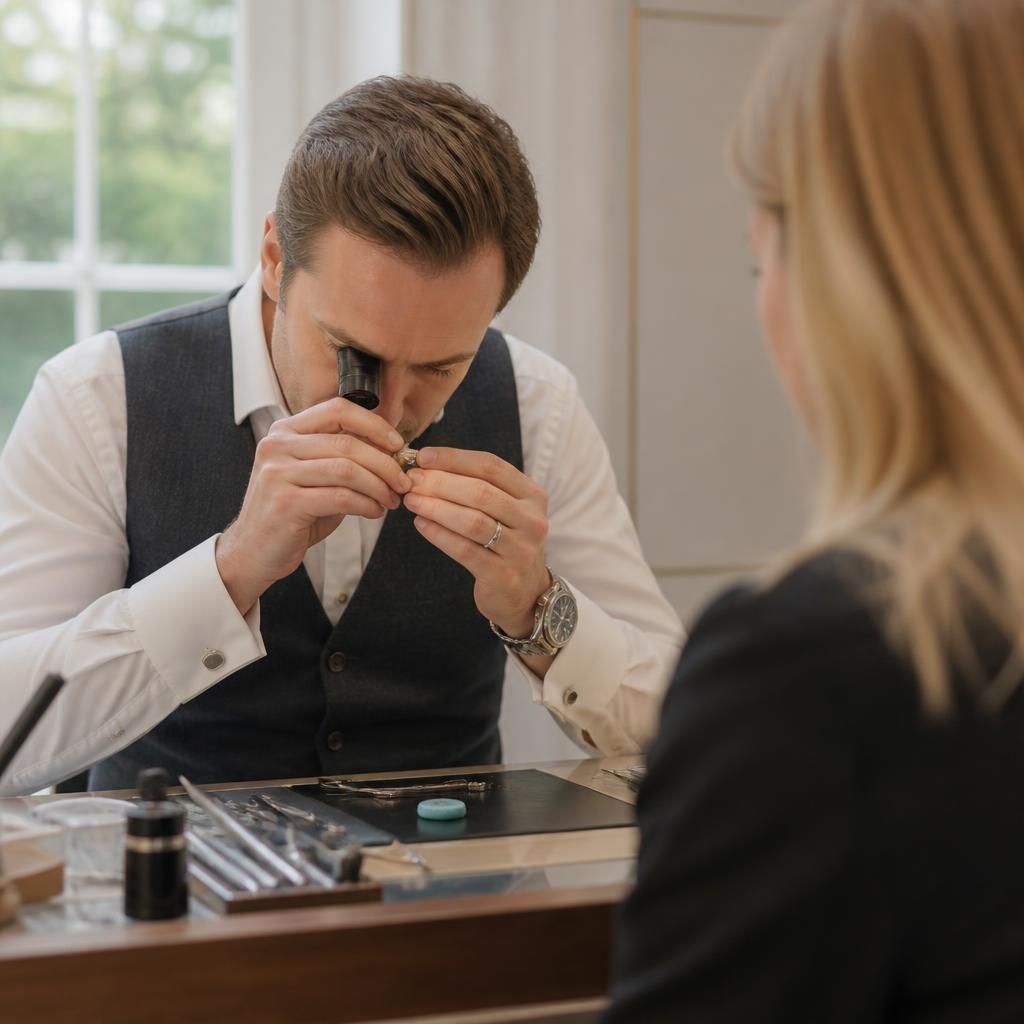
A reliable timescale often depends on inspecting the jewellery under magnification and checking how securely stones, claws, hinges and clasps are functioning. We may also need to confirm the metal, measure a ring accurately or determine whether previous repairs have affected the structure. For this reason, an initial estimate can be provisional until the item has been examined in person.
If additional damage is found after work has started, we will explain what needs attention and discuss the options before carrying out work beyond the agreed repair. This helps avoid an incomplete repair and ensures that the condition, value and intended use of the jewellery are properly considered.
What happens during the repair process?
Urgent requests can sometimes be accommodated, but rushing delicate work is not always appropriate. Jewellery that is structurally weakened, contains vulnerable gemstones or requires a replacement part may need the normal workshop process to achieve a safe and lasting result.
Before leaving your jewellery with us, ask for the expected completion date, whether the estimate includes parts or specialist work, and how you will be contacted if further work is recommended. If the item is needed for a particular date, tell us at the outset so the timescale can be assessed realistically. For an accurate estimate for your piece, bring it to us for an inspection rather than relying on the apparent size of the repair alone.
A jewellery repair timescale can only be confirmed reliably after the piece has been inspected. Damage that appears minor may involve worn claws, weakened metal, a distorted setting or previous repair work, all of which can add to the work required.
We examine the jewellery under magnification, assess the metal, gemstones, settings and fastenings, then explain the recommended repair and expected turnaround. If further damage is discovered during the work, we will discuss it with you before carrying out anything beyond the agreed repair.
- Cleaning, inspection and minor adjustments: Some straightforward work may be completed during an appointment or within a short turnaround, subject to workshop availability.
- Ring resizing: A simple resize may take several working days. More involved alterations, including substantial changes in size, shaped bands, intricate settings or patterned metalwork, can take longer.
- Chain and clasp repairs: A broken link, jump ring or standard clasp is often relatively quick to repair. A delicate chain, unusual fastening or extensive damage may require additional bench work.
- Stone replacement or resetting: The timescale includes assessing the setting, sourcing a suitable gemstone and securing it correctly. Matching a particular colour, cut or size can extend the process.
- Claw and setting repairs: Rebuilding worn claws, replacing sections of a setting or securing a loose stone requires careful work and thorough checking, so it generally takes longer than a simple polish or adjustment.
- Polishing and refinishing: Light polishing may be completed relatively quickly, while removing deep scratches, restoring a worn finish or protecting delicate engraving requires more time.
- Jewellery remodelling: Redesigning an existing piece is a bespoke process. It may involve design consultation, measuring, preparation of the original metal, making new components and final setting, so the timescale is usually longer than for a standard repair.
- Condition and construction: Fine, antique or heavily worn jewellery often needs a slower, more conservative approach. Handmade pieces, intricate designs and multi-stone settings can require additional preparation.
- Metal type: Gold, platinum, silver and mixed-metal designs behave differently when cut, soldered, shaped and polished. Platinum repairs, for example, may require dedicated techniques and careful heat control.
- Gemstones: Some stones are more sensitive to heat, pressure or chemicals than others. The setting may need to be removed or protected during repair, and extra inspection may be necessary afterwards.
- Replacement materials: Standard components may be readily available, but a discontinued clasp, unusual gemstone or specially made part may need to be sourced or produced to match the original.
- Specialist processes: Engraving, stone cutting, intricate setting, antique restoration and certain watch-related services may involve a specialist and therefore add to the turnaround.
- Workshop scheduling: The repair queue, seasonal demand and the availability of the relevant craftsperson can affect when work is started, even when the repair itself is straightforward.
- We record the item and discuss the problem, its history and any particular requirements.
- We inspect the jewellery, including the setting, stones, fastenings and areas that may not be visible during normal wear.
- We explain the recommended repair, any alternatives and the expected timescale.
- The work is completed using methods appropriate to the metal, gemstones and construction of the piece.
- We check the finished item, clean it where suitable and confirm that moving parts, settings and fastenings are working as they should.
Book a Jewellery Repair Assessment
Bring your jewellery to us for a careful repair assessment and a clear indication of the work required and expected turnaround. Contact Steven Charles Quance to arrange your assessment.
Speak to your personal jeweller
Every commission begins with a conversation. Arrange an appointment in the Birmingham Jewellery Quarter or talk it through by phone.