
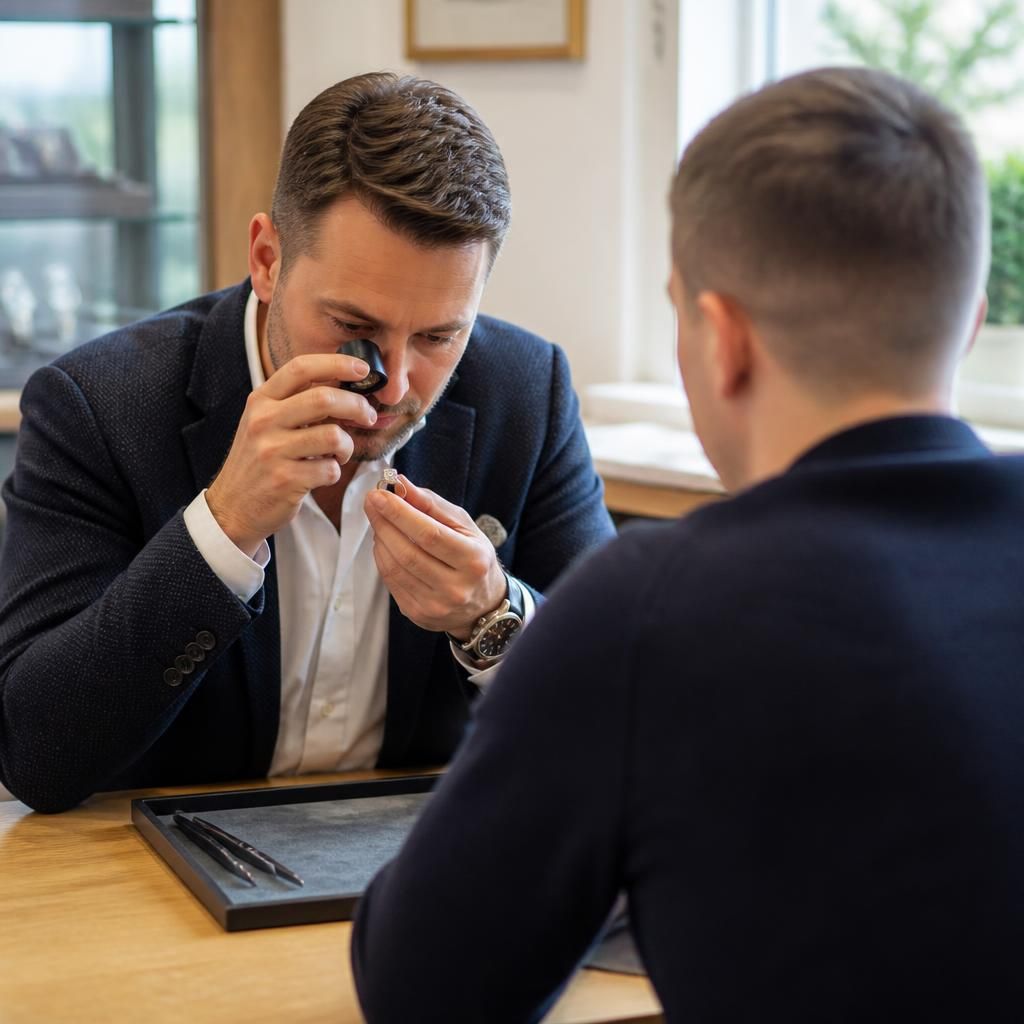
How do I know if my jewellery needs professional repair?
Your jewellery may need professional repair if you notice a loose or missing stone, bent or worn claws, a broken clasp, stretched links, a split shank, damaged solder joint, or significant scratches and distortion. Stop wearing the piece if it catches on clothing, feels loose, makes a rattling sound, or has sharp edges, as prompt assessment can prevent further damage or loss.
Your jewellery needs professional repair when a stone, setting, clasp, chain, shank or other structural part is loose, worn, broken or no longer working correctly. Even a small fault can worsen with everyday wear, increasing the risk of losing a stone or causing damage that is more difficult to restore. If you are unsure, stop wearing the piece and arrange an assessment rather than trying to correct it yourself.
Look closely at the jewellery in good light and check it periodically, particularly if it is worn frequently. The following signs indicate that professional attention is advisable:
Not every mark requires structural repair. Light surface scratches and minor changes in shine are normal with wear and may be addressed through professional cleaning, polishing or refinishing. Deeper scratches, dents, worn plating or discolouration should be assessed so that the appropriate treatment is chosen without removing too much metal or affecting the original finish.
Stop wearing jewellery immediately if a stone is loose, a ring is split, a chain is partly broken, a clasp will not secure or any part feels sharp. Keep the item in a soft, separate container and retain any loose stone or detached component. Avoid household glue, pliers and do-it-yourself polishing products. These can mark the metal, contaminate gemstones or conceal the fault without restoring the underlying strength.
During a professional assessment, the jewellery can be checked for movement, thinning metal, worn settings, damaged joints and signs of previous repair. The repair may involve tightening or rebuilding a setting, replacing a clasp or fitting, restoring a chain link, reshaping a ring, strengthening a worn area, polishing or carrying out more extensive remodelling. The suitable approach depends on the metal, construction, gemstone and condition of the piece.
It is also sensible to request a condition check during routine cleaning or before an important occasion, especially for regularly worn engagement rings, wedding rings and sentimental pieces. Early detection can often prevent stone loss and help preserve the original design. If your jewellery shows any of these signs, bring it to us for professional advice before wearing it again; we can explain the condition, recommended repair and likely options clearly before work begins.
A loose gemstone is one of the clearest signs that jewellery needs professional repair. If a stone moves in its setting, makes a faint rattling sound, or appears uneven, stop wearing the piece and have it assessed. The claws, bezel or surrounding metal may have worn or become distorted, and further movement could allow the stone to fall out.
Do not test the stone by shaking the jewellery or try to tighten the setting with household tools. Keep the piece in a soft, separate container and bring it in for inspection. A professional repair assessment can establish whether the setting needs tightening, rebuilding or replacing, while checking the stone and surrounding metal for impact damage or wear.
- A loose or moving stone: If a diamond or gemstone shifts when the piece is gently handled, or makes a faint rattling sound, its setting may have loosened. Do not shake the jewellery to test it further; place it safely aside and have the setting inspected.
- Worn, bent or broken claws: Claws hold a stone in position and can become thin, bent or damaged through wear. A claw that catches on clothing, looks shorter than the others or no longer sits neatly over the stone needs prompt attention.
- A cracked, split or distorted ring shank: The band may become thin at the base, develop a visible crack or lose its round shape. This can affect the ring’s strength and may cause the setting to tilt or the ring to split further.
- A broken or unreliable clasp: If a necklace or bracelet clasp does not close securely, opens during wear or has a damaged safety catch, the piece could be lost. Clasp repairs or replacement should be assessed alongside the connecting rings and chain ends.
- Stretched, stiff or damaged links: Gaps between links, flattened sections, kinks or links that no longer move properly can indicate wear. Continuing to wear a stretched chain or bracelet may result in a break.
- Loose or damaged earrings: Earring posts, backs, hinges and fittings can bend or loosen. An earring that does not sit securely, has a weak hinge or repeatedly comes undone should be repaired before use.
- Sharp edges or snagging: Jewellery that catches on clothing, scratches the skin or feels rough may have a broken edge, worn setting or damaged solder joint. This is both a comfort issue and a sign that the structure needs checking.
- Visible cracks, breaks or failed joints: A split in the metal, a broken solder joint or a component that has separated should not be glued or bent back into place at home. Heat, adhesives and incorrect pressure can damage gemstones, finishes and future repair work.
- Severe distortion or impact damage: A ring that has been knocked out of shape, a setting that has been pushed to one side or a bracelet that has been crushed may need more than simple adjustment. The stone, mount and metal should be examined together.
Book a Professional Jewellery Repair Assessment
If your jewellery has a loose stone, damaged clasp, broken component or sharp edge, stop wearing it and bring it to us for a professional repair assessment. We will explain the condition and suitable repair options before any work begins.
Speak to your personal jeweller
Every commission begins with a conversation. Arrange an appointment in the Birmingham Jewellery Quarter or talk it through by phone.