
How can I assess the quality of local jewellery repair services before committing?
Assess a local jewellery repair service by checking its experience with your jewellery’s materials and construction, examining examples of its workmanship, and confirming that the proposed work, costs, timescale and aftercare are explained clearly. A reputable jeweller should inspect the piece carefully, discuss repair options and risks, provide a written quotation, and handle your jewellery securely and transparently.
Assess the quality of a local jewellery repair service by checking its relevant experience, examining examples of its workmanship, and confirming that the proposed repair, risks, cost, timescale and aftercare are explained before work begins. A reputable jeweller should inspect your piece in person, identify the cause of the problem, discuss suitable options and provide a clear written quotation.
Quality repair is not simply a matter of making jewellery look acceptable again. The work should restore security, function and appearance while respecting the original design, metal, setting and any sentimental or monetary value. Use the following points to compare a service before leaving your jewellery in its care.
Check experience with the type of jewellery you own
Ask whether the jeweller regularly works with the relevant metal and construction. Gold, platinum, silver and mixed-metal pieces can require different techniques, as can items containing gemstones, enamel, plating or intricate handwork. A repairer should also understand the particular demands of:
A competent jeweller should be able to explain how the proposed method suits your item. Be cautious if the response is vague or if a repair is recommended without examining the piece closely.
Look for evidence of workmanship
Ask to see suitable examples of completed repairs or alterations, where confidentiality allows. Look for clean joins, even surfaces, symmetrical settings, secure claws and a finish that blends with the surrounding metal. On a ring, the repaired area should not normally appear noticeably heavier, flatter or rougher than the original construction unless this is part of the agreed solution.
Photographs can provide useful evidence, but they do not show every detail. Where possible, examine finished work in person and ask how the repair was carried out. A jeweller who can explain the process clearly is more likely to have assessed the structural issues rather than concentrating only on visible damage.
Expect a proper inspection before a quotation
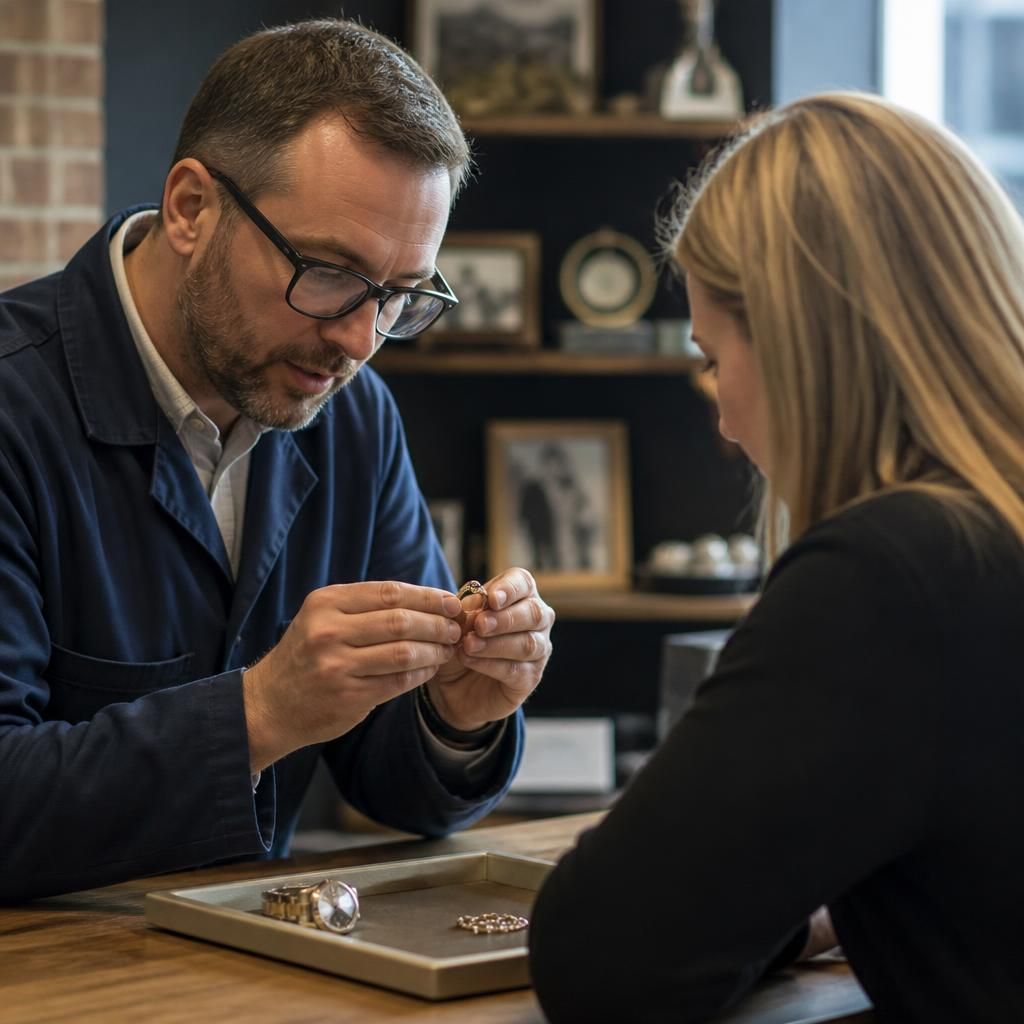
A reliable repair service should inspect the item under magnification and record its condition. This may include checking for worn claws, thinning metal, loose stones, previous repairs, fractures, stretched links, damaged threads or movement in joints. The jeweller should also point out existing wear that could affect the proposed work.
The inspection should distinguish between the immediate fault and any underlying weakness. For example, replacing a loose stone without addressing worn claws may not provide a durable repair. Similarly, closing a split without considering thinning metal can leave the area vulnerable to further damage.
Request a written quotation with clear limits
The quotation should describe the work in plain language and identify any replacement parts, stones, metal additions, finishing or plating included. It should also state the price, expected timescale and whether the amount could change if concealed damage is found after work begins.
Ask how you will be contacted if additional work is needed. No material change to the agreed repair should be made without your approval. A written record also helps prevent misunderstandings about whether polishing, rhodium plating, stone tightening, cleaning or valuation is included.
Price alone is not a dependable measure of quality. An unusually low quotation may exclude necessary preparation, suitable materials, refinishing or future aftercare. Compare like-for-like specifications and consider whether the service has explained the risks and limitations as carefully as the price.
Ask about materials and replacement components
Find out whether replacement metal will match the original alloy and colour, and whether any new stones or components will be identified appropriately. A repair may require a component that is visually similar but not identical, so this should be discussed in advance.
For plated jewellery, ask whether the repair will expose a different underlying metal and whether replating is recommended after soldering or polishing. For rings and other frequently worn items, ask whether the proposed repair is intended as a temporary remedy or a longer-term structural solution.
Check how gemstones and valuables are handled
The jeweller should record the item’s condition when it is received, including visible marks, loose stones and identifying features. If appropriate, ask whether photographs, measurements or a written description will be taken. This provides a clear record for both parties.
Ask how stones are protected during heating, setting, polishing and cleaning. Some gemstones are unsuitable for particular treatments, and a careful repairer should explain any restrictions rather than applying a standard process to every item. Valuable or sentimental pieces should remain traceable throughout the repair process, with secure storage and controlled access.
Confirm security and insurance arrangements
Ask how jewellery is stored while it is awaiting inspection, approval, repair or collection. The service should be able to explain its collection procedure and what identification or documentation is required. It is also reasonable to ask whether the business has appropriate insurance for customer property while it is in its care, and whether your own insurance provider requires particular documentation.
If the item is high in value, a specialist watch or a significant family piece, discuss whether a valuation or additional condition report is advisable before work begins. A valuation is separate from a repair quotation and should not be assumed to be included.
Understand the risks and likely result
Every repair carries some risk, particularly where metal is brittle, severely worn, previously repaired or close to a gemstone. A trustworthy jeweller will explain realistic limitations. They may advise that a thin ring needs strengthening, that an old setting cannot safely support its stone without rebuilding, or that polishing could remove original detail.
Ask whether the finished item will look identical to its original condition, whether any marks may remain, and whether the repair could alter its shape, weight or finish. Clear discussion of limitations is a positive sign; an absolute promise that every fault can be made invisible is not.
Review aftercare and guarantees
Before committing, ask what happens if a stone becomes loose, a clasp fails or a repaired area needs attention after collection. The service should explain any workmanship guarantee, exclusions and recommended inspections. A guarantee should not replace careful workmanship, but its terms can show whether the jeweller is prepared to stand behind the work.
Good aftercare advice should include how often the item should be checked, which activities may increase wear, and whether cleaning or polishing is suitable. Jewellery that is worn every day may need periodic inspection even after a successful repair.
Use questions to test the service’s approach
Before agreeing to the work, ask:
The quality of the answers matters as much as the answers themselves. A specialist should listen to your priorities, explain alternatives without pressure and give you time to decide.
Recognise warning signs
Consider choosing another service if it refuses to provide a written quotation, cannot explain who will carry out the work, dismisses questions about risks, pressures you to agree immediately, or proposes a repair without inspecting the item. Unclear collection procedures, unexplained additional charges and reluctance to discuss materials or aftercare also warrant caution.
For a valuable, sentimental or technically complex piece, a face-to-face consultation is usually the most reliable way to assess a repair service. Bring any previous valuation, insurance documentation or information about the jewellery’s history, and explain how the piece is worn. This gives the jeweller the context needed to recommend a repair that is appropriate, transparent and proportionate to the item’s condition and value.
A careful inspection before work begins is one of the clearest signs of a quality jewellery repair service. The jeweller should examine the piece closely, identify the cause of the damage and check for related weaknesses such as worn claws, thinning metal, loose stones or previous repairs.
This assessment should inform a written quotation that explains the proposed work, materials, expected timescale and any limitations. If concealed damage is discovered, you should be contacted before additional work is carried out. Clear advice at this stage helps ensure the repair is suitable for the jewellery’s construction, condition and intended use, rather than being a temporary solution that only disguises the visible fault.
- Engagement and wedding rings, including worn claws, thin shanks and damaged settings.
- Antique, vintage or handmade jewellery, where preserving original features may be more important than achieving a completely new appearance.
- Diamond and gemstone pieces, especially stones that may be vulnerable to heat, pressure, chemicals or sudden temperature changes.
- Bracelets, chains and necklaces, where the quality of soldered joins, clasps and replacement components affects long-term security.
- Watches or jewellery incorporating mechanical, delicate or specialist components.
- What caused the damage or weakness?
- Is repair the best option, or would remodelling or replacement be safer?
- What materials and techniques will be used?
- Could the work affect the stones, hallmark, finish or original details?
- Will I be contacted if further damage is found?
- What is included in the quotation and what is excluded?
- How will the item be recorded and stored?
- What inspection or aftercare is recommended once the repair is complete?
Arrange a Jewellery Repair Consultation
If you would like to discuss a repair, bring your jewellery to Steven Charles Quance for a careful inspection and clear advice on the most suitable approach. We can explain the proposed work, likely timescale, cost and aftercare before you decide.
Speak to your personal jeweller
Every commission begins with a conversation. Arrange an appointment in the Birmingham Jewellery Quarter or talk it through by phone.