
What criteria should I use to choose the right jewellery valuation expert for my needs?
Choose a jewellery valuation expert with relevant professional qualifications, substantial experience in assessing your type of jewellery or watch, and a clear understanding of the valuation’s purpose, such as insurance, probate, resale or divorce. They should provide a written report explaining the items, methods and values used, disclose any potential conflict of interest, and confirm their fees and timescale before the appointment.
Choose a jewellery valuation expert based on relevant professional qualifications, experience with your type of jewellery or watch, independence, and the quality of the written report they provide. The expert should also understand the purpose of the valuation—such as insurance, probate, sale, divorce or family division—because each purpose may require a different definition of value and supporting evidence.
Check their qualifications and professional standing. Look for a valuer with recognised gemmological, horological or jewellery training appropriate to the items being examined. Membership of a relevant professional body can provide additional reassurance, particularly where the organisation has an established code of conduct or valuation guidance. For diamond and gemstone jewellery, ask whether the valuer has formal gemmological expertise. For mechanical or luxury watches, choose someone who understands model references, movement types, originality, condition, service history and market-specific factors.
Professional membership alone does not guarantee that an individual is suitable for every valuation. Ask about the valuer’s practical experience with pieces similar to yours, including antique jewellery, signed or designer pieces, high-value gemstones, watches or items with incomplete documentation. A specialist who regularly handles the relevant category is more likely to identify alterations, replacement parts, repairs, treatments and features that materially affect value.
Confirm the purpose and valuation basis before booking. An insurance valuation generally considers the likely cost of replacing an item with an equivalent piece in an appropriate retail market. A probate valuation usually records the value at the relevant date of death and may be prepared for estate administration. A resale or auction opinion is based on a different market and should not be substituted for a formal insurance or probate report. If the valuation is for divorce, taxation or another legal process, explain this at the outset so the report uses suitable wording and assumptions.
For probate, establish whether the valuer can provide a dated written report that identifies each item separately and states the valuation date, value basis, assumptions and limitations. The report may need to be shared with an executor, solicitor or other professional adviser. A jewellery valuer can assess and document the items, but should not present the report as legal, tax or estate-planning advice.
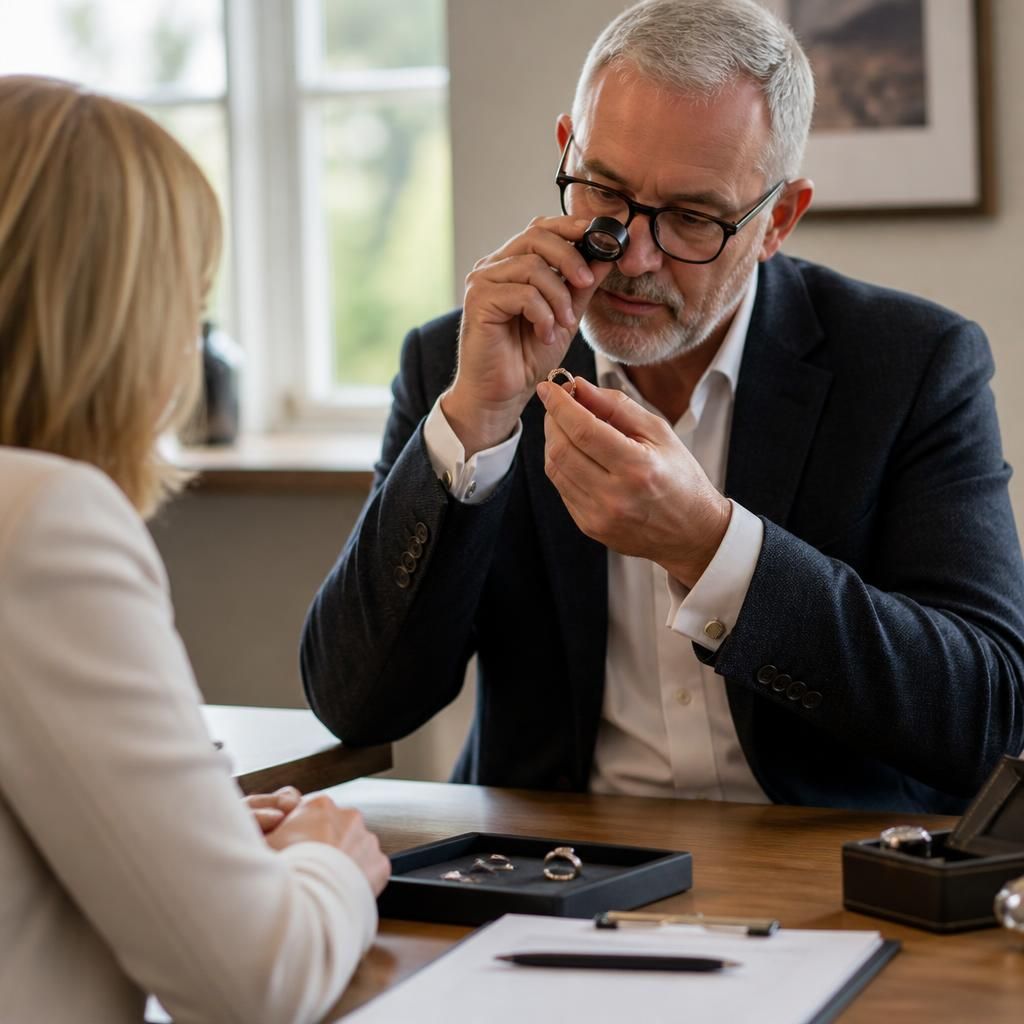
Assess the quality of the inspection. A reliable valuation normally involves a physical examination rather than an estimate based only on photographs. The expert should record relevant details such as:
Not every item requires laboratory testing or an independent gemstone certificate, but the valuer should explain when further examination is necessary. If testing could affect the result, ask whether it is included in the quoted fee and whether the item must be sent to an external laboratory. Any uncertainty should be stated clearly rather than hidden behind an apparently precise figure.
Request a clear, itemised report. A useful report should link each value to a specific item and include descriptions detailed enough for identification. It should explain the market considered, the valuation date, the currency, the condition and any assumptions about authenticity, provenance or replacement. Photographs, measurements and hallmark details can make a report easier to use for insurance, probate and future reference. Ask whether the report is suitable for your insurer or professional adviser before the appointment.
Impartiality is also important. A jeweller who offers to buy an item may have a potential conflict of interest if they are valuing it at the same time. This does not automatically invalidate the assessment, but the relationship should be disclosed and the purpose of the figure should be clear. If you need an independent value for probate, a dispute or a formal division of assets, ask how the expert separates valuation work from any potential purchase or sales service.
Clarify fees, timescales and security arrangements. Ask whether the charge is calculated per item, by appointment, by time or according to the complexity of the work. Confirm whether photographs, research, testing, travel, urgent work, additional copies and updates are charged separately. The valuation should not be influenced by the fee, but a very low price may indicate a brief identification service rather than a fully researched written report. Agree the expected completion date and how the report and jewellery will be returned or collected.
Valuable pieces should be handled discreetly and stored securely during the appointment. Ask whether the examination takes place in a private setting, whether items remain in your presence, and what arrangements apply if an item must be retained for further testing. Keep your own record of what you leave with the valuer, including any boxes, certificates or accessories, and obtain a receipt where items are retained.
Before choosing an expert, you can ask:
Be cautious if an expert gives a firm value without examining the item, refuses to explain the valuation basis, offers only a verbal figure when a formal report is required, or cannot describe the limits of their expertise. A valuation is an opinion supported by examination and market evidence, not a permanent guarantee of a sale price. Values can change with condition, rarity, market demand, exchange rates and the purpose of the assessment.
For straightforward insurance updates, a suitably qualified local valuer may be appropriate. For an estate containing rare gemstones, significant antique pieces, signed jewellery or specialist watches, consider whether additional expertise or independent certification is needed. Bringing previous paperwork and explaining exactly why you need the valuation will help the expert produce a report that is accurate, relevant and usable.
The most important criterion is whether the jewellery valuation expert prepares the report for your specific purpose. An insurance valuation, probate valuation and resale opinion use different valuation bases, so confirm this before the appointment.
Choose an expert who will examine each item carefully and provide a written, itemised report covering the valuation date, condition, identifying marks, gemstones, assumptions and limitations. For probate or other formal purposes, check that the report is suitable for your solicitor, executor or insurer, and ask how any potential conflict of interest is managed if the jeweller also buys or sells jewellery.
- metal fineness marks, hallmarks, manufacturer’s marks and signatures;
- gemstone identity, measurements, colour, clarity, treatments and settings where relevant;
- dimensions, weight and distinguishing features;
- condition, wear, damage, repairs, alterations and missing components;
- for watches, reference details, serial information where appropriate, movement, originality, service history and accessories;
- available receipts, certificates, previous valuations, provenance and purchase documentation.
- What qualifications and professional memberships are relevant to this valuation?
- How often do you value jewellery, gemstones or watches like mine?
- Have you prepared reports for my intended purpose, such as insurance or probate?
- Will you inspect the items in person and explain any testing or research required?
- What valuation basis and date will appear in the report?
- What will the report contain, and will it be accepted by my insurer, solicitor or executor?
- Do you buy, sell or repair items that you value, and if so, how are conflicts of interest managed?
- What is included in the fee, how long will the work take, and how will my items be protected?
Arrange Your Jewellery Valuation Consultation
Arrange a jewellery valuation consultation with our experienced team to discuss your items, the purpose of the valuation and the report you require. We can explain the process, fees and timescale before examining your jewellery or Rolex timepiece.