
What is the best way to clean a personalised silver necklace after restoration?
Clean a personalised silver necklace after restoration with lukewarm water, mild washing-up liquid and a very soft brush, then rinse carefully and pat dry with a lint-free cloth. Avoid abrasive polishes, harsh chemicals and soaking, particularly if the necklace has gemstones, oxidised detailing or delicate engraving; use a silver-polishing cloth only where your restoration advice confirms it is suitable.
The safest way to clean a personalised silver necklace after restoration is to use lukewarm water, a small amount of mild washing-up liquid and a very soft brush, followed by careful rinsing and drying. This method removes everyday oils and residue without placing unnecessary stress on engraved details, soldered areas, textured finishes or any gemstones. Before cleaning, follow any specific aftercare advice provided with your necklace, as the restoration may include a finish that should not be polished or soaked.
Personalised jewellery needs slightly more care than a plain silver chain. Engraving, names, dates, fingerprints, oxidised backgrounds and other decorative details can collect dirt, while aggressive cleaning may soften contrast or remove a deliberately darkened finish. If the necklace includes pearls, opals, turquoise, coral, porous stones, enamel or glued elements, avoid immersing it unless you have been advised that this is suitable.
To clean the necklace at home:
A silver-polishing cloth should only be used if the restoration advice confirms that the surface is intended to be polished. Lightly polishing plain, bright silver can restore its appearance, but repeated rubbing may affect plated surfaces, oxidised detailing, satin finishes, patina or delicate engraving. Do not use silver dips, polishing pastes, abrasive cloths, baking soda, toothpaste, bleach, chlorine or household cleaning products. These can scratch silver, strip surface treatments, weaken certain components or damage stones and decorative materials.
Do not soak a restored necklace for prolonged periods, particularly if it contains gemstones, enamel, glued components, hollow sections or mixed materials. Avoid steam cleaners and ultrasonic cleaners unless the necklace has been assessed as suitable. Vibration, heat and moisture can loosen settings or affect repairs that are secure under normal wear but not designed for intensive cleaning.
After cleaning, inspect the necklace before wearing it. Check that the clasp closes securely, the chain links remain even, the pendant is not moving unusually and any stones are firm. If you notice a loose stone, a gap at a repaired joint, a catch that does not close properly, sharp edges or fresh discolouration, stop wearing the necklace and arrange an inspection rather than attempting a further clean.
Silver naturally tarnishes when exposed to air, moisture, cosmetics, perfume, hairspray, hand cream, chlorine and some household chemicals. To reduce further tarnishing, put the necklace on after applying cosmetics and remove it before bathing, swimming, exercising or sleeping. Wipe it with a soft dry cloth after wearing, then store it separately in a dry, lined jewellery box or pouch. Keeping the chain untangled also prevents unnecessary pulling on restored sections and personalised fittings.
If the necklace has an intentionally darkened background to make the personalisation more visible, do not try to return the whole piece to a bright finish. The safest approach is usually gentle surface cleaning and occasional professional assessment. Professional aftercare is particularly appropriate where the necklace has complex engraving, antique or sentimental features, mixed metals, gemstones, visible soldering or a restoration warranty that specifies particular cleaning methods.
When the correct treatment is uncertain, bring the necklace back for advice before using a polish or cleaning solution. The suitable method depends on the silver finish, the construction of the pendant, the materials incorporated into it and the restoration work carried out. A careful inspection can confirm how to preserve its appearance without compromising the restored areas.
The safest way to clean a personalised silver necklace after restoration is gentle surface cleaning rather than aggressive polishing. Use a soft, slightly damp lint-free cloth with lukewarm water and a little mild washing-up liquid, taking particular care around engraved lettering, soldered joints and the clasp.
If the necklace has a deliberately darkened, satin or plated finish, confirm the recommended cleaning method before using any silver-polishing cloth. When dirt remains in the engraving or you notice a loose fitting or damaged repaired area, stop cleaning and arrange a professional inspection.
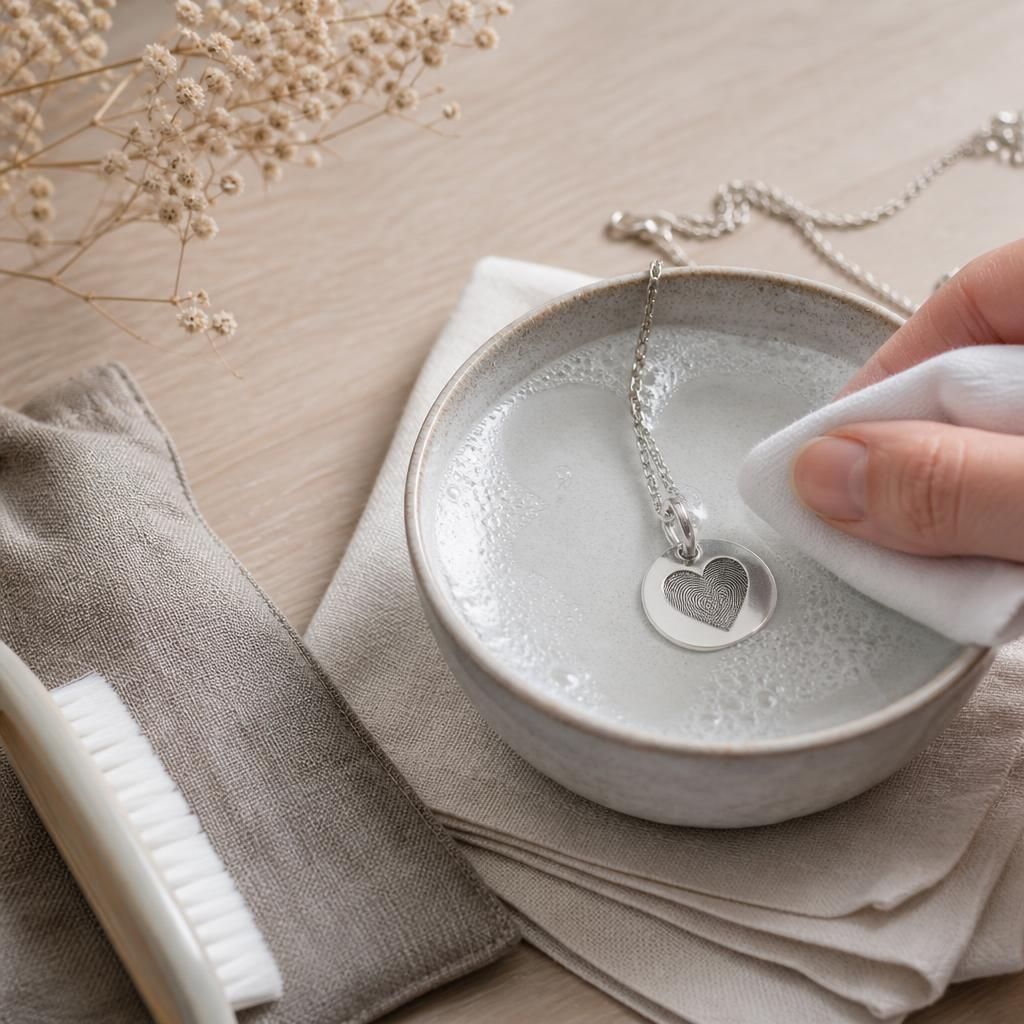
- Prepare a clean bowl with lukewarm water and add a small amount of mild, non-abrasive washing-up liquid.
- Place a soft cloth beneath the bowl or work over a secure surface so the necklace is less likely to be damaged if dropped.
- Dip a soft, lint-free cloth into the solution and gently wipe the pendant and chain. A very soft baby toothbrush can help loosen residue around lettering and the back of the pendant, but use minimal pressure.
- Do not force the brush into narrow gaps, weakened links or recently repaired areas. If dirt remains, repeat the gentle wiping rather than scrubbing.
- Remove soapy residue with a clean, lightly damp cloth. If the necklace is suitable for rinsing, rinse it briefly in lukewarm water while keeping it away from an open plughole.
- Pat the necklace dry with a soft lint-free cloth, then leave it flat on a dry cloth until all moisture has evaporated. Make sure water has not remained around the clasp, bail, engraving or gemstone settings before storing it.
- Avoid silver dips, abrasive cloths, toothpaste and baking soda, which can scratch the silver or remove an oxidised background used to make the personalisation stand out.
- Do not soak the necklace if it contains porous gemstones, enamel, glued elements or mixed materials.
- Dry it thoroughly, especially around the pendant loop, chain links and clasp, before storing it separately in a dry, lined pouch or jewellery box.
Need advice on caring for your restored necklace?
If you are unsure whether your restored personalised silver necklace can be polished, soaked or cleaned around its engraving, contact Steven Charles Quance for tailored aftercare advice. We can inspect the finish and restored areas before recommending the safest cleaning method.
Speak to your personal jeweller
Every commission begins with a conversation. Arrange an appointment in the Birmingham Jewellery Quarter or talk it through by phone.