
How does the restoration service handle personalised or unique jewellery pieces?
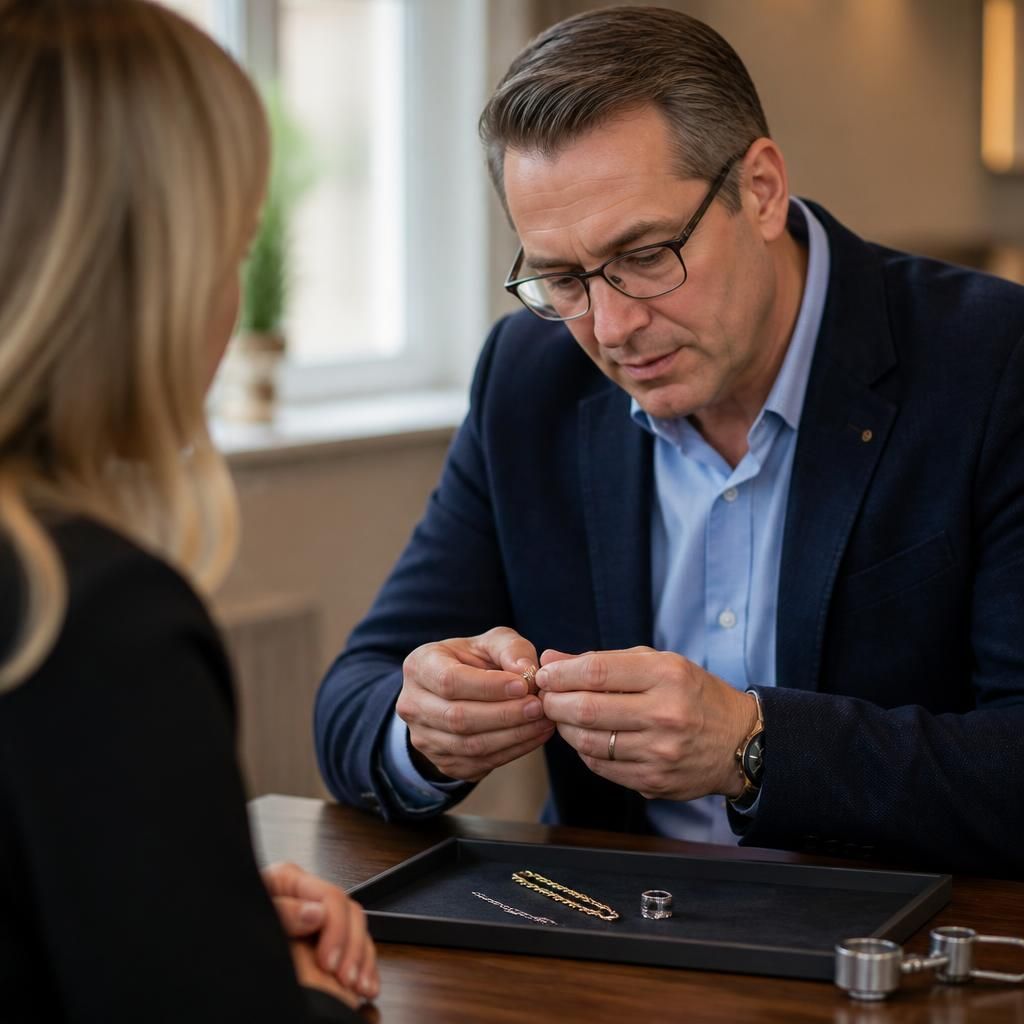
Personalised and unique jewellery is restored through an individual assessment of its materials, construction, stones and sentimental features before any work begins. We then recommend suitable repairs, remodelling or cleaning methods that preserve the original character while improving its condition, security and wearability.
Personalised and unique jewellery is handled as an individual restoration project rather than treated as a standard repair. The piece is assessed before work begins, with attention given to its materials, construction, gemstones, setting, engraving, finish and sentimental features. This allows the restoration approach to improve its condition and wearability while retaining as much of its original character as possible.
The assessment normally considers:
Where the jewellery has an unusual construction or includes a material that cannot be identified immediately, the details are discussed with you before any treatment is recommended. This is particularly important for antique, handmade or inherited pieces, where the original manufacturing methods may differ from modern jewellery techniques.
Following the assessment, suitable options may include repair, strengthening, stone-setting work, resizing, clasp or fitting replacement, cleaning, refinishing or remodelling. The recommended method depends on the structure and condition of the piece. For example, a worn ring may need its setting secured before it is polished, while a personalised pendant may require careful cleaning and finishing around an engraving rather than aggressive surface work that could soften its detail.
Preserving personal features is a central part of the process. Engraving is inspected before polishing or reshaping, and any work that could affect its depth or definition is considered carefully. If a repair must be made close to an inscription, stone or decorative element, the proposed approach is explained so that you can make an informed decision. Remodelling can also retain selected stones, metal or design features when the original item can no longer be worn safely in its existing form.
For jewellery containing gemstones, the stones and settings are checked before cleaning or repair. Loose, chipped or vulnerable stones may require specialist handling, and some treatments are unsuitable for particular gems, enhancements or settings. Cleaning is therefore selected according to the jewellery rather than applied as a universal process. The piece is inspected again after the work to confirm that stones, fittings and finishes are secure.
Before restoration begins, you can discuss the intended result, the features that must be preserved and any acceptable changes to the design. Where there is more than one practical solution, the differences between repair and remodelling are explained, including how each option may affect the appearance, strength, original material and future maintenance of the piece. Work should only proceed once the agreed approach is clear.
Some personalised jewellery cannot be returned to its exact original condition without risking further damage or removing evidence of its age. In these cases, the appropriate solution may be a sympathetic repair that leaves some wear visible, a discreet strengthening treatment, or a carefully planned redesign. The priority is to provide a durable result without disguising important character or making assumptions about what the piece means to you.
After restoration, practical aftercare advice is provided according to the jewellery’s construction and intended use. This may include removing the piece for activities that could cause impact or chemical exposure, checking settings periodically, storing it separately and arranging professional inspections when necessary. If the jewellery later needs resizing, repair, remodelling or valuation, its restoration history can help inform the next stage of care.
Bringing any relevant information about the piece is helpful, including its age, previous repairs, known materials, gemstone details, original packaging or photographs showing how it looked before damage. This does not replace the physical assessment, but it can help identify features that should be preserved and guide a more accurate restoration plan.
Personalised jewellery is assessed carefully before restoration so that engravings, initials, dates, fingerprints, unusual settings and other identifying details are not weakened or lost. Polishing, reshaping or repairs close to these features are planned around their condition and depth.
Where the original design cannot be restored safely, we explain the available options before work begins. A sympathetic repair may preserve visible age and character, while remodelling can retain suitable stones, metal or decorative elements in a safer, wearable design.
- the type and condition of the precious metal, including any plating, mixed metals or unusual alloy;
- the security, condition and suitability of gemstones, settings, claws, bezels and mounts;
- wear to the band, chain, clasp, hinges or other moving parts;
- personalised details such as engraving, fingerprints, initials, dates, motifs or incorporated family jewellery;
- evidence of previous repairs, alterations, resizing or remodelling; and
- areas that may be weakened by age, thinning, fatigue, damage or the way the piece is worn.
Discuss Your Unique Jewellery Restoration
Bring your personalised or unique jewellery to us for an individual restoration assessment, so we can discuss suitable repair, remodelling and preservation options before any work begins.
Speak to your personal jeweller
Every commission begins with a conversation. Arrange an appointment in the Birmingham Jewellery Quarter or talk it through by phone.