
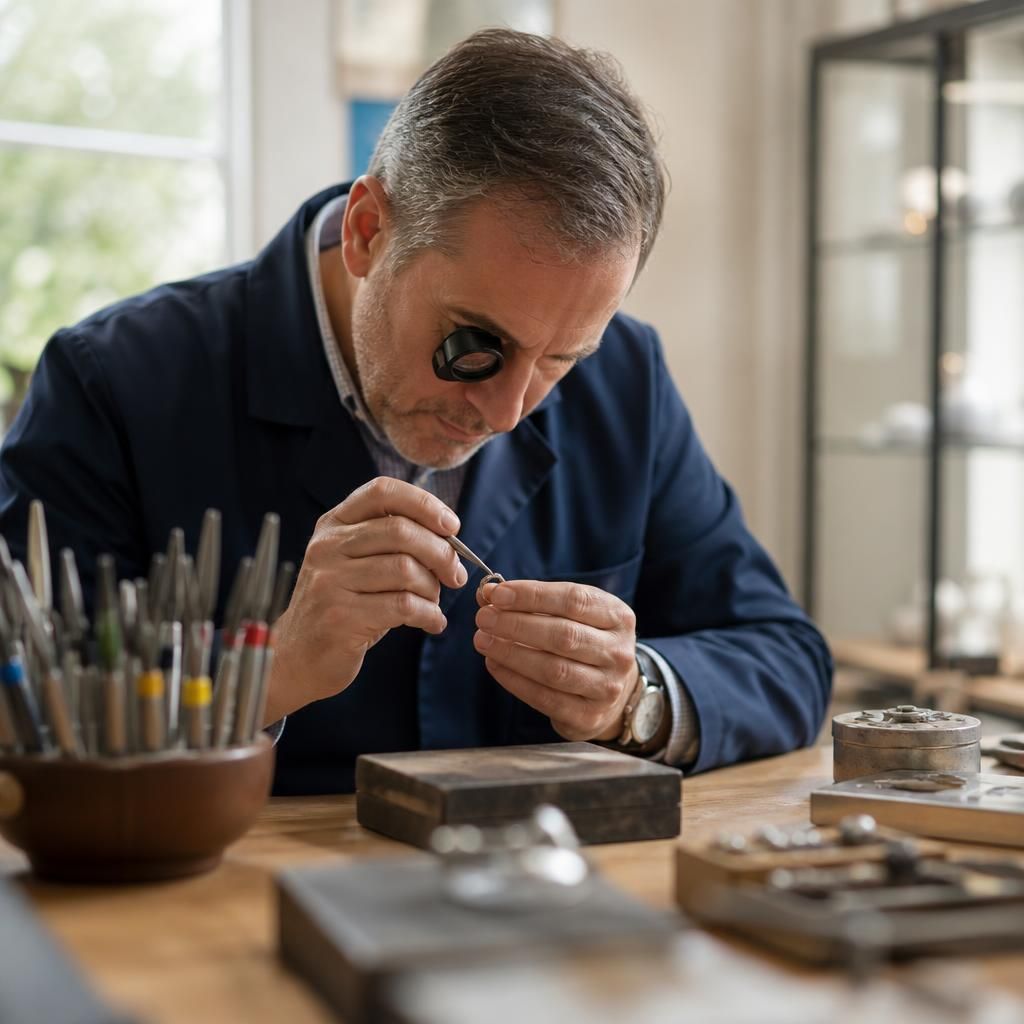
Have you confirmed the materials and techniques used in restoring or repairing your jewellery to ensure long-lasting results?
Yes. Before restoring or repairing your jewellery, confirm that the jeweller will use materials compatible with the original piece—such as suitable precious-metal alloys, secure settings and appropriate replacement components—and proven techniques that protect its structure, finish and gemstones for lasting results.
Yes. Confirming the materials and techniques planned for a repair or restoration is essential to achieving a durable result. The replacement metal, solder, setting components, gemstones, finishes and cleaning methods must be suitable for the jewellery’s original construction, age and condition. A repair should restore strength and function without unnecessarily altering the character, proportions or evidence of skilled workmanship in the piece.
Before work begins, the jeweller should inspect the item closely and explain what has been identified. This assessment normally includes the metal type and fineness, hallmarks, stone security, worn claws, thin sections, damaged joins, previous repairs and any areas affected by corrosion or impact. Personalised, antique or unusual jewellery may require additional care because its design, alloy or construction may not follow modern manufacturing methods.
Ask which materials will be used and why they are appropriate. Important points include:
The technique used should address the cause of the damage, not only its visible symptom. For example, a loose stone may need a setting rebuilt or claws replaced rather than merely tightened. A split ring may require damaged metal to be removed and a sound section accurately fitted. A worn hinge, catch or bracelet connection may need its alignment and load-bearing surfaces corrected so that the repair does not fail through repeated movement.
Different methods have different advantages. Traditional soldering can be appropriate for many repairs when heat can be controlled safely. Precision laser welding may be useful for localised work, delicate details or areas where limiting heat exposure is important. Hand fabrication, remodelling or carefully matched replacement sections may be preferable where a component is missing or the original structure is too thin to repair reliably. The jeweller should be able to explain the chosen method, its limitations and any effect it may have on the finish or originality of the piece.
Gemstones need particular consideration during restoration. Some stones tolerate heat and ultrasonic cleaning poorly, while others may have treatments, fractures or inclusions that increase their vulnerability. Pearls, opals, emeralds and certain treated or composite stones commonly require more cautious handling than durable, untreated gemstones. Confirm that stones will be assessed before cleaning or heating, and ask whether they will be removed, protected or worked around when necessary.
For valuable, inherited or heavily restored jewellery, request a written record of the agreed work. It should describe the condition before repair, the materials to be added, the techniques proposed, any risks, and the finish or colour expected afterwards. Photographs can also help record the setting, hallmarks, engraving and stone arrangement. If the piece has a valuation, insurance history or known provenance, retain those details so that the restoration does not create uncertainty about its identity or future value.
After completion, check that the jewellery has been inspected for secure settings, smooth joins, correctly operating catches and hinges, even finishing and any remaining movement. Ask about the recommended wearing, cleaning and inspection routine, as well as the terms of any guarantee or workmanship cover. Properly matched materials and appropriate techniques reduce avoidable deterioration, but regular professional checks remain important for rings and other pieces exposed to knocks, friction, moisture or frequent wear.
Material compatibility is central to a lasting jewellery repair. Replacement gold, platinum or silver should be matched as closely as practical to the original piece in colour, fineness and hardness. The solder or joining material must also suit the metal and be applied at a temperature that will not damage gemstones, enamel, pearls or previous repairs.
The technique should address the cause of the damage rather than conceal its visible symptom. A loose stone may require worn claws or a setting to be rebuilt, while a split shank may need a sound section of matching metal fitted into place. Before work begins, ask which materials and techniques are proposed, why they are suitable, and how the finished piece will be checked for secure settings, smooth joins and an even finish.
- Precious-metal compatibility: replacement gold, platinum, silver or other components should match the original metal as closely as practical in colour, fineness, hardness and working properties. Mixing unsuitable alloys can produce visible colour differences, weak joins or accelerated wear.
- Solder and joining materials: the solder should be suitable for the metal and strong enough for its position. Its melting temperature must also be managed carefully, particularly around heat-sensitive gemstones, enamel, pearls or previous repairs.
- Replacement stones and settings: a replacement gemstone should be correctly sized, securely held and appropriate for the way the jewellery will be worn. Claws, bezels, hinges and other setting components must provide adequate support rather than simply improve the appearance.
- Finishing materials: polishing, plating, texturing or re-graining should be selected to match the original surface. Excessive polishing can remove detail, soften engraving and reduce the definition of a vintage design.
Discuss Your Jewellery Repair Materials and Techniques
Discuss the proposed materials and repair techniques with our jewellery experts before work begins, so your piece receives a suitable, durable restoration. Contact Steven Charles Quance to arrange a jewellery repair consultation.
Speak to your personal jeweller
Every commission begins with a conversation. Arrange an appointment in the Birmingham Jewellery Quarter or talk it through by phone.