
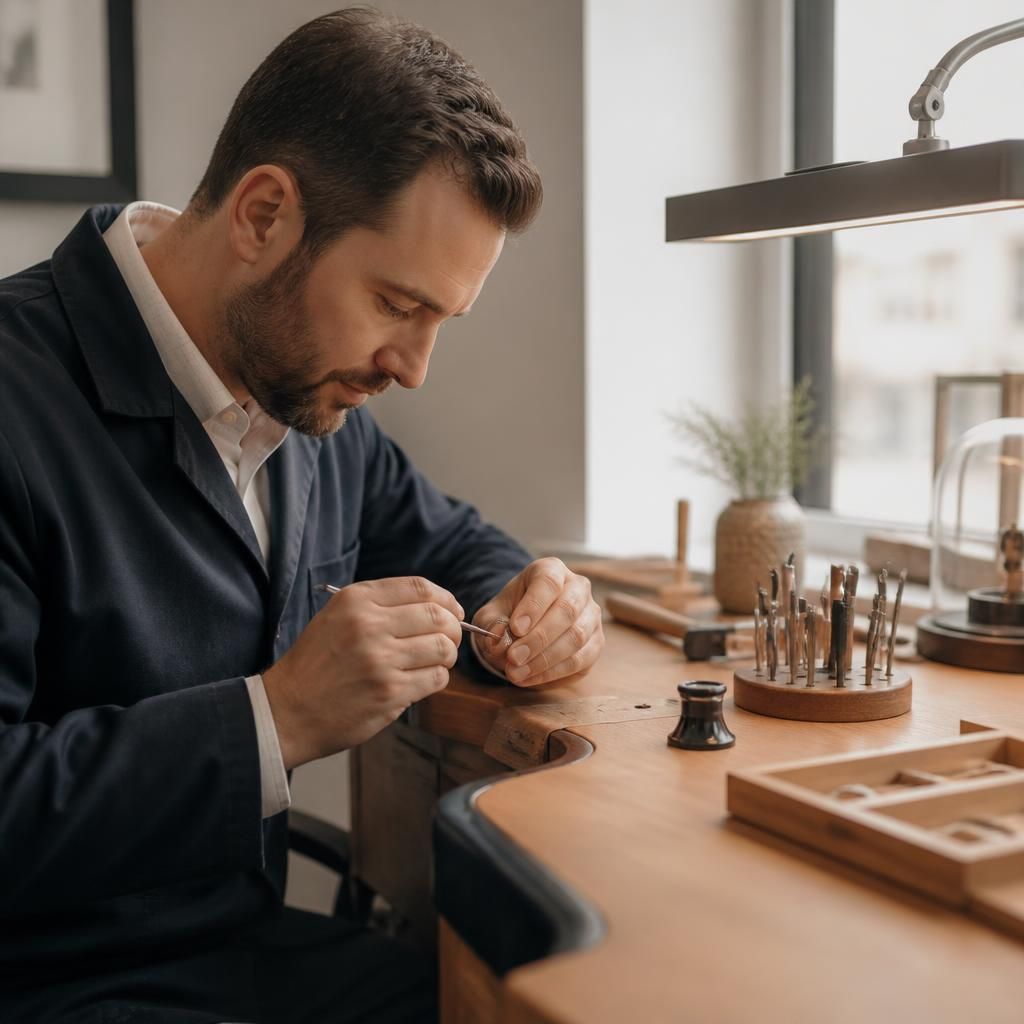
How can I maintain my jewellery post-repair in Birmingham?
Maintain jewellery after repair by following the care advice provided, removing it before bathing, swimming, exercising or using household chemicals, and storing it separately in a clean, dry, fabric-lined box. Check repaired areas and stone settings regularly for movement or damage, and arrange a professional inspection if anything feels loose, catches on clothing or shows signs of wear.
To maintain jewellery after repair in Birmingham, follow the care instructions provided at collection, protect the repaired area from impact and chemicals, store each piece separately, and arrange a professional inspection if you notice movement, catching, discolouration or any other change. A repair restores the structure or appearance of a piece, but regular wear can still place stress on soldered joints, claws, chains, hinges and settings.
Follow the repair-specific advice first
Different repairs require different aftercare. A ring that has been resized may need particular care around the newly joined section, while a piece that has had a stone reset should be checked for movement in the setting. If a chain, clasp, hinge or delicate link has been repaired, avoid pulling or twisting it until you are confident that it is operating normally.
Keep any written care guidance supplied with the repair. If you are unsure whether a piece is ready for everyday wear, contact us before putting it under additional strain. This is particularly important for valuable, antique, handmade or intricately set jewellery.
Remove jewellery before activities that can cause damage
Put jewellery on after applying creams, perfume and hairspray, allowing products to dry first. Rinse and dry the skin before wearing a repaired piece again if it has been exposed to perspiration, salt water or cosmetic products.
Clean it gently
Use a soft, lint-free cloth to remove surface oils and moisture after wear. For many solid gold or platinum pieces without vulnerable stones, gentle cleaning with lukewarm water and a small amount of mild washing-up liquid may be suitable. Rinse thoroughly and pat dry rather than rubbing repaired joints or settings vigorously.
Do not use abrasive cloths, powders, household cleaners or unapproved polishing compounds. Avoid ultrasonic or steam cleaning unless a professional has confirmed that it is suitable. These methods can be unsuitable for some gemstones, treated stones, antique jewellery, plated finishes, loose settings and pieces containing delicate construction. Pearls, opals, emeralds and other porous or more fragile materials usually need especially cautious care.
Store each item separately
Keep jewellery in a clean, dry, fabric-lined jewellery box or pouch. Separate chains, rings, earrings and bracelets so that they cannot rub together, tangle or scratch one another. Fasten clasps before storage and lay chains flat where possible. Avoid leaving jewellery loose in a bathroom, as humidity and changing temperatures can contribute to tarnishing and may affect some materials.
Store repaired items away from direct sunlight, excessive heat and damp conditions. If a piece has a soft stone, enamel, delicate finish or antique construction, use individual compartments and avoid placing anything heavy on top of it.
Check repaired areas regularly
Inspect the jewellery in good light during normal cleaning. Look for a gap or crack in a ring, a visible join, a bent claw, a loose stone, a stretched link, a worn clasp or a hinge that no longer closes correctly. Check that earrings remain secure and that the backs fit properly. On rings, gently feel around the setting and shoulders for sharp edges or changes in shape.
Stop wearing the item and arrange professional advice if a stone moves, the piece catches on clothing, a clasp opens without resistance, a repaired area feels sharp or the metal appears distorted. Do not try to tighten claws, bend metal or repair a clasp at home, as this can worsen the damage or result in a lost stone.
Allow for regular professional checks
Cleaning can reveal wear that is not obvious when jewellery is covered by oils or residue. A professional inspection can assess settings, joins, clasps, links, hinges and areas that receive repeated friction. The appropriate timing depends on the design, materials, frequency of wear and type of repair. High-wear items such as engagement rings and wedding rings may benefit from checks as part of routine aftercare, particularly before travel or important occasions.
Bring the piece back for assessment if it has suffered an impact, has been exposed to chemicals, or has been caught on clothing. Keep records of any repair, valuation or care recommendation, especially for high-value jewellery and items covered by insurance. A current valuation may also be appropriate when the piece has been substantially remodelled or its condition has changed.
Special considerations for watches and delicate jewellery
Keep a repaired or serviced watch away from water unless its water resistance has been specifically confirmed. Water resistance is not permanent and can be affected by age, impact, worn seals or work carried out on the case. Do not operate the crown or pushers while the watch is wet, and arrange an inspection if condensation appears beneath the crystal.
For vintage jewellery, handmade pieces and designs with fine settings, accept that normal wear may require closer monitoring. Their construction, previous repairs and materials can make them more sensitive to pressure, cleaning methods and temperature changes. Professional guidance is preferable to general-purpose cleaning advice when the piece has unusual stones, antique finishes or significant sentimental or financial value.
If you are uncertain how to care for a repaired item, contact Steven Charles Quance for advice before cleaning or wearing it in demanding conditions. Describing the repair and the way the jewellery is worn helps determine whether it needs simple cleaning guidance, an inspection, adjustment or further repair.
Maintaining jewellery after repair means protecting the repaired area from impact, chemicals and unnecessary strain, while checking regularly for signs of movement or wear. Remove the piece before swimming, exercising, sleeping, bathing or using household products, and store it separately in a clean, dry, fabric-lined box.
Inspect repaired joins, clasps, chains and stone settings in good light. Stop wearing the jewellery if a stone moves, a clasp opens unexpectedly, a join feels sharp or the piece catches on clothing. Do not attempt to bend metal or tighten settings yourself; contact Steven Charles Quance for professional advice and any required aftercare.
- Take rings, bracelets, necklaces and earrings off before bathing, swimming, exercising or carrying out household cleaning.
- Keep jewellery away from bleach, chlorine, detergents, solvents, hairspray, perfume and other cosmetic products. These substances may affect precious metals, plating, finishes, soldered areas or gemstones.
- Remove rings before lifting heavy objects or doing practical work, as pressure can distort the band or catch and loosen a setting.
- Do not wear repaired pieces while sleeping if the movement or pressure could stress a chain, clasp, stone setting or delicate mount.
Need advice after your jewellery repair?
If you need advice about caring for a repaired piece, contact Steven Charles Quance before cleaning it or wearing it in demanding conditions. We can assess the jewellery and recommend appropriate aftercare, adjustment or further repair.
Speak to your personal jeweller
Every commission begins with a conversation. Arrange an appointment in the Birmingham Jewellery Quarter or talk it through by phone.