
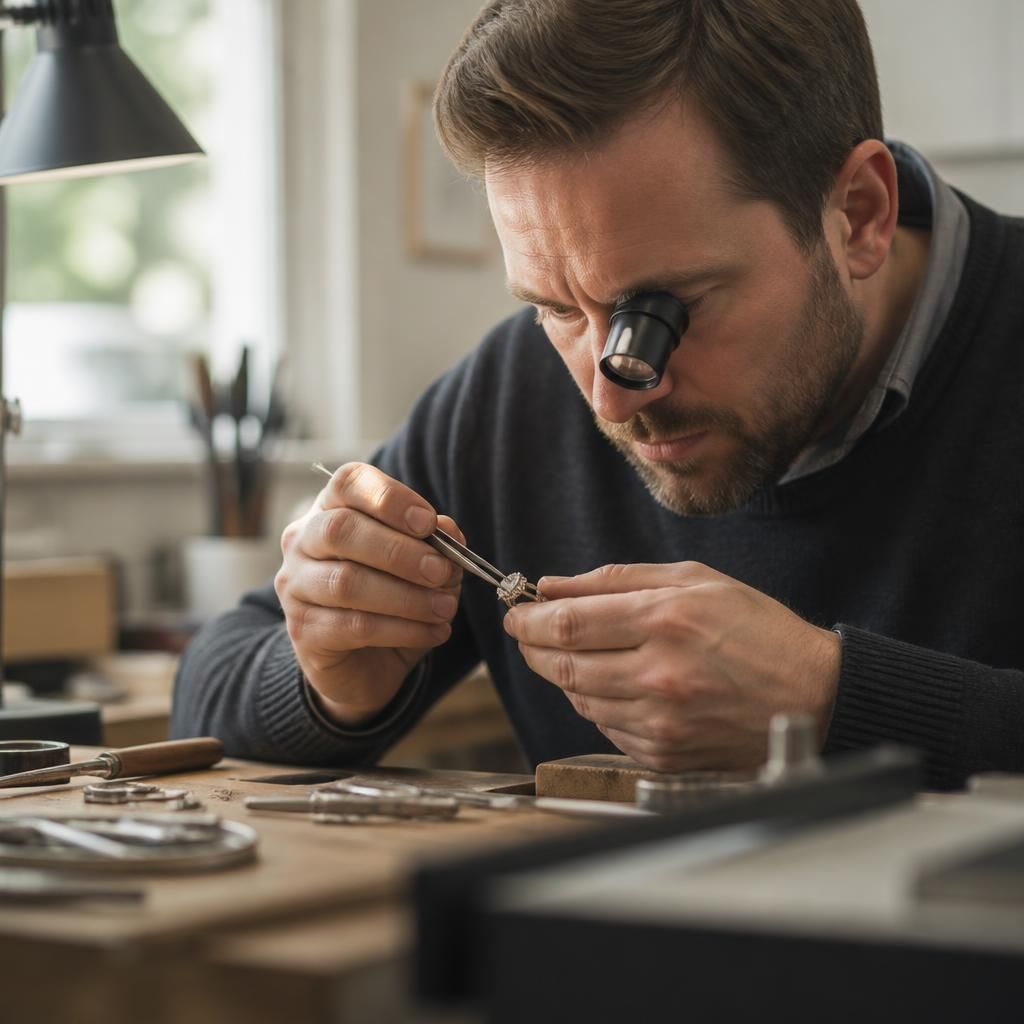
Are you aware of the specific techniques and expertise required for repairing different types of jewellery, such as vintage pieces or those with intricate settings?
Yes. Vintage jewellery and pieces with intricate settings require specialist assessment and careful techniques, such as matching period finishes, preserving delicate construction, rebuilding worn claws and securing stones without disturbing neighbouring settings.
Yes. Different jewellery types require different repair methods, and vintage pieces or designs with intricate settings need particularly careful assessment before any work begins. The repairer must identify the metal, construction method, gemstone characteristics, previous alterations and areas of weakness before selecting techniques such as hand-finishing, soldering, laser welding, claw rebuilding or stone resetting.
Assessment comes before repair. A detailed inspection establishes whether the item needs a straightforward repair, sympathetic restoration or more substantial rebuilding. This may include checking for worn claws, loose stones, thinning shanks, fractured solder joints, stretched links, damaged hinges and evidence of earlier repairs. Gemstones are also examined for chips, fractures, treatments and sensitivity to heat. Photographs and a written description can be useful for valuable or sentimental pieces, particularly where preserving the original condition is important.
Vintage and antique jewellery requires a sympathetic approach. Older pieces may have hand-cut stones, fine wires, unusual joints or construction methods that differ from modern jewellery. Their surface marks and patination can form part of their character, so indiscriminate polishing may remove detail or alter the appearance. Restoration should normally aim to retain as much original material and design as possible while making the piece secure and wearable. A replacement component may need to be shaped by hand and finished to blend with the existing work rather than appearing newly manufactured.
Matching the metal and finish is also important. Gold, platinum and silver behave differently when heated, filed or polished, and an alloy may not match the colour or hardness of an older piece. A careful repairer considers the appropriate solder, wire or sheet, then blends the repair through controlled filing, burnishing and polishing. Where an aged finish is part of the design, the final surface may need to be toned or lightly textured rather than brought to a completely bright, modern polish.
Intricate settings demand precision and control. In pavé, halo, channel and millegrain settings, stones may be held by very small beads, rails or shared claws. Removing or replacing one stone can put pressure on its neighbours, particularly if the surrounding metal has become thin. The setting is checked under magnification, damaged beads or claws are rebuilt where necessary, and the stones are secured without disturbing sound adjacent work. After repair, each stone should be checked for movement and the setting examined for sharp edges that could catch on clothing.
Claw work is one of the most common specialist repairs. If a claw is worn but the surrounding setting remains sound, it may be possible to rebuild or replace the worn section with matching metal. If several claws are worn, simply tightening them may not provide a durable solution; the setting itself may need strengthening or reconstruction. The correct method depends on the amount of remaining metal, the stone shape, the setting design and the way the jewellery is worn.
Heat-sensitive materials need additional precautions. Pearls, opals, emeralds, some treated gemstones and materials such as enamel may be vulnerable to heat, sudden temperature changes, chemicals or impact. Where possible, stones are removed before soldering or other heated work. If removal could cause greater risk, the repair method must be reconsidered and protective measures used. In some cases, a low-temperature or cold-working technique is more appropriate than conventional soldering.
Laser welding can be useful for some fine repairs because it allows highly localised work with less surrounding heat than traditional soldering. It is not suitable for every item, however. The choice depends on the metal, thickness, accessibility, finish and the strength required at the repaired area. Traditional soldering, hand-fabrication or a combination of methods may be more appropriate for other designs.
Repair and restoration are not always the same. Repair usually focuses on making a piece secure and functional, such as replacing a worn catch or tightening a loose stone. Restoration may involve recreating missing detail, correcting previous alterations or matching an historic finish. For a vintage item, the proposed result should be discussed in advance: preserving visible age, returning the piece to an earlier appearance and adapting it for regular wear can lead to different recommendations.
High-value, unusual or heavily worn jewellery may need a staged approach. The initial examination identifies risks and records the condition. The proposed work can then be agreed before any irreversible alteration is made. If a stone, hallmark, engraving or unusual construction feature could be affected, this should be explained clearly. A valuation may also be appropriate before repair, particularly where the piece has significant monetary or insurance importance.
After specialist work, the jewellery should be checked for secure settings, smooth edges, sound joins and correct operation of catches, hinges or articulated sections. Ask for practical aftercare advice suited to the item rather than relying on a general cleaning routine. Vintage jewellery and intricate settings should be inspected periodically, kept away from harsh chemicals and removed for activities that expose them to impact, heat or excessive moisture.
The most suitable repair service is therefore one that can distinguish between construction types, understand gemstone and metal behaviour, and explain the risks and options before proceeding. For vintage pieces and intricate settings, careful diagnosis and controlled craftsmanship are as important as the repair technique itself.
Repairing vintage jewellery is a process of sympathetic restoration: the aim is to make the piece secure and wearable while preserving its original design, materials and character. Older jewellery may contain hand-cut gemstones, fine wirework, unusual joints or an aged surface that can be damaged by modern polishing or unsuitable heat.
A careful repair begins with examining the construction, metal, gemstones and any previous alterations. Worn claws may be rebuilt with matching metal, while missing decorative details may need to be shaped and finished by hand so they blend with the original work. If a stone is heat-sensitive or the setting is particularly delicate, the repairer may remove the stone or choose a lower-heat technique. The proposed work should be agreed before any irreversible changes are made, especially where hallmarks, engraving or historic details are important.
- Pearls: require protection from heat, chemicals and abrasion. Their drill holes, nacre and thread or wire mounting should be inspected rather than assuming that restringing alone will solve the problem.
- Opals and emeralds: may contain natural features or treatments that affect how they respond to heat and pressure. Setting work must be carried out cautiously.
- Enamel: can chip or discolour if exposed to unsuitable heat, tools or cleaning methods, so repairs near enamel require controlled handling.
- Delicate chains and mesh: often need individual links, end caps or catches repaired without flattening the structure or creating a visible heavy joint.
Discuss Your Vintage or Intricate Jewellery Repair
Discuss your vintage or intricately set jewellery with our team before any repair work begins, so we can assess its construction, gemstones and condition. We will explain the suitable repair or restoration options and any precautions needed to preserve its original character.
Speak to your personal jeweller
Every commission begins with a conversation. Arrange an appointment in the Birmingham Jewellery Quarter or talk it through by phone.