
What is the process for jewellery repair assessments?
A jewellery repair assessment involves a careful inspection of the piece to identify the damage, assess the condition of the materials and stones, and determine the safest repair method. You will then receive a clear explanation of the recommended work, expected timescale and quotation before any repair begins.
A jewellery repair assessment is a structured inspection carried out before any work begins. It establishes what is damaged, whether the surrounding materials and gemstones are secure, which repair method is appropriate, and whether the proposed work is practical and proportionate to the piece. You should receive an explanation of the findings, an expected timescale and a quotation before the repair is authorised.
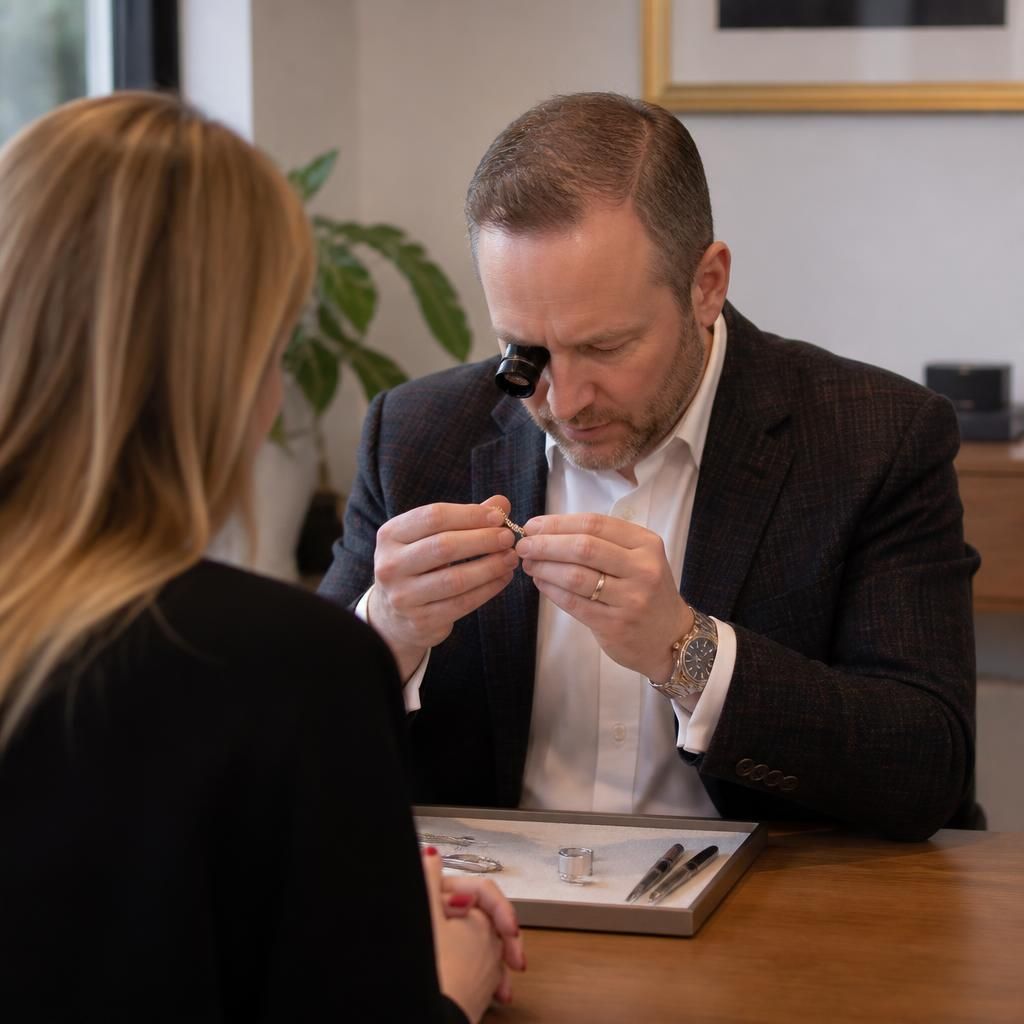
The assessment usually begins with a visual inspection under magnification. The jeweller checks the condition of the metal, settings, claws, hinges, clasps, links, solder joins and any moving parts. Gemstones are examined for chips, fractures, looseness and signs that they may have been affected by the original damage. The piece is also checked for previous repairs, thinning caused by wear, distortion or other weaknesses that could affect the safety and durability of the proposed work.
This wider inspection is important because the visible fault is not always the only issue. For example, a loose stone may be caused by worn claws or a distorted setting, while a broken chain may have weakened links elsewhere. Repairing only the obvious break could leave the piece vulnerable to further damage. Where appropriate, the jeweller will point out related work that may be advisable, while distinguishing essential repairs from preventative or cosmetic improvements.
The assessment considers several practical factors:
After inspection, the jeweller explains the recommended repair in clear terms. This may involve soldering or laser work, replacing a component, rebuilding a setting, retipping claws, securing a stone, reshaping a band, replacing a clasp or carrying out a careful clean and polish. If there is more than one suitable approach, the options should be compared by durability, appearance, cost and effect on the original design.
A quotation is then prepared from the condition of the piece and the work identified during the assessment. Some repairs can be priced immediately, whereas a more complex item may need closer examination, consultation with a specialist or partial dismantling before the full condition is known. If dismantling could reveal additional damage or change the cost, this should be explained before that step is taken. No repair should proceed without your approval of the proposed work and price.
The assessment also helps establish a realistic turnaround time. Straightforward repairs may be completed more quickly than work involving specialist techniques, replacement parts, gemstone setting, hand engraving or several stages of finishing. The availability of a suitable component, the need to match an existing design and the condition of the piece can all affect the timescale. If a repair is needed by a particular date, mention this during the assessment so the available options can be discussed honestly.
Before leaving the item, it is sensible to confirm what has been recorded. The description should identify the piece and its visible condition, including notable marks, stones and existing damage. If the item has a valuation, insurance requirement or particularly high monetary or sentimental value, tell the jeweller so the handling, documentation and recommended work can be considered accordingly.
Once you approve the quotation, the repair is carried out using the agreed method. On completion, the piece should be checked again for security, movement, alignment and finish. Gemstones and settings should be inspected, and any cleaning or polishing should be appropriate for the materials and surface treatment. The completed item should be returned with advice about wear, storage and any future checks that may help prevent a repeat problem.
To make an assessment as useful as possible, bring any relevant information about the piece, such as previous repair details, valuation documents or a warranty. Explain how the damage occurred and whether the item has a particular deadline or must retain a specific original feature. Do not attempt to straighten, glue or tighten the jewellery yourself, as an improvised repair can make professional restoration more difficult and may increase the risk to gemstones or delicate components.
A careful assessment therefore does more than identify a break. It separates the immediate fault from underlying wear, protects stones and valuable materials, provides a basis for an informed decision and helps set an achievable repair schedule. If the recommended work changes after a closer examination, you should be contacted and given the opportunity to approve any revised cost or method before additional work is undertaken.
A jewellery repair assessment is an inspection that identifies both the visible fault and any underlying weakness before a repair is approved. The jeweller examines the metal, settings, gemstones and moving parts under magnification, as repairing only the obvious break may leave the piece vulnerable to further damage.
For example, a loose gemstone may be caused by worn claws or a distorted setting, while a broken chain may have weakened links nearby. The assessment determines whether the repair should involve reshaping, soldering, replacing a component or securing the setting, and whether additional work is essential or simply advisable.
Once the inspection is complete, you should receive a clear explanation of the recommended method, quotation and expected turnaround time. If closer examination reveals further damage or changes the proposed cost, no additional work should proceed without your approval.
- Materials: Gold, platinum, silver and other metals respond differently to heat, soldering, polishing and reshaping.
- Construction: A handmade, hollow, textured, plated or intricate piece may require a different technique from a simple solid design.
- Gemstones: Some stones are more sensitive to heat, pressure or chemicals, so the setting may need to be removed or protected before work.
- Previous work: Earlier repairs, resizing or alterations can affect the strength of the metal and the available repair options.
- Finish: Polishing, engraving, plating, rhodium finishing or matching a particular texture may add work after the structural repair is complete.
- Value and significance: Valuable, antique or sentimental pieces may require a particularly conservative approach to preserve their original features.
Book Your Jewellery Repair Assessment
Book your jewellery repair assessment with Steven Charles Quance for a careful inspection, clear repair advice and a quotation before any work begins.
Speak to your personal jeweller
Every commission begins with a conversation. Arrange an appointment in the Birmingham Jewellery Quarter or talk it through by phone.