
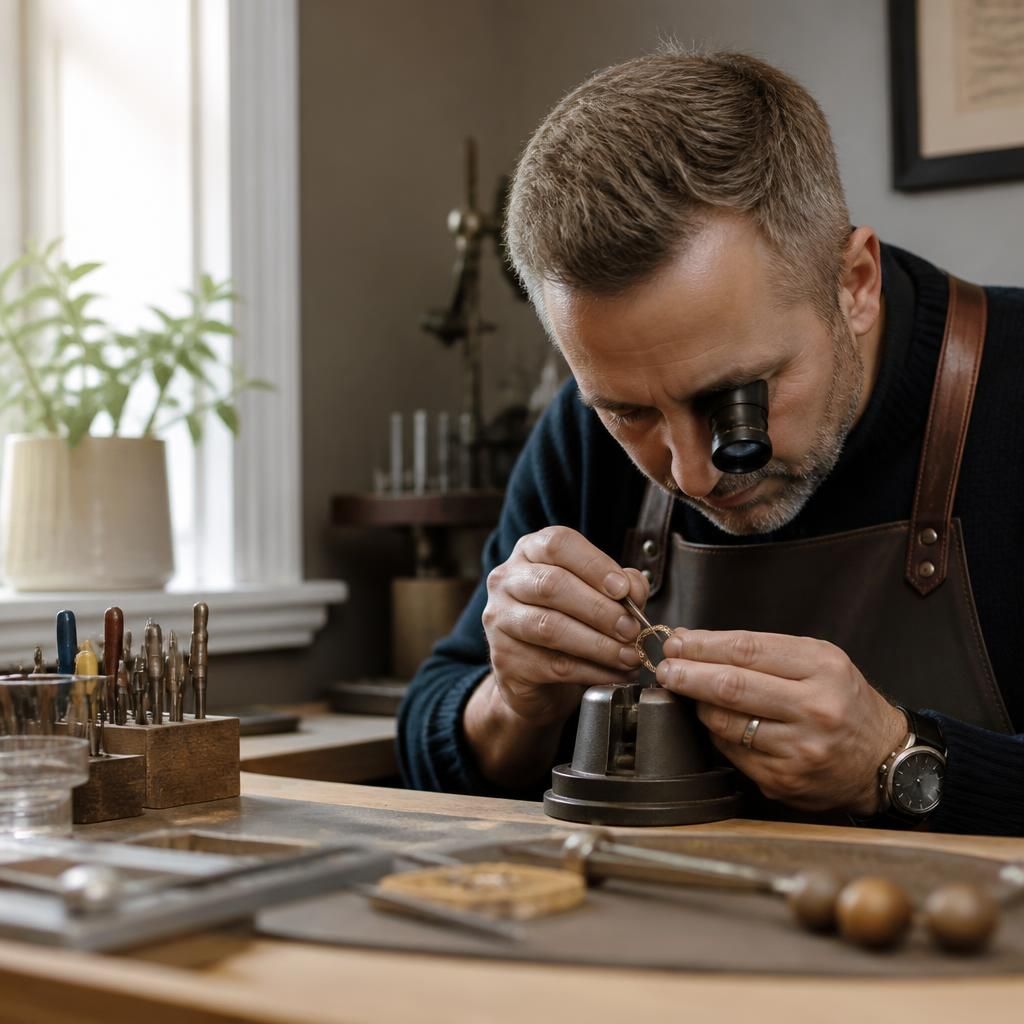
What are the common types of jewellery repairs and how does each affect the completion time?
Common jewellery repairs include ring resizing, chain and clasp repairs, stone replacement or resetting, soldering, polishing and remodelling. Completion time depends on the repair’s complexity, the jewellery’s metal and gemstones, whether specialist parts or techniques are required, and the condition of the piece after assessment.
Common jewellery repairs include ring resizing, chain and clasp repairs, stone replacement or resetting, soldering, polishing, and remodelling. Their completion times vary because each repair involves different levels of workshop work, risk and specialist skill. Straightforward repairs may be completed relatively quickly, while work involving gemstones, intricate settings, unusual metals or substantial damage usually requires more assessment and careful preparation.
The completion time confirmed after assessment is more reliable than an estimate based on the repair description alone. A jeweller needs to inspect the piece for hidden damage, check the condition of the metal and settings, confirm the intended result and establish whether materials or specialist processes are required.
Ring resizing
Ring resizing is one of the most common jewellery repairs. Making a plain gold or platinum band larger or smaller is generally more straightforward when the design is unbroken and free from gemstones. The jeweller normally cuts the shank, adds or removes metal, reshapes the ring and finishes the join so that it is secure and difficult to see.
A ring with a simple design may have a shorter completion time than one with stones, engraving or a patterned surface. Eternity-style rings, for example, may need careful consideration because altering the band can affect the position and security of multiple stones. Rings with settings close to the area being altered may also require additional inspection and adjustment. If the ring is significantly worn, has previous repair work or is made from a less familiar alloy, further preparation may be necessary.
Chain, bracelet and clasp repairs
Broken chains and bracelets are commonly repaired by rebuilding a damaged link, replacing a worn clasp, closing a split ring or soldering a weakened section. A small break in an otherwise sound chain can often be dealt with efficiently. However, a chain that has stretched, become very thin or suffered damage in several places may need more extensive work.
Clasp replacement can be relatively quick when a suitable component is readily available and matches the item. Completion may take longer if the clasp is an unusual size, has to be specially sourced or needs to be matched to the existing metal and style. Heavier bracelets and intricate links also require careful testing, as a repair must withstand normal movement without creating a stiff or conspicuous section.
Stone replacement and gemstone resetting
Replacing a missing, chipped or damaged stone can involve more than finding a visually similar gemstone. The replacement must be suitable in size, shape, colour, durability and setting. The jeweller also needs to check whether the existing setting has been bent, worn or damaged by the original loss.
If a suitable stone is available and the setting is sound, the work may progress without extensive delay. A longer completion time is more likely when a stone must be sourced, cut to a particular shape or matched closely to surrounding gemstones. Resetting may require rebuilding claws, adjusting a bezel or repairing the surrounding metal before the stone can be secured. Once the repair is complete, the setting should be checked carefully to ensure the stone is held safely.
Claw, bezel and setting repairs
Worn claws, loose bezels and damaged settings should be treated as important structural repairs rather than cosmetic faults. A jeweller may retip or replace claws, tighten a setting, rebuild part of the mount or replace a worn section of metal. The work can be relatively limited when one claw has minor wear, but a mount with widespread thinning or movement may need more comprehensive attention.
These repairs can take longer because the stone must be protected while the surrounding metal is worked. In some cases, the gemstone needs to be removed before repair and securely reset afterwards. The final inspection is particularly important because the setting must be checked from different angles and under appropriate magnification.
Soldering and broken joints
Soldering joins or reconnects metal components, including jump rings, chain links, ring shoulders and parts of brooches. The time required depends on the accessibility of the break, the thickness of the metal and whether gemstones are close to the repair area.
A clean break in a plain piece may be comparatively quick to prepare and finish. Distorted, fractured or previously repaired metal may need to be stabilised or rebuilt first. Heat-sensitive gemstones and certain finishes require additional protection, and some pieces may be better repaired with a method other than conventional soldering. After joining, the area must be filed, shaped and polished so the repair is both secure and visually consistent.
Polishing, cleaning and surface restoration
Professional cleaning and polishing are often among the simpler services, particularly when the jewellery only has light surface marks and no structural damage. The process can restore brightness and remove everyday residue, although it does not remove deep scratches or significant dents without taking away some metal.
Heavily scratched, matt or worn jewellery may require more involved surface restoration. This can include removing dents, re-establishing edges, refining a textured finish or restoring a particular satin or high-polish appearance. Plated jewellery may need its surface coating renewed rather than simply polished. Pieces with gemstones, delicate engraving or intentional antique wear must be treated carefully to avoid changing their character.
Engraving and finish restoration
Re-engraving, adding an inscription or restoring a worn pattern may be completed alongside another repair, but it can extend the overall turnaround. The jeweller needs to match the lettering or design to the original and ensure that the surface is sufficiently sound for the work. Hand engraving and unusual motifs generally require more preparation than a standard finish.
Jewellery remodelling and substantial restoration
Remodelling is usually one of the longer repair options because it involves redesigning or substantially changing an existing piece. This may include reusing gemstones in a new setting, combining elements from several items, converting a brooch into a pendant or creating a new ring from an inherited piece.
The process can involve consultation, design approval, measuring, gemstone assessment, sourcing additional materials, making the new component and completing detailed finishing work. The original metal may also need testing and refining before it can be reused. Remodelling should therefore be considered a project rather than a simple repair, with the completion time agreed after the design and materials have been confirmed.
How the material affects completion time
Gold, platinum, silver and other jewellery metals behave differently during cutting, soldering, shaping and finishing. The colour and alloy also need to be considered when adding metal or replacing a component, so that the repaired area is compatible with the original piece. Platinum work, mixed-metal designs and unusual alloys may require particular workshop processes.
Gemstones also influence the method and timing. Some stones are more sensitive to heat, impact or sudden temperature changes than others. A jeweller may need to remove a stone before carrying out work, use protective techniques or choose a cold-working method. Antique, fragile or heavily worn jewellery may need a more conservative approach to preserve the original material.
Why the initial estimate may change
Assessment, repair and final checks
A typical repair process starts with an inspection and a record of the jewellery’s condition. The proposed work, materials, likely completion time and any limitations should be explained before the repair is authorised. The piece is then prepared, repaired and finished, followed by checks for security, alignment, movement, surface quality and cleanliness.
The final checks can be especially important for rings, bracelets and gemstone settings because these items are exposed to regular movement and contact. A repair should not be considered complete until the jewellery has been examined for both appearance and structural integrity.
What to expect when requesting a completion time
For a straightforward repair, ask whether the work can be completed during the standard workshop schedule or whether a shorter service is available. More complex work should not be rushed if doing so could compromise the setting, finish or long-term durability. If the jewellery is needed for a particular date, mention this at the assessment so the available options can be considered before work begins.
Where the repair involves a valuable gemstone, delicate construction or an important sentimental piece, the safest completion time is the one that allows proper assessment, skilled workmanship and thorough final inspection. A clear estimate can then be provided based on the actual condition and requirements of the jewellery, rather than on the type of repair alone.
The completion time for a jewellery repair is confirmed after assessment because the visible fault may not reveal the full extent of the damage. A loose stone, for example, may also involve worn claws or thinning metal. The jeweller will inspect the construction, gemstones, previous repairs and required materials before recommending the safest method and providing a reliable completion estimate.
Straightforward work on sound jewellery can usually follow the standard workshop schedule. Repairs involving delicate settings, unusual materials, replacement stones or remodelling require more preparation and careful final checks, so they may take longer. This assessment-led approach helps protect the jewellery’s condition and ensures the finished repair is secure as well as visually consistent.
- The visible fault may not be the only problem. A loose stone may be linked to worn claws, a stretched setting or thinning metal.
- Previous repairs can affect how safely the piece can be opened, reshaped or soldered.
- A required gemstone, clasp, chain section or matching metal may need to be sourced before work begins.
- Some repairs need a specialist technique, hand engraving, stone cutting or workshop equipment.
- Design approval or confirmation of the replacement material may be required before the repair can proceed.
- Items with sentimental, antique or unusual construction may need extra inspection to avoid irreversible damage.
Arrange Your Jewellery Repair Assessment
Arrange your jewellery repair assessment with Steven Charles Quance so we can inspect the piece, confirm the required work and provide a reliable completion estimate.
Speak to your personal jeweller
Every commission begins with a conversation. Arrange an appointment in the Birmingham Jewellery Quarter or talk it through by phone.