
How does resizing a gold ring affect its value and structural integrity?
Resizing a gold ring usually has little effect on its intrinsic or resale value, although removing or adding gold, altering a distinctive design, or leaving visible marks can affect its worth. When carried out by an experienced jeweller using the correct method, resizing should preserve the ring’s structural integrity; poor workmanship or excessive alterations can weaken the shank, settings or soldered joints.
Resizing a gold ring normally has little effect on its intrinsic gold value or resale value, provided the work is proportionate to the design and completed by an experienced jeweller. Its structural integrity should also be preserved when the correct resizing method is used. However, removing or adding gold, altering a distinctive design, disturbing a setting or leaving weak or visible joins can affect both the ring’s value and its long-term durability.
How resizing affects value
A gold ring’s intrinsic value is primarily linked to the purity, weight and condition of the gold, together with any gemstones and the quality or desirability of the design. A small adjustment to the size does not usually change these factors significantly. The ring remains the same piece, and professional finishing should make the alteration discreet.
Resizing down may involve removing a section of the shank before joining and refinishing it. This can slightly reduce the weight of gold. Resizing up may involve stretching the metal for a limited adjustment or inserting a carefully matched section of gold. An added section can increase the weight, but the value of the additional material is not necessarily equal to the full cost of the workmanship. Resizing costs reflect inspection, skill, tools, finishing and any associated stone or setting work, not simply the price of the gold used.
Resale value can be affected if the alteration changes an important feature of the ring. This may include an original hallmark area, engraved inscription, patterned shoulder, engraving, milgrain edge or other defining detail. On a valuable antique, vintage or designer ring, preserving originality may be more important than achieving the simplest possible size adjustment. A ring that has been poorly resized, shows a prominent seam or has lost part of its original design may be less desirable to a future buyer.
Sentimental value is separate from financial value. Resizing does not normally reduce the meaning of a ring, but an important inscription or decorative detail should be identified before work begins so it can be protected, removed and restored, or incorporated into the finished design where possible.
How resizing affects structural integrity
Gold is workable, but it is not indestructible. A ring can be resized safely when the jeweller assesses the metal, construction, setting and required size change before deciding how to proceed. The aim is to maintain an even, secure shank with no sharp transitions, excessive thinning or stress around the shoulders and setting.
For a reduction in size, the jeweller will usually remove a measured section from the least noticeable part of the band, bring the ends together, join them securely and restore the original profile. For an increase in size, the jeweller may stretch the shank where the design and metal allow, or add a matching piece of gold. Stretching is not suitable for every ring because it can thin the band and may distort stones, settings or decorative work. Adding metal is generally more controlled for a substantial increase, but the new section must match the original gold in colour, purity, thickness and finish as closely as possible.
The join should be properly aligned and finished so that it does not create a weak point or catch against the skin. The jeweller should also check that the band remains round, the shoulders are balanced and any gemstones are secure. Heat used during joining can affect soldered details, settings or heat-sensitive stones, so the construction and gemstone suitability must be considered before work starts.
When resizing may present greater risk
Some rings should not be resized in the conventional way. In these cases, alternatives may include an internal sizing solution, a redesigned shank, rebuilding part of the band, remodelling the ring or creating a new setting while preserving the original stones. The most appropriate option depends on the ring’s condition, the required adjustment and the importance of retaining its original design.
What a proper assessment should include
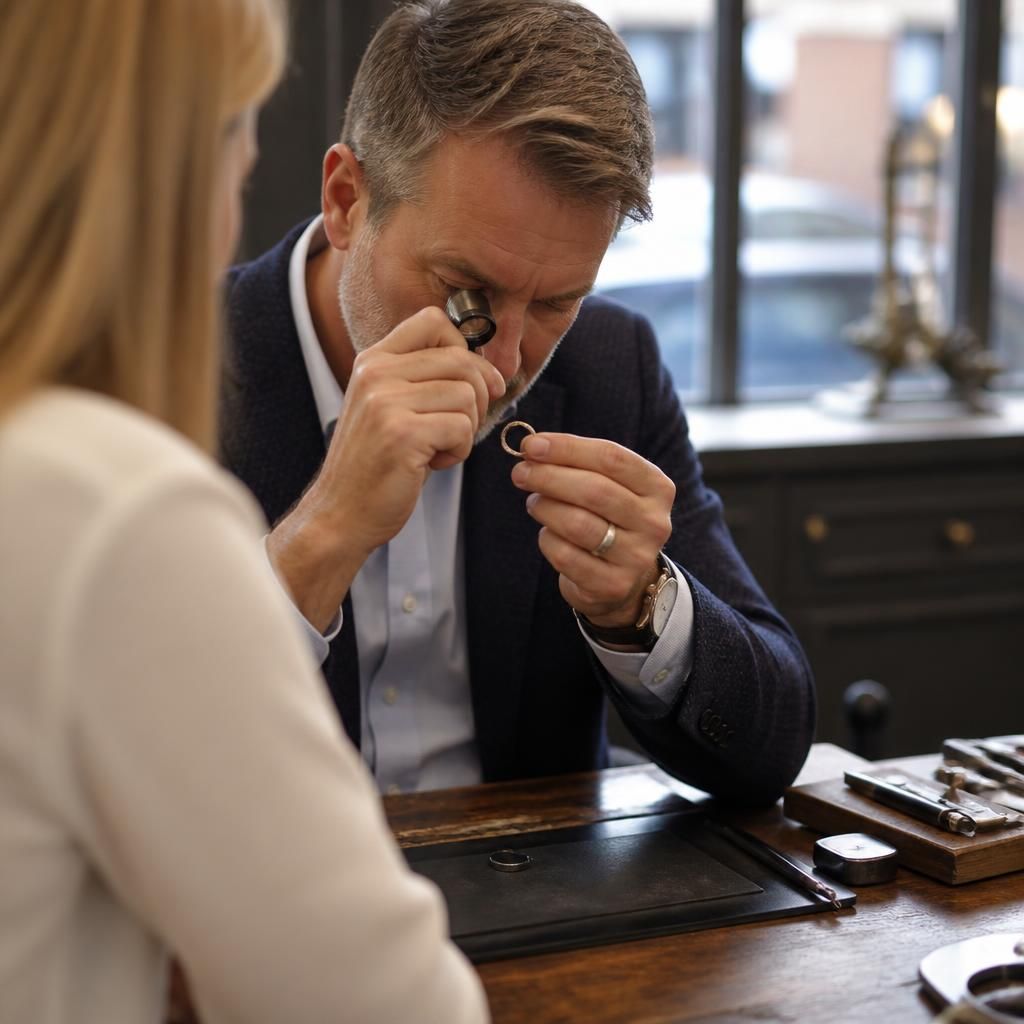
Before resizing, the jeweller should confirm the current and required finger size, inspect the thickness and condition of the shank, identify the gold purity and assess any hallmarks, gemstones, settings and previous repairs. The ring should be checked for cracks, thinning, distortion and loose stones. This assessment helps determine whether the ring can be resized directly, whether additional work is needed, or whether resizing could cause unacceptable damage.
After the alteration, the ring should be checked for a secure join, an even shape, a smooth interior and a consistent surface finish. Gemstones and settings should be inspected again, particularly where the ring includes stones near the area being altered. Any hallmark, engraving or design detail affected by the work should be discussed with you before the ring is completed.
How to protect the ring after resizing
A resized ring should be monitored for any change in shape, movement of a stone, a rough edge or a visible line at the join. These signs do not always mean the resizing has failed; they may indicate wear, an existing weakness or a setting that needs adjustment. Prompt inspection can prevent a minor issue becoming more serious.
It is also sensible to have the ring checked periodically, especially if it is worn every day or has delicate settings. Avoid exposing it unnecessarily to impact, harsh chemicals or activities likely to bend the band. Cleaning and polishing can improve its appearance, but polishing should be controlled because repeated removal of metal can soften engraving and reduce definition.
In practical terms, expert resizing should preserve the ring’s appearance, function and value. The main risks arise not from resizing itself but from an unsuitable method, excessive alteration, inadequate inspection or poor finishing. If a ring is valuable, antique, heavily set or especially meaningful, a detailed assessment before work begins is the best way to protect both its structure and its long-term value.
Professional assessment is the main safeguard for a gold ring’s value and structural integrity during resizing. Before work begins, the jeweller should examine the shank, settings, gemstones, hallmarks, engraving and any previous repairs to determine whether the ring can be altered safely.
This is particularly important for antique rings, thin bands and designs with stones around the circumference. The safest method may involve adding a matched section of gold rather than stretching the existing metal, or recommending a rebuilt shank or alternative sizing solution. A careful assessment helps prevent weakened joints, distorted settings, visible seams and unnecessary loss of original detail.
- Very thin or worn bands may not have enough metal to resize safely without rebuilding or reinforcing the shank.
- Rings with stones set around most or all of the circumference can be difficult or unsuitable to resize because changing the shape may loosen settings.
- Channel, pavé and bead-set stones can require inspection and possible resetting after the band is altered.
- Patterned, engraved, enamelled or pierced designs may be disrupted by cutting, stretching or adding metal.
- Older rings may have weakened joints, previous repairs, worn claws or irregular construction that needs attention before resizing.
- Harder alloys, unusual construction and mixed-metal designs may require specialist handling to avoid cracking, discolouration or an obvious mismatch.
Arrange an Expert Gold Ring Resizing Assessment
If you are considering resizing a valuable, antique or stone-set gold ring, arrange an expert assessment before any work begins. We can examine its structure, settings and design to recommend the safest resizing method.