
What are the considerations when choosing a second-hand jewellery shop in the Jewellery Quarter?
When choosing a second-hand jewellery shop in Birmingham’s Jewellery Quarter, consider the seller’s reputation, the authenticity and condition of each piece, transparent pricing, and the quality of advice provided. Check that the shop offers appropriate documentation, secure payment arrangements and reliable aftercare, including repairs, resizing and valuations where required.
When choosing a second-hand jewellery shop in Birmingham’s Jewellery Quarter, assess the business as carefully as the piece itself. The important considerations are the shop’s reputation and expertise, the authenticity and condition of its jewellery, the transparency of its pricing and documentation, and the quality of its aftercare. A reputable jeweller should be willing to explain what a piece is made from, how it has been assessed and what support is available after purchase.
Consider the shop’s reputation and expertise
Look for an established jeweller with a clear physical presence, knowledgeable staff and a professional approach to buying and selling pre-loved jewellery. Experience matters because jewellery may have been altered, repaired, resized or remodelled before it reaches the shop. An expert should be able to discuss these details in practical terms rather than relying only on a description such as ‘vintage’, ‘antique’ or ‘pre-owned’.
Personal recommendations and independent reviews can provide useful context, but they should not replace your own questions. A trustworthy shop should explain its assessment process, provide clear terms of sale and give you time to consider a purchase without pressure.
Check authenticity and hallmarking
Ask how the shop has verified the metal, gemstones and any maker or designer attribution. For precious-metal jewellery, inspect the hallmark or other identifying marks with the assistance of the jeweller. Hallmarks can indicate fineness and the relevant assay office, although a mark may be worn, altered or difficult to interpret. Jewellery that falls outside hallmarking requirements, or older pieces with unusual marks, may need additional testing.
For gemstone jewellery, ask whether the stones have been tested and whether any treatments, laboratory-grown stones or replacements have been identified. If a piece is accompanied by a gemstone or jewellery report, check that the document relates to the item being offered. Where the value or rarity of a piece is significant, an independent report may be appropriate.
Examine the condition and any previous work
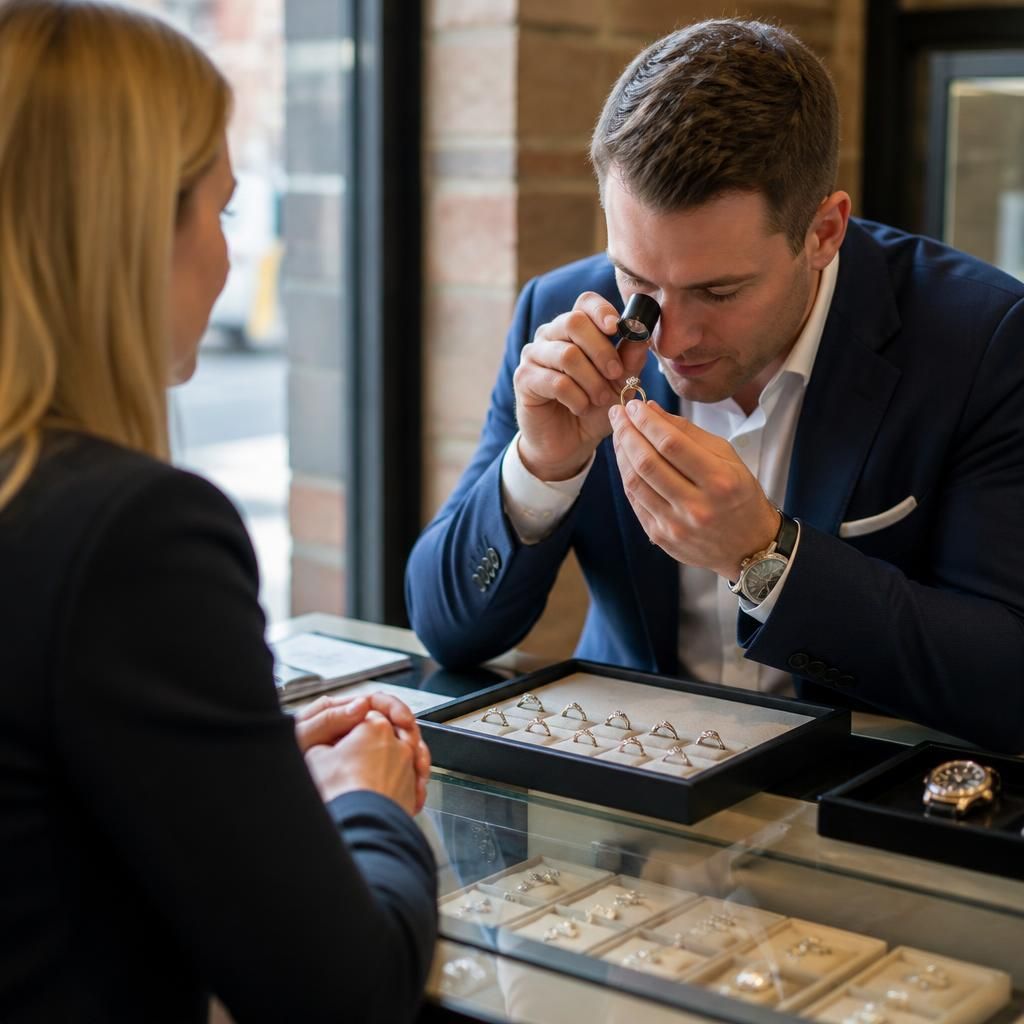
Pre-loved jewellery is not necessarily in perfect original condition. Wear to settings, thinning of bands, worn claws, stretched links, loose stones and previous soldering can all affect durability and future costs. Ask to see the piece under magnification if appropriate, and find out whether it has been professionally cleaned or restored.
Pay particular attention to:
Ask whether the quoted price includes any necessary preparation or whether repairs, resizing or replacement parts would be additional. A lower purchase price may not represent good value if substantial work is needed immediately.
Request clear information about provenance
Provenance can help establish an item’s history, particularly for signed, antique or collectible jewellery. However, a lack of original packaging or paperwork does not automatically make a piece unauthentic. The important point is that the seller should distinguish between information that has been verified and details that are simply believed or inferred.
For valuable items, ask whether the shop can provide an invoice describing the metal, gemstones, condition and any significant features. Keep this documentation, as it may be useful for insurance, future valuation, repairs or resale.
Compare the price with the complete value
Compare like with like rather than judging price solely by the weight of the metal. The design, workmanship, gemstone quality, age, condition, maker, rarity and cost of future maintenance can all influence the value of a second-hand piece. The price should be explained clearly, including any applicable charges and the work already carried out.
A valuation for insurance or probate is not necessarily the same as the amount a shop would pay when buying the item from you. Ask what type of valuation is being provided and what it is intended to represent. This avoids confusing an insurance replacement figure with an achievable resale price.
Understand the paperwork and returns policy
Before paying, check that the receipt accurately describes the item and records any relevant limitations. The shop should provide its terms for returns, exchanges, deposits, repairs and cancellations in a form you can understand. Purchases made in person may have different return arrangements from distance purchases, so confirm the policy before committing.
Also check the payment process and whether the item remains securely held while any agreed work is completed. For higher-value purchases, ask about collection, delivery, insurance and how the jewellery will be packaged.
Assess the aftercare available
Good aftercare is particularly important with pre-loved jewellery because its condition and construction may require ongoing attention. Ask whether the jeweller offers cleaning, inspection, ring resizing, repairs, remodelling and valuations. It is also useful to know whether work is carried out in-house or referred to a specialist, and whether an estimate will be provided before chargeable work begins.
For rings and regularly worn items, periodic checks can identify worn settings or weakened joins before a stone is lost. A shop that is prepared to discuss maintenance honestly is more useful than one that focuses only on the initial sale.
Consider ethical and practical factors
Buying pre-loved jewellery can extend the life of an existing piece, but ask how the shop sources its stock and handles items whose ownership history is unclear. A professional business should have appropriate procedures for verifying sellers and recording purchases. If ethical sourcing is important to you, ask specific questions about recycled metals, gemstone treatments and any new materials used during restoration or alteration.
Finally, choose a shop where the advice is proportionate to your needs. The right piece should suit how you intend to wear it, not just appear attractive in the display. Consider whether the design is comfortable, whether the setting is practical for daily use and whether future resizing or repairs are technically possible. Taking these points together will help you judge the reliability of the shop, the condition of the jewellery and the overall value of the purchase.
When choosing a second-hand jewellery shop in Birmingham’s Jewellery Quarter, examine how carefully each piece has been assessed before it is offered for sale. Ask about the metal, gemstones, hallmarking, previous repairs and current condition, rather than relying solely on an item’s age or appearance.
Look closely at ring bands, claws, settings, catches, hinges and chain links for thinning, looseness or signs of soldering. Find out whether cleaning, resizing or repairs have already been completed, and whether any further work is recommended. A reputable jeweller should explain these points clearly, provide an accurate description on the receipt and outline available aftercare, including repairs, resizing and valuations.
- the thickness and shape of rings, especially at the base of the band;
- the security of claws, settings, catches and hinges;
- scratches, dents, porosity or visible solder repairs;
- the condition of chains, bracelets and moving parts; and
- whether the item has been resized or altered, and whether further alteration is advisable.
Ask Our Experts About Second-Hand Jewellery
If you are considering a pre-loved piece, speak to our jewellery experts about its authenticity, condition, value and suitability for your needs. We can also advise on resizing, repairs, valuations and ongoing aftercare before you buy.
Speak to your personal jeweller
Every commission begins with a conversation. Arrange an appointment in the Birmingham Jewellery Quarter or talk it through by phone.