
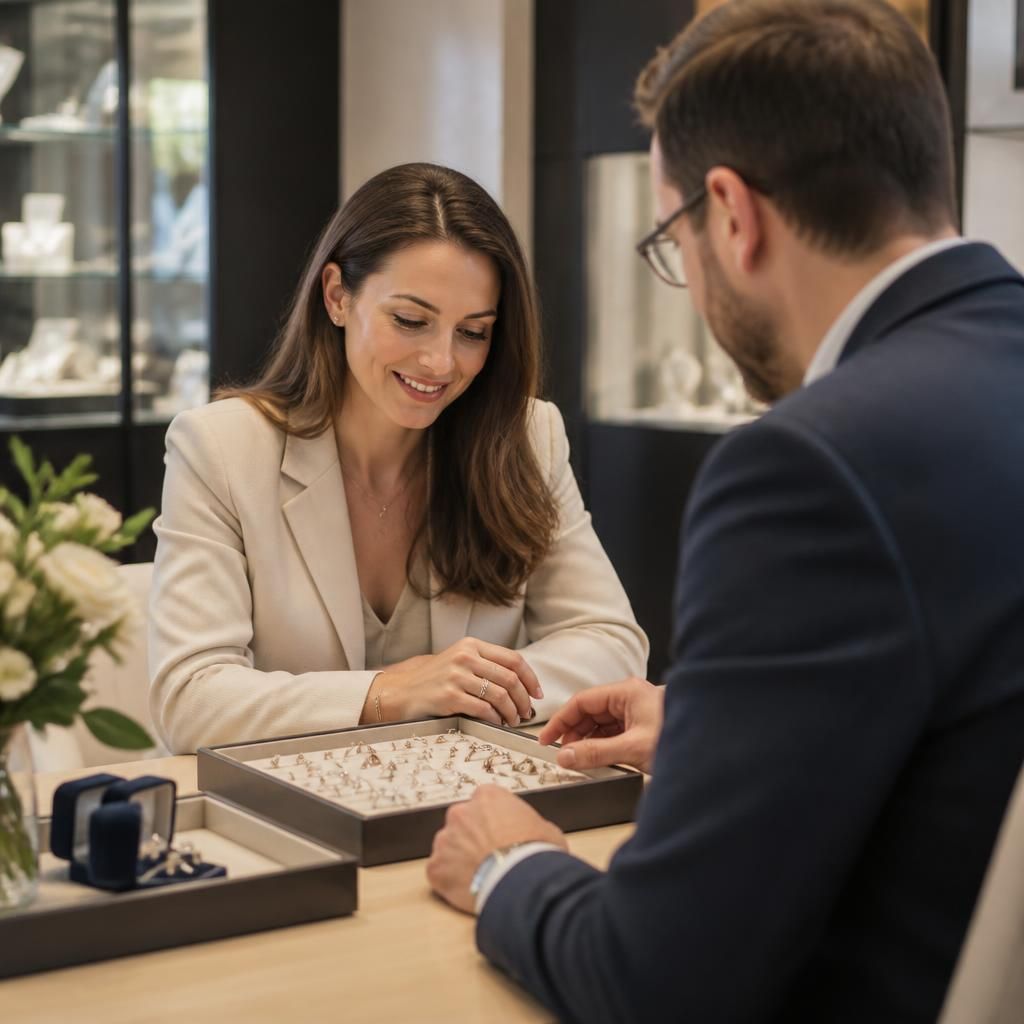
What types of engagement rings are available in the Jewellery Quarter?
Engagement rings available in the Jewellery Quarter include classic solitaire, halo, cluster, three-stone, shoulder-set and vintage-inspired designs, in metals such as platinum, gold and white gold. You can also commission a bespoke ring, choosing the setting, diamond or coloured gemstone, metal, proportions and personal details to create a one-of-a-kind design.
Engagement rings available in Birmingham’s Jewellery Quarter range from traditional solitaire and halo designs to vintage-inspired clusters, three-stone rings, shoulder-set styles and fully bespoke creations. You can usually choose the setting, precious metal, diamond or coloured gemstone, proportions and personal details, making it possible to select an existing design or commission a ring that is made specifically for you.
Solitaire engagement rings feature a single principal gemstone, most commonly a diamond, held prominently above the band. The uncluttered design places emphasis on the stone’s cut, shape and proportions. Solitaires are available with different claws, bezels or other setting styles, and suit those who prefer a classic ring that can be worn comfortably every day. The setting also affects how much light reaches the stone and how protected its edges are.
Halo engagement rings surround the central stone with a border of smaller diamonds or gemstones. A halo can increase the apparent spread of the centre stone and add detail around the design without requiring a large principal diamond. Round, oval, pear, cushion and other centre-stone shapes can be used, with the surrounding stones selected to complement rather than overpower the main gem.
Diamond cluster rings group several stones closely together to create a larger, decorative surface. Unlike a halo, a cluster may not have one dominant centre stone; the gemstones can be arranged in floral, geometric or irregular patterns. Cluster designs are particularly suitable for vintage-inspired rings and can be adapted with diamonds, sapphires or other coloured gemstones.
Three-stone engagement rings use three principal stones, traditionally representing the past, present and future of a relationship. The stones may be the same shape or deliberately contrasting, and the centre stone can be larger than the two side stones. This style offers more visible gemstone coverage than a solitaire while retaining a clear, balanced structure.
Shoulder-set and side-stone rings have smaller diamonds or gemstones set into the shoulders of the band, leading towards the central stone. Pavé, channel and grain settings create different effects and levels of sparkle. These rings can provide additional detail while maintaining a relatively streamlined outline, although the setting should be checked carefully for comfort and security.
Vintage-inspired engagement rings draw on details associated with earlier periods, including milgrain edges, engraved shoulders, scrollwork, floral motifs and unusual stone arrangements. A vintage-inspired design does not necessarily contain an antique gemstone or historic setting; it may be newly made using traditional-looking details. Genuine antique or vintage rings may also be available, but their condition, alterations, hallmarking and previous repairs should be assessed before purchase.
Coloured gemstone engagement rings offer an alternative to an all-diamond design. Sapphires and rubies are established choices for rings intended for regular wear, while other gemstones can provide distinctive colour and character. Gemstone durability, treatment, setting protection and care requirements vary, so the stone should be selected with the wearer’s lifestyle in mind. A diamond may also be combined with a coloured centre stone or used as an accent.
Contemporary engagement rings may use clean lines, asymmetry, mixed metals, tension-inspired settings, architectural forms or unusual stone orientations. These designs can be visually distinctive, but practical details remain important: the ring should sit securely, avoid sharp edges that catch on clothing and leave sufficient space if it is intended to be worn alongside a wedding ring.
Bespoke engagement rings are designed around your requirements rather than selected from a fixed range. You can discuss the preferred gemstone shape, setting height, metal, band width, decorative details and budget before a design is prepared. A bespoke ring may be created from a new concept, adapted from an existing style or made using stones or metal from a sentimental piece. The process should include clear drawings or design information, confirmation of materials and an explanation of how the ring will be made before work begins.
Precious metal choices commonly include platinum, yellow gold, white gold and rose gold. Platinum has a naturally white appearance and is valued for its density, while gold is available in different colours and purities. White gold may require periodic refinishing to maintain its bright surface, depending on its finish and wear. The choice of metal affects colour, weight, durability, maintenance and how the setting looks against the gemstone.
The setting is as important as the overall style. Claw settings display more of a stone and can allow good light entry, but claws need checking during routine maintenance. Bezel settings surround the gemstone with a rim of metal, offering additional protection to its edges. Rub-over and flush settings provide a lower profile, while pavé and channel settings create continuous detail along the band. Your choice should balance appearance with the way the ring will be worn.
When comparing rings in the Jewellery Quarter, consider the gemstone’s quality, the security of the setting, the thickness and shape of the band, the quality of the workmanship and whether the ring can be resized or repaired in the future. For a diamond, review the recognised grading information alongside the stone itself rather than relying on colour or clarity descriptions alone. For any gemstone, ask whether it has been treated and what care is recommended.
It is also worth checking the ring’s hallmarking, the exact metal used, the gemstone details and what is included in the aftercare. Resizing, cleaning, setting inspections, repairs, remodelling and valuations may be relevant over the life of the ring. A professional consultation allows these practical points to be considered alongside style, so you can choose between an established design and a bespoke ring with confidence.
The setting determines how an engagement ring looks, how securely the gemstone is held and how practical it is for everyday wear. Claw settings show more of the stone and allow light to enter, while bezel, rub-over and flush settings offer greater protection and a lower profile.
When comparing styles in the Jewellery Quarter, consider the wearer’s routine as well as the appearance. Pavé and channel-set shoulders add sparkle but need regular checks, particularly if the ring is worn during hands-on work. A higher setting can showcase a larger centre stone, but should leave enough clearance for a wedding ring. Ask about the metal, setting security, resizing options and future aftercare before making your choice.
Discuss Your Engagement Ring Options in the Jewellery Quarter
Discuss your engagement ring options in the Jewellery Quarter with our expert team, including styles, gemstones, settings, metals and bespoke design requirements. Contact us to arrange a personal consultation and receive practical guidance based on your preferences and budget.
Speak to your personal jeweller
Every commission begins with a conversation. Arrange an appointment in the Birmingham Jewellery Quarter or talk it through by phone.