
What should I look for in aftercare services from jewellers in the Jewellery Quarter?
Look for aftercare services that include careful inspections, transparent advice and skilled workmanship for ring resizing, repairs, cleaning, remodelling and valuations. A reputable jeweller should explain the recommended work, provide a clear quotation, protect your jewellery during the process and offer appropriate guidance for its ongoing care.
Good aftercare from a Jewellery Quarter jeweller should combine careful assessment, skilled workmanship, clear pricing and useful guidance for the future. It should cover more than cleaning: a dependable service may include ring resizing, jewellery repairs, stone security checks, remodelling, valuations and, where relevant, advice on maintaining a luxury watch.
Start with a proper inspection
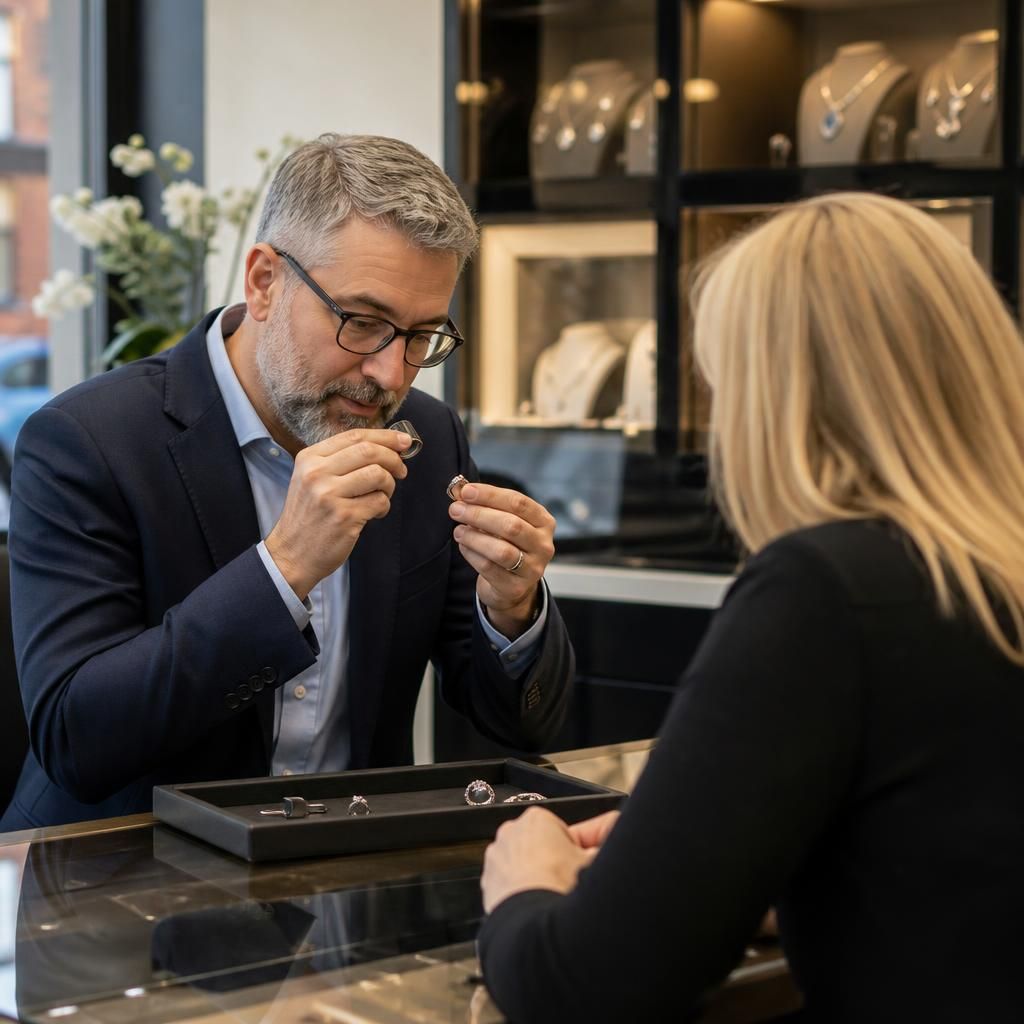
Before any work is recommended, the jeweller should examine the piece closely and explain its condition. This may include checking claws, settings, bezels, soldered joints, hinges, clasps and the shank of a ring. Stones should be assessed for movement, chips or existing damage, while the metal should be checked for thinning, wear and previous repairs. A watch requires a different assessment, including its case, bracelet, crown and visible signs of water or impact damage.
This inspection matters because the most suitable service is not always the one initially requested. For example, a ring that feels loose may need more than resizing if its setting has weakened. Cleaning or polishing may also be inappropriate where a surface finish, engraving or delicate construction could be affected.
Look for transparent recommendations and quotations
A reputable jeweller should explain:
Clear communication is particularly important for sentimental, bespoke or high-value jewellery. You should know how the piece will be handled, whether any stones need to be removed, and whether the proposed work is intended to preserve the original character or alter the design.
Check the jeweller’s expertise in the work required
Different aftercare services demand different skills. Ring resizing involves altering the band while preserving its shape, finish and setting. Repairs may involve rebuilding worn claws, replacing a damaged clasp, securing a loose stone or restoring a broken chain. Remodelling requires design judgement as well as technical ability, particularly when incorporating stones or metal from an existing piece into a new one.
Ask whether the work is completed by an appropriately skilled in-house craftsperson or by a specialist workshop. The important point is that the jeweller can explain the process and take responsibility for quality control. For a handmade or bespoke item, aftercare should be sensitive to the original design and construction rather than treating it as a generic piece.
Make sure security and handling procedures are clear
Your jewellery should be recorded accurately when it is accepted for assessment or repair. The description should identify the item, materials, stones, distinguishing features and any existing marks or damage. For valuable pieces, ask how items are stored, insured and tracked while in the jeweller’s care.
It is also sensible to clarify the collection process and what identification or documentation may be required. A trustworthy service should treat personal information, valuations and details of valuable possessions confidentially.
Ask what is included in ring resizing and repairs
For a ring resize, confirm whether the quoted work includes checking the setting, restoring the surface finish and inspecting the ring after the alteration. Resizing can affect a ring’s balance, engraving or proportions, so the jeweller should discuss any constraints before proceeding. Some designs, eternity-style rings, patterned bands and rings with settings around the full circumference may require a different solution from a plain band.
For general repairs, ask whether the finished piece will be tested before it is returned. This may involve checking that stones are secure, clasps close correctly and moving parts operate as intended. A repair should address the underlying cause where possible, not only conceal the visible damage.
Consider valuations and documentation
A valuation is separate from an insurance estimate, a resale opinion or an informal description. Ask what type of valuation is being prepared and what information it will contain. A useful document should describe the item accurately, including its metal, stones, design features, condition and relevant identifying details, so that it can support the intended purpose.
Keep valuation documents, purchase records and repair notes together. They can help with insurance administration, future repairs, resale discussions and establishing the history of a bespoke piece. If the item has changed significantly through resizing, remodelling or stone replacement, ask whether its valuation should be reviewed.
Look for aftercare advice tailored to the jewellery
Professional aftercare should include practical guidance rather than a generic recommendation to have jewellery cleaned. Advice may cover removing rings for manual work, avoiding exposure to chemicals, storing pieces separately and checking settings periodically. Softer gemstones, porous materials, plated finishes and intricate designs may need more careful handling than durable precious-metal jewellery.
For a luxury watch, ask about servicing, water resistance, bracelet care, magnetism, impact and safe storage. Water resistance is not permanent and should not be assumed simply because a watch was originally designed for contact with water. Any service advice should reflect the watch’s construction and the manufacturer’s requirements.
Understand guarantees and future support
Ask whether completed work is covered by a workmanship guarantee and what it excludes. Normal wear, accidental damage, misuse and further alterations may be treated differently from a fault in the repair itself. You should also know who to contact if a problem appears after collection and whether future inspections or adjustments are available.
The best aftercare relationship is ongoing. A jeweller who keeps accurate records, explains maintenance and recognises the history of your pieces can give more consistent advice when a ring needs resizing, a stone needs securing or an older design is being remodelled.
Before agreeing to aftercare, check that the jeweller offers a detailed assessment, a written quotation, secure handling, appropriate specialist skills and clear post-service guidance. Those standards help protect the condition, value and personal significance of your jewellery while ensuring that any work is properly understood before it begins.
Jewellery aftercare should include secure handling and a clear record of the item before any work begins. The jeweller should note the design, metal, gemstones, identifying marks and existing wear, then explain how the piece will be stored, insured and tracked while it is in their care.
This is particularly important for bespoke, sentimental or high-value jewellery. Ask for a written description of the proposed work, its cost and any limitations before authorising repairs, resizing or remodelling. When the item is collected, it should be checked against the original record and inspected to confirm that settings, clasps and finishes are secure.
- What work is recommended and why it is necessary.
- Whether the work is routine maintenance, a repair or a more extensive restoration.
- What effect the work may have on the metal, finish, stones, engraving or original design.
- Whether any risks or limitations need to be considered.
- What the quotation includes and whether further work would require your approval.
Arrange Expert Jewellery Aftercare and Advice
Arrange a jewellery aftercare consultation with Steven Charles Quance for expert advice on ring resizing, repairs, remodelling, valuations or ongoing care. Bring your piece for a careful assessment and clear recommendations before any work is authorised.
Speak to your personal jeweller
Every commission begins with a conversation. Arrange an appointment in the Birmingham Jewellery Quarter or talk it through by phone.