
What distinguishes bespoke jewellers from traditional jewellers in the Jewellery Quarter?
Bespoke jewellers create or substantially adapt a piece around your requirements, offering design consultation, material choices and skilled making or remodelling. Traditional jewellers typically sell established collections and ready-made pieces, although many also provide repairs, alterations and some degree of personalisation.
Bespoke jewellers differ from traditional jewellers mainly in how a piece is conceived, made and selected. A bespoke jeweller develops jewellery around your requirements, from the initial consultation and sketches through to material selection, making and aftercare. A traditional jeweller generally offers established collections and ready-made pieces, although many traditional jewellers also provide repairs, resizing, alterations and limited personalisation. The two approaches can overlap, but the level of design involvement and individual control is usually different.
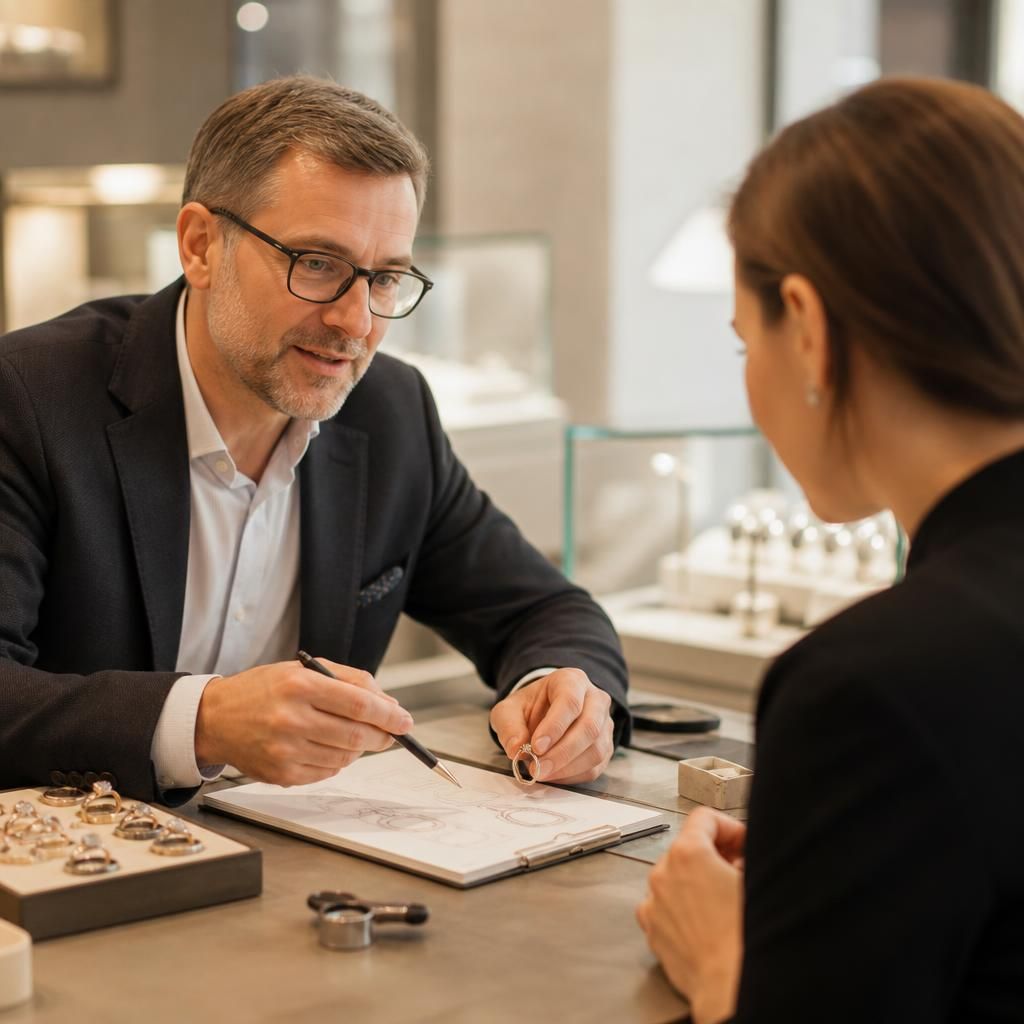
Bespoke jewellery begins with your brief rather than an existing product. You may have a particular gemstone, a family piece to remodel, a preferred metal, or an idea for an engagement or wedding ring that you cannot find in a collection. The jeweller considers how the piece will look, how it will be worn, the required setting and construction, and how the design can be made practical for everyday use. This creates a more consultative process than choosing from a display cabinet.
With a traditional purchase, the main decision is usually which existing design best suits your taste, budget and requirements. This can be the right option when you want to compare finished pieces, take an item away promptly or choose a recognisable style. Traditional jewellers may still offer useful adjustments, such as ring resizing, engraving, stone changes or alterations to a standard design, but those changes are normally made within the limits of the original piece.
The principal differences include:
Bespoke does not automatically mean that every component is made entirely by hand or that a traditional jeweller cannot produce high-quality work. Experienced jewellers may use computer-aided design, hand finishing, specialist workshops or established manufacturing techniques where appropriate. The important distinction is whether the piece is created specifically for you and whether you have meaningful input into its design and specification.
For engagement and wedding rings, bespoke design can be particularly useful when you need a non-standard size, an unusual stone arrangement, a specific profile or a wedding band that fits closely against the engagement ring. It is also suitable when you want to incorporate inherited jewellery. Remodelling can preserve usable gemstones or sentimental elements while creating a piece that is safer, more wearable or better suited to your current style. A careful assessment is needed before deciding which components can be reused.
For luxury watches, the distinction is usually different. A watch is generally selected from an existing model or collection rather than designed from the movement upwards. The value of expert service lies in helping you assess authenticity, condition, provenance, suitability and aftercare. Personalisation may be possible through an appropriate strap, presentation or engraving service, but it should not compromise the watch or affect its future service requirements.
Whichever route you choose, ask how the jeweller manages quality and aftercare. For bespoke work, confirm what is included in the design consultation, whether you will approve the proposed design, how gemstone information is provided and what happens if an alteration is needed. For a traditional purchase, check the exact materials, stone specifications, sizing options, valuation provision and care recommendations. A reputable jeweller should explain these points clearly rather than relying on the appearance of the finished item alone.
Ethical sourcing is also relevant to both approaches. Ask where gemstones and precious metals come from, what documentation is available and whether the jeweller can explain the sourcing standards used. Bespoke design gives you the opportunity to discuss these choices before the piece is made; a traditional purchase requires you to establish the provenance of an existing item.
In practical terms, choose bespoke jewellery when the design, fit, symbolism or use of personal materials is central to your decision. Choose a traditional piece when you prefer to compare established designs, need a ready-made item or want a simpler purchasing process. A trusted Jewellery Quarter jeweller should be able to explain both options objectively and recommend whether a ready-made piece, an adapted design or a fully bespoke commission is most appropriate for you.
Bespoke jewellery is developed from your requirements rather than selected from an existing collection. The process allows you to discuss the design, metal, gemstones, proportions, setting and finish before the piece is made, with the jeweller assessing how those choices will affect appearance, durability and everyday wear.
This level of involvement is particularly useful for engagement and wedding rings that must fit together closely, suit a non-standard finger shape or incorporate gemstones from inherited jewellery. You should receive clear information about the proposed design, materials, timescale and price before making a commitment. A traditional jeweller may also offer resizing, engraving or alterations, but these changes are generally limited by the structure of the finished piece.
- Design freedom: Bespoke work allows greater control over the shape, proportions, setting, finish and details. Traditional jewellery is usually selected from existing designs, with personalisation available on some pieces.
- Material selection: A bespoke consultation can cover the choice of precious metal, gemstone characteristics, setting style and finish. With a ready-made piece, the materials and specifications have already been determined.
- Making process: Bespoke jewellery may be handcrafted, adapted from an existing design or produced through a combination of traditional and modern techniques. A traditional purchase is normally supplied as finished stock or ordered from an established collection.
- Fit and wearability: Bespoke rings can be designed around finger shape, lifestyle, a wedding-band pairing or an existing heirloom. A traditional ring may need to be selected first and then adjusted where possible.
- Timescale: Bespoke work requires consultation, design approval, sourcing and making, so it commonly takes longer than buying an available item. The appropriate timescale depends on the complexity of the design and the materials required.
- Price structure: Bespoke pricing reflects the design work, craftsmanship, materials, gemstones and making process. A traditional piece is priced as an established product, although alterations, rare stones, designer provenance and precious-metal content can also affect its cost.
Discuss Your Bespoke Jewellery Requirements
Discuss your bespoke jewellery requirements with our team, including your design ideas, preferred materials, gemstone choices, budget and timescale. We can advise whether a fully bespoke piece, adapted design or jewellery remodelling is the most suitable option.
Speak to your personal jeweller
Every commission begins with a conversation. Arrange an appointment in the Birmingham Jewellery Quarter or talk it through by phone.