
How does resizing affect different types of ring materials and designs?
Resizing affects each ring differently depending on its metal, construction and setting. Gold and platinum rings can usually be adjusted by carefully adding or removing metal, while alternative metals and intricate designs may require specialist methods or may not be suitable for conventional resizing.
Ring resizing affects a piece according to its metal, construction, setting and surface details. Most traditional rings in gold, platinum or silver can be made larger or smaller by carefully opening the band, adding or removing a section of metal, and then joining, shaping and refinishing it. Alternative metals, highly detailed designs and some stone settings require different techniques, and certain rings cannot be resized safely without compromising their structure or appearance.
Gold rings are generally suitable for conventional resizing because gold is workable and can be matched by colour and alloy. A ring can usually be enlarged by inserting a carefully selected piece of matching metal, or reduced by removing a small section from the lower part of the band. The join is then soldered or laser welded, filed and polished so it blends with the original surface. White gold may need its rhodium finish restored after work, while rose gold requires close attention to colour and alloy matching.
Platinum rings can also be resized, but platinum should be handled with dedicated tools and processes. It has different working and heating characteristics from gold, so using unsuitable equipment can cause contamination or an unsatisfactory join. A correctly carried out platinum resize should preserve the metal’s density, colour and durability, although the ring may require refinishing to restore its original finish.
Silver rings are often straightforward to adjust, particularly when they have a simple band. Silver is softer than platinum and some gold alloys, so the finished ring needs careful shaping and polishing to avoid thinning the band or leaving visible marks. Tarnish, oxidation and surface treatments may also need to be addressed as part of the finishing process.
Alternative metals need individual assessment:
- Titanium is lightweight but difficult to cut, join and reshape using conventional jewellery methods. Some titanium rings can be adjusted with specialist equipment, while others need replacing if the size is substantially wrong.
- Tungsten carbide is extremely hard and cannot normally be resized by cutting and adding metal. A replacement is usually the practical option.
- Stainless steel and similar contemporary alloys may be machinable, but their composition, construction and finish determine whether a satisfactory resize is possible.
- Ceramic, carbon fibre and mixed-material rings may contain sections that cannot be cut, soldered or stretched. Resizing can therefore be limited or unavailable.
A ring’s design can be as important as its material. A plain, evenly proportioned band usually offers the greatest flexibility. A patterned or engraved band may need the design realigned after resizing, and a highly polished or textured finish may require careful restoration. If a ring has a narrow lower section, a hollow construction or decorative details around the entire circumference, removing or adding metal in the usual position may affect its balance or appearance.
Stone settings require particular care. Rings with stones close to the area being worked on can be exposed to heat, pressure or movement during resizing. A jeweller should inspect the claws, setting and adjacent metal before starting, protect the gemstones appropriately and check the setting again afterwards. Channel-set, pavé and other settings with multiple stones may be more difficult to resize because altering the band can change the tension around the stones or disturb their alignment.
Eternity and full-set rings are among the most restricted designs because stones or decorative sections run around the entire band, leaving no plain area where metal can easily be removed or added. Some may be adjusted using specialist methods, but the result depends on the original construction and the amount of change required. Tension-set, ceramic, hinged and heavily articulated rings also need an assessment before any work is agreed.
Vintage and antique rings can present additional risks. Their metal may have become thin through wear, previous repairs or repeated polishing, and their settings may already be delicate. Resizing may require strengthening or rebuilding part of the shank rather than simply cutting and joining it. Preserving an original engraving, milgrain edge, patina or hand-finished detail may also influence the recommended method.
Resizing can affect the ring’s proportions even when the work is technically successful. Enlarging a band may make it slightly thinner in the resized area, while reducing a ring can alter the relationship between the shoulders and the central setting. For a substantial size change, rebuilding or replacing part of the band may provide better structural support than repeatedly stretching the metal. Stretching is not appropriate for every alloy and can leave the ring thinner or uneven if used incorrectly.
Before work begins, the ring should be examined for its metal, thickness, previous joins, worn areas, setting security, engraving and overall shape. The required fit should be confirmed using a suitable sizing measure, taking account of the ring’s width, the shape of the finger, seasonal changes and whether it is worn alongside another ring. Where the design or material makes conventional resizing unsuitable, options may include an internal sizing aid, reshaping, rebuilding the shank or creating a replacement band.
After resizing, the ring should be checked for a round profile, a smooth interior, a secure join and an even finish. All stones and settings should be inspected, and any engraving or surface texture should be restored as far as the design allows. The ring should feel secure without pinching, spinning excessively or leaving pressure marks. If it feels uncomfortable or a stone appears loose after collection, stop wearing it and arrange an inspection rather than attempting to adjust it at home.
The safest approach is to have the complete ring assessed before a method is selected. Material, design, gemstones, previous alterations and the amount of adjustment all affect what can be done. A careful assessment allows the resizing method to be chosen for the particular piece, helping preserve its fit, strength and original design.
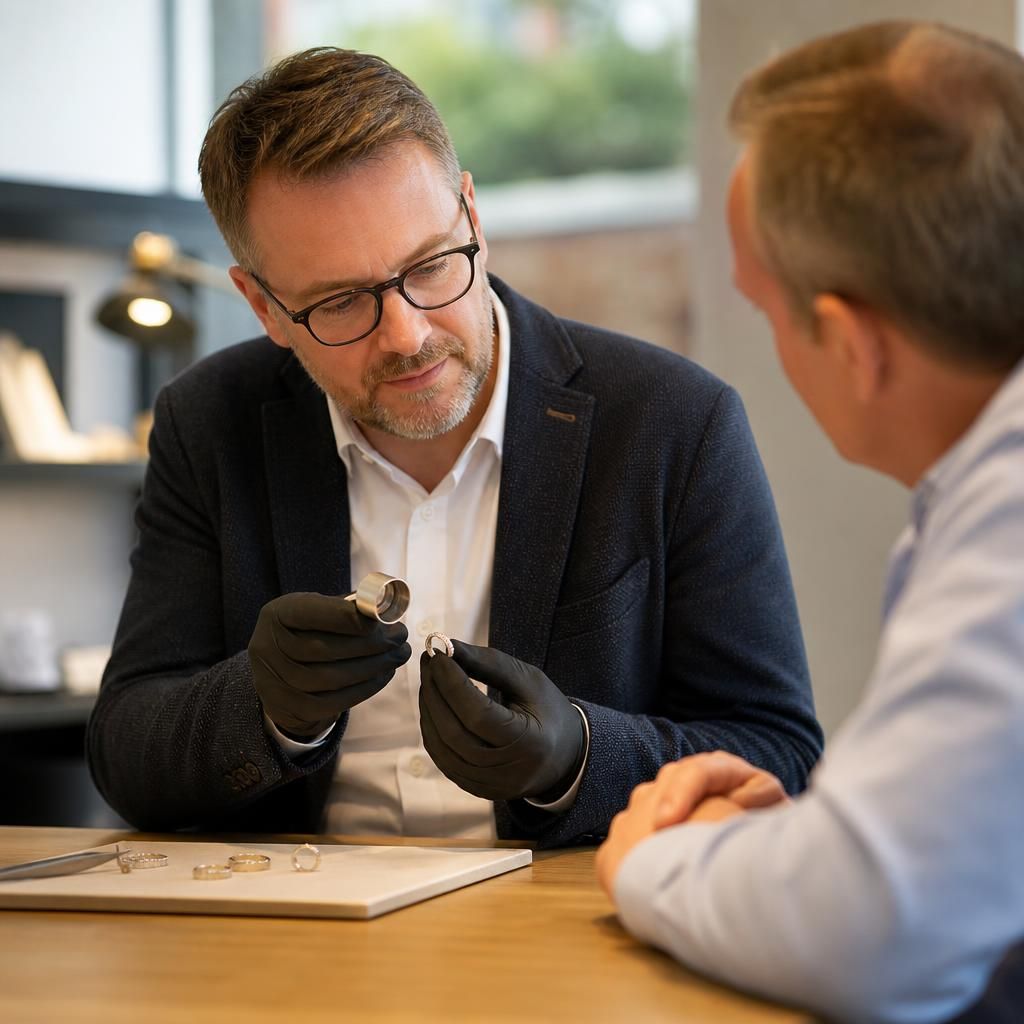
Ring resizing affects each piece according to its metal, construction and design. Plain gold, platinum and silver bands are usually suitable for conventional resizing, while tungsten, ceramic, carbon fibre and some mixed-material rings may need specialist treatment or replacement.
Design details also determine what can be done safely. Eternity rings, pavé settings, intricate engravings and vintage bands may have no plain section where metal can be removed or added. A jeweller should assess the band’s thickness, previous repairs, gemstones and settings before selecting a method, then check the ring’s shape, finish and stone security after resizing.