
What are the key factors to consider when selecting ring resizing and engraving services to ensure high-quality craftsmanship?
Choose a ring resizing and engraving service with demonstrable experience in your ring’s metal, setting and construction, supported by a careful inspection before work begins. Confirm how the jeweller will protect gemstones and finishes, match the existing design, check the final fit and lettering, and provide clear advice on limitations, timescales and aftercare.
High-quality ring resizing and engraving depends on the jeweller’s technical experience, the condition and construction of the ring, and the quality of the inspection and finishing process. Before work begins, the service should assess the metal, setting, gemstones, existing hallmark or engraving, and the amount of alteration required. You should also receive clear advice about what can be achieved safely, how the finished ring will be checked, and what aftercare may be needed.
Choose experience that matches your ring. Resizing and engraving are not identical processes for every piece. Gold, platinum, silver and other metals behave differently when heated, cut, shaped and polished. A jeweller should be familiar with the particular metal used in your ring and understand how it responds to soldering, laser work, polishing and finishing. Experience is especially important with older jewellery, mixed-metal designs, patterned bands, signet rings and rings with delicate shoulders or fine details.
The construction of the ring is equally important. A plain band may be relatively straightforward to resize, whereas an eternity ring, tension-style setting, intricate filigree design or heavily engraved band can have significant limitations. The jeweller should explain these limitations rather than promise a result that could compromise the ring’s structure or appearance.
Insist on a detailed inspection before agreeing to the work. The ring should be checked for thinning, cracks, previous repairs, worn claws, loose stones and distortion. These issues can affect whether resizing or engraving is advisable and may need to be addressed first. The inspection should also establish the current finger size, the desired finished size and whether the ring needs to fit alongside another ring.
For a ring set with gemstones, the jeweller should inspect each stone and its setting. Heat, pressure and vibration can present risks depending on the gemstone and setting style. Some stones are more vulnerable to heat, impact or sudden temperature changes than others. A careful service will recommend appropriate protection and may advise against a particular method where it could damage the stone, loosen the setting or affect a treatment.
Assess how the resize will be carried out. A professional resize should preserve the ring’s roundness, balance and comfort. When a band is made smaller, a section may be removed before the ends are accurately joined. When it is made larger, the jeweller may stretch the metal within safe limits or add a matching section of metal. The appropriate method depends on the ring’s design, metal, thickness and required alteration.
Ask how the join will be finished and made to blend with the original metal. A well-executed resize should not leave a conspicuous seam, sharp edge, uneven profile or visible difference in texture. On patterned or engraved rings, the design may need to be carefully continued or reworked so that the alteration does not interrupt the appearance. Excessive resizing can affect the proportions of a ring or make the setting less secure, so a reputable jeweller should explain when a different solution is more suitable.
Consider the engraving process as carefully as the wording. The service should confirm whether the inscription will be placed inside or outside the band, how much space is available, and whether the chosen lettering will remain legible at the intended size. The jeweller may need to adjust the font, spacing, alignment or punctuation to suit the curvature and width of the ring.
Before engraving, check the spelling, dates, initials and symbols carefully. The work is permanent or difficult to reverse, particularly when the inscription is deep or the ring has limited metal. A professional should identify any concerns about cramped lettering, an uneven surface or an existing inscription that could affect the result. If the ring is being resized as well, agree whether the engraving will be completed before or after the alteration, as this can affect the placement and alignment.
Look for careful design matching and appropriate equipment. Machine engraving can provide consistent lettering and positioning, while hand engraving can be useful for individualised decoration and certain traditional finishes. The important consideration is whether the chosen technique suits the ring, the metal, the design and the intended result. The jeweller should be able to explain the proposed method and show examples of comparable work where appropriate.
Matching an existing finish is also part of good craftsmanship. A high-polish band, brushed surface, hammered texture, milgrain edge or decorative pattern should be restored consistently after the work. Polishing must be controlled because removing too much metal can soften details, reduce definition or alter the shape of the ring.
Check the service’s process for quality control. After resizing, the ring should be checked for its final size, roundness, smooth edges, secure joins and overall comfort. Gemstone settings should be examined for movement, and claws should be checked where relevant. After engraving, the inscription should be reviewed for depth, clarity, spacing and alignment. The finished piece should be cleaned appropriately and inspected under magnification when necessary.
It is reasonable to ask how the ring will be recorded before work starts, particularly if it has sentimental, antique or high-value features. Notes about existing marks, damage, stones and finishes help distinguish pre-existing conditions from changes made during the service. A written description of the proposed work, any agreed limitations, the expected timescale and the cost can prevent misunderstandings.
Give proper weight to communication and aftercare. A suitable jeweller will explain the options in plain language and tell you when a requested alteration may not be safe or appropriate. They should not treat a standard ring size or engraving layout as suitable for every design. Ask what to do if the fit is still uncomfortable, an engraving needs correcting, or a stone appears loose after collection.
Aftercare may include checking the setting, cleaning the ring, reviewing the finish and advising when future inspection is sensible. Resizing can change how a ring sits on the finger, while engraving and polishing can affect the appearance of existing details. Keeping the service record and following the care advice helps protect the ring over time.
When selecting ring resizing and engraving services, prioritise demonstrated expertise, a thorough pre-work assessment, suitable methods for the ring’s materials and design, protection of gemstones, accurate design matching and a documented final inspection. The best decision is not simply based on price or speed; it is based on whether the jeweller can explain the risks, preserve the character of the ring and deliver a secure, balanced and clearly finished result.
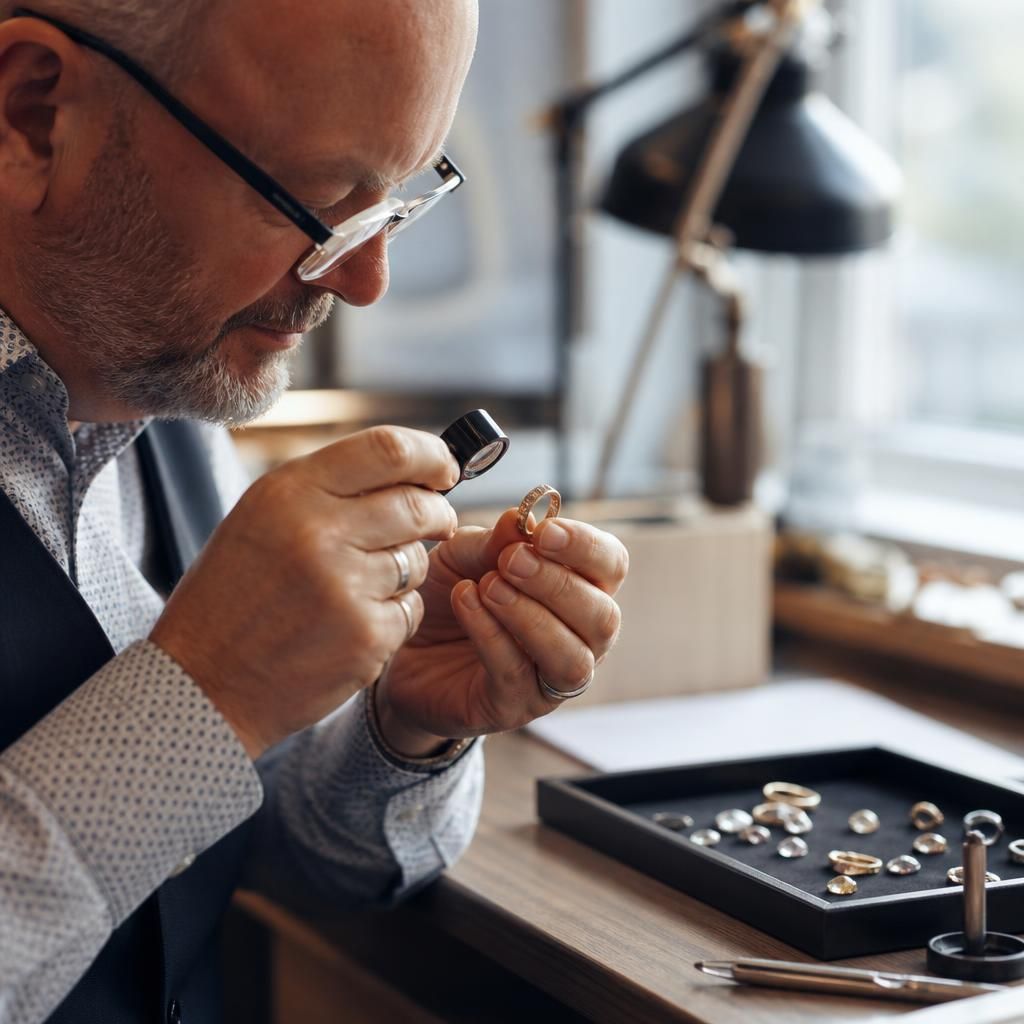
A thorough pre-work inspection is one of the clearest indicators of a high-quality ring resizing or engraving service. Before any alteration, the jeweller should record the ring’s metal, condition, existing marks, gemstone settings, surface finish and current size.
This assessment identifies risks such as thinning, previous repairs, worn claws, loose stones or delicate details that could be affected by cutting, heat, pressure or polishing. It also allows the proposed method, expected result and any limitations to be explained before work begins. After completion, the ring should be checked for the correct size, a secure and discreet join, an even finish and clear, accurately positioned engraving.
Discuss Your Ring Resizing or Engraving Requirements
Discuss your ring’s metal, design, current condition, resizing needs and engraving requirements with Steven Charles Quance before work begins. We can assess the piece, explain suitable options and confirm the expected finish, timescale and aftercare.