
What should I consider when deciding to sell my used Rolex Submariner through a dealer?
When selling a used Rolex Submariner through a dealer, consider the valuation offered, the dealer’s expertise in authenticating and assessing condition, any fees or deductions, and the security and timing of payment. Choose a reputable dealer who explains the process clearly, checks the watch and paperwork thoroughly, and provides a fair offer based on the model, reference, originality, service history and current market demand.
When selling a used Rolex Submariner through a dealer, the main considerations are the accuracy of the valuation, the dealer’s ability to authenticate and assess the watch, the terms of the offer, and the security and timing of payment. A reputable dealer should explain how the model, reference, condition, originality, documentation and current demand have been taken into account, rather than presenting an unexplained figure.
Understand what determines the valuation
A Submariner’s value is based on the specific watch, not simply its name or age. The dealer will usually consider:
- The reference number and production period.
- Whether it is a date or no-date model, and the material used for the case and bracelet.
- The dial, bezel insert, hands, crown and bracelet configuration.
- Overall condition, including scratches, dents, stretch in the bracelet and wear to the clasp.
- Whether the components are original and correct for the reference.
- The presence and quality of the box, warranty card, instruction booklets, service documents and other accessories.
- Evidence of servicing and the watch’s current mechanical performance.
- Recent market demand for comparable examples.
Small differences can have a material effect on an offer. A complete, original watch in strong condition may be valued differently from a watch with replacement parts, an extensively polished case or incomplete paperwork, even if both appear similar at first glance.
Compare like-for-like offers
Do not compare a dealer’s purchase offer directly with the highest advertised retail price for a similar Submariner. A dealer must allow for authentication, servicing, insurance, operating costs, the time required to find a buyer and the risk of holding stock. A private-sale price may also involve more work and risk for the seller, including arranging viewings, verifying payment and dealing with returns or disputes.
For a useful comparison, ask each dealer to value the same watch using the same description and photographs, then confirm whether the figure is subject to physical inspection. Check whether the offer is an outright purchase price or an estimated resale figure. If the offer can change after inspection, ask which findings could lead to a reduction and request that any amendment is explained before you agree to sell.
Check the dealer’s expertise and reputation
A Submariner should be assessed by someone familiar with Rolex references, period-correct details and common replacement or counterfeit components. The dealer should be able to explain the authentication process, including examination of the movement, serial and reference markings, dial, bezel, bracelet, clasp and other relevant details. Paperwork can support provenance, but it does not replace a proper examination of the watch itself.
Look for a clear business identity, established contact details, written terms and a straightforward explanation of how ownership, identification and payment will be handled. Reviews can be useful, but they should not be the only basis for your decision. Be cautious if a buyer pressures you to accept immediately, refuses to identify deductions, asks you to send the watch without suitable documentation, or gives an unusually high figure without inspecting it.
Be accurate about condition and originality
Describe the watch honestly before arranging a valuation. Mention any known repairs, replacement parts, non-original components, moisture exposure, damage, polishing, bracelet alterations or servicing outside the official network. Concealing a defect is unlikely to improve the final outcome and may cause the offer to be revised once the watch is examined.
A well-worn watch is not necessarily unsuitable for sale, but condition needs to be recorded accurately. Avoid having the case or bracelet polished, or arranging cosmetic work, solely to increase the offer without first taking specialist advice. Incorrect polishing can soften the original case lines, and aftermarket or incorrectly fitted parts may affect both authenticity and value.
Gather the relevant documents
Take the watch, box and available paperwork to the valuation. The warranty card, purchase receipt, service records and previous valuation documents may help establish the watch’s history. If the original box or papers are missing, the watch can still be assessed, although completeness may influence the offer.
You should also be ready to provide reasonable evidence that you own the watch. A dealer may request identification and details about the transaction as part of its compliance procedures. If the watch was inherited or received as a gift, explain this clearly and provide any relevant documentation. Do not hand over original documents permanently unless the sale terms state what will happen to them.
Clarify the type of sale
Ask whether the dealer is offering to buy the Submariner outright or sell it on your behalf under a consignment arrangement. With an outright purchase, you normally receive an agreed price once the dealer has completed its checks. With consignment, the watch remains subject to an agreement and payment may depend on a future sale.
For consignment, confirm the advertised price, commission, insurance arrangements, expected selling period, authority to reduce the price, return conditions and responsibility for servicing or damage. Read the agreement carefully before leaving the watch. If you want certainty over timing and payment, an outright purchase may be more suitable, even if a consignment estimate appears higher.
Ask about deductions and the final payment
A written offer should state whether the amount is the net sum you will receive. Establish whether any deduction could be made for authentication, servicing, replacement parts, postage, insurance, commission or administration. A dealer should not introduce material charges after you have accepted an offer without explaining them and obtaining your agreement.
Confirm the payment method, the expected payment date and what happens if a bank transfer is delayed. Payment should be made through a secure, traceable method to an account in the agreed name. Be cautious of requests to make payments yourself, accept unexplained third-party funds or release the watch solely on the basis of a screenshot or email claiming that money has been sent.
Consider transport and insurance
Agree how the watch will reach the dealer and who carries the risk while it is being transported. If you post it, use appropriate specialist packaging, tracking and insurance, and retain photographs of the watch, serial details and packaging before dispatch. For a higher-value watch, an in-person appointment can reduce transport risk and allows questions to be answered during the inspection.
Do not make the package or its label identifiable as containing a luxury watch. Ask when responsibility transfers to the dealer and obtain confirmation that the watch has been received and recorded in the agreed condition.
Keep a record of the transaction
Retain the written valuation, final offer, purchase agreement, identification record, photographs, correspondence and proof of payment. The final document should identify the watch sufficiently, including its reference and serial details where appropriate, and should confirm whether the sale is complete and whether any return or authentication period applies.
Most personal sales will be straightforward, but the tax treatment can depend on how the watch was acquired, its use and the circumstances of the sale. If the Submariner forms part of business stock, an investment activity or a wider pattern of trading, obtain independent tax advice and keep the relevant records.
The best dealer experience is one in which the valuation is evidence-based, the watch is examined carefully, deductions are disclosed in advance and payment arrangements are clear. Comparing transparent offers and asking precise questions will help you decide whether the proposed price reflects your Submariner’s specification, condition and provenance, rather than simply accepting the first figure provided.
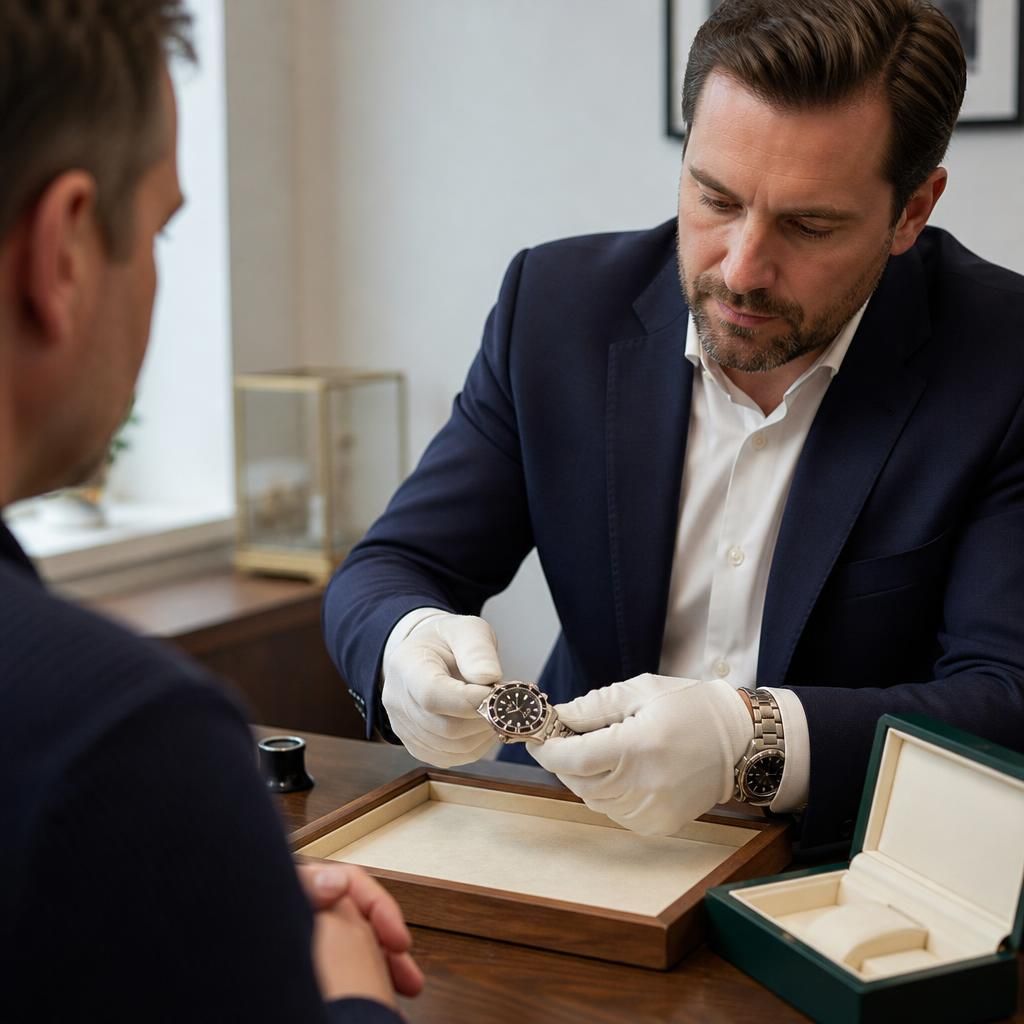
When selling a used Rolex Submariner through a dealer, ask for a written net offer that explains how the figure was reached and confirms the amount you will actually receive. The valuation should reflect the exact reference, originality, condition, documentation, service history and current demand, rather than the Submariner name alone.
Before accepting, clarify whether deductions may be made for servicing, replacement parts, authentication, insurance, postage or commission. Also confirm whether the dealer is buying the watch outright or selling it on consignment, when payment will be made, and what happens if the offer changes after inspection. A reputable process should leave you with clear terms, a secure payment method and a record identifying the watch sold.