What are the key elements to consider when choosing a pre-owned Rolex for men or women?
When choosing a pre-owned Rolex for men or women, consider the model, case size and style, wrist fit, condition, authenticity, service history, accompanying documentation and overall price. The best choice should suit the wearer’s lifestyle and preferences while offering a properly verified movement, realistic signs of wear and reliable aftercare.
Choosing a pre-owned Rolex for men or women involves assessing more than the dial and asking price. The key considerations are the model’s suitability, case size and wrist fit, condition, authenticity, service history, originality, documentation, seller protection and long-term ownership costs. A well-chosen watch should be comfortable and appropriate for the wearer while also having a properly verified movement, a credible history and a price that reflects its condition.
Start with the wearer and intended use
Consider when and where the watch will be worn. A daily watch needs practical features, comfortable proportions and sufficient resistance to everyday knocks and moisture. A dress-oriented model may prioritise a slimmer profile and refined dial, while a sports model may offer a more robust case and bracelet. Think about work, travel, formal occasions and personal style rather than choosing solely on collectability or current demand.
Rolex models are not strictly limited to one gender. Case proportions, bracelet length and styling usually matter more than the label applied to a watch. A smaller case can suit a man who prefers a discreet fit, while a larger model may be preferred by a woman who wants a more substantial presence on the wrist. The correct choice is the one that looks balanced, feels comfortable and reflects the wearer’s preferences.
Assess case size, thickness and wrist fit
Case diameter is only part of the fit. Thickness, lug-to-lug length, bezel design and bracelet shape can all affect how a watch sits on the wrist. A larger diameter may appear less imposing if the case is slim, whereas a compact watch with prominent lugs can wear more substantially than expected.
Try the watch on if possible, ideally with the bracelet adjusted to the intended fit. The case should sit securely without sliding excessively, and the lugs should not extend beyond the natural width of the wrist. Check that the clasp is comfortable and that the bracelet can be adjusted accurately. If purchasing remotely, request clear measurements and confirm whether additional or removed links are included.
Choose the model and specification carefully
Compare the model’s purpose, movement, functions and materials. Some watches provide only hours, minutes and seconds, while others include a date, additional timing functions or a second time zone. Decide which features will genuinely be used, as complications can affect servicing requirements, thickness and price.
Also review the dial colour, hour markers, hands, bezel and bracelet. Small specification differences can significantly change the character and desirability of a pre-owned Rolex. Confirm that the dial and hands are appropriate for the reference and period, particularly if originality and future value are important to you.
Examine the condition rather than expecting perfection
Condition should be judged across the case, bezel, crystal, dial, hands, bracelet, clasp and movement. Light marks from careful wear may be consistent with a pre-owned watch. More significant concerns include deep scratches, dents, corrosion, loose or stretched bracelet links, a damaged crystal, moisture ingress or an over-polished case with softened edges.
Look closely at photographs, but do not rely on photographs alone. Ask for a clear description of any marks and request images of the case sides, lugs, clasp, crown and case back. A polished watch is not automatically unsuitable, but excessive polishing can alter the original shape and reduce the definition of its design. The quality of any previous work is therefore more important than whether the watch has been polished at all.
The movement should operate correctly, with the hands setting smoothly and the date changing as expected where applicable. Accuracy, power reserve and water resistance should be assessed by a qualified watchmaker rather than assumed from appearance. Water resistance is not permanent and should not be relied upon without appropriate testing.
Verify authenticity and originality
Authentication should include the watch as a complete object, not just the serial or reference number. The case, movement, dial, hands, bezel, bracelet and clasp should be consistent with one another and with the stated model. A genuine case can still be paired with incorrect, replaced or aftermarket components, so a detailed inspection is essential.
Serial and reference markings can help establish identity and approximate production details, but they do not prove authenticity by themselves. The movement should be examined by an experienced professional, and any unusual engraving, inconsistent finishing or mismatched component should be explained before purchase. If a watch has replacement parts, establish whether they are genuine Rolex components and whether that affects your priorities regarding originality or value.
Review service history and mechanical condition
A documented service history can show when the watch was inspected, which work was completed and whether parts were replaced. Useful information may include movement servicing, gasket replacement, regulation, water-resistance testing and repairs to the bracelet or clasp. If there is no service history, this does not necessarily rule out the watch, but you should allow for a professional assessment and possible servicing.
Do not judge mechanical condition solely by whether the watch is currently running. A watch can appear to function while requiring lubrication, adjustment or replacement seals. Ask whether a recent service was carried out, who performed it and whether any warranty or service guarantee applies. Independent advice is particularly valuable where the watch is vintage, heavily worn or being sold without supporting records.
Check documentation and provenance
Documentation may include the original guarantee card, service records, receipts, instruction material, presentation box and valuation documents. These items can support the watch’s history, but their presence does not replace physical authentication. Check that the details on the paperwork correspond with the watch, including the model, serial information where shown, purchase or service dates and described configuration.
Be cautious of gaps or contradictions in the history. A missing box or card is not conclusive evidence of a problem, particularly with older watches, but it should be reflected in your assessment of provenance and price. A reputable seller should explain what is included, what has been verified and where uncertainty remains.
Consider originality and modifications
Find out whether the watch retains its original dial, hands, bezel, bracelet and clasp. Factory variations and legitimate replacements can occur during a watch’s life, so the important point is to understand exactly what has been changed and why. Aftermarket diamonds, bezels, dials or bracelets may affect authenticity, insurance, servicing and resale preferences.
Customisation is a personal choice, but a watch intended as a long-term store of value is usually assessed differently from one chosen primarily for appearance. Ask for a written record of any modifications and confirm whether the warranty, water resistance or future service options are affected.
Judge the price against the complete package
Compare like for like: the same model and specification, with similar condition, age, originality, bracelet completeness, service status and documentation. The lowest advertised price may not represent the lowest overall cost if the watch needs significant servicing or has missing links and unclear provenance.
Include likely ownership costs such as servicing, insurance, bracelet adjustments, repairs and valuation. A transparent price should be supported by a clear explanation of the watch’s condition and what is included. Be wary of pressure to make a quick payment, unusually vague descriptions or offers that do not provide adequate time for checks.
Understand the seller’s protection and aftercare
Before completing the purchase, establish what guarantee is provided, how long it lasts, what it covers and how claims are handled. Clarify whether the guarantee relates to the movement only or also includes other components and workmanship. You should also know the returns process, delivery and insurance arrangements, and whether the watch can be inspected or independently assessed.
Aftercare is an important part of the decision. Confirm that advice is available for servicing, cleaning, safe use and storage, and that future repairs or valuations can be discussed. Keep all receipts, service records and correspondence, as they help establish the watch’s history over time.
In practice, the strongest choice is a pre-owned Rolex that fits the wearer, suits its intended use, has a consistent and verified specification, and is priced fairly for its condition. If any aspect of the model, movement, provenance or paperwork is unclear, pause the purchase and arrange a professional inspection before committing.
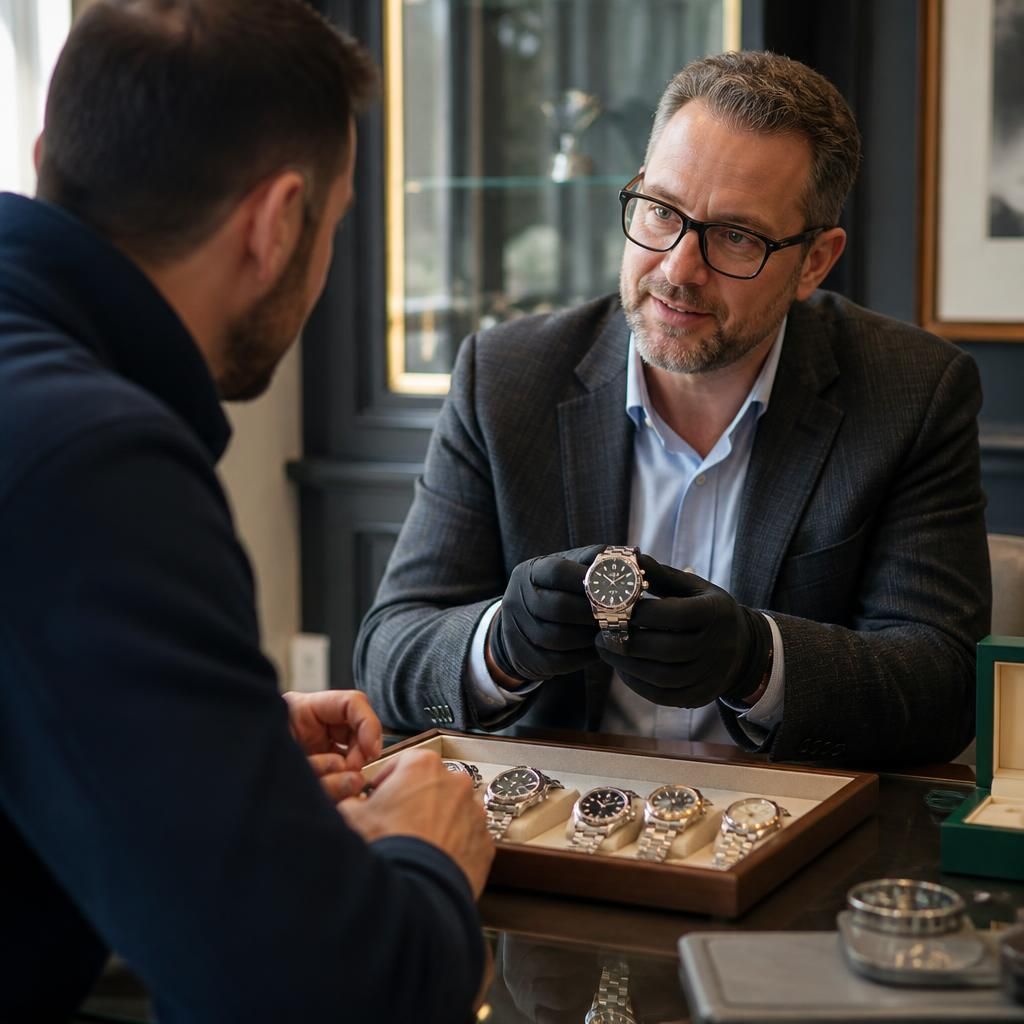
Choosing the right pre-owned Rolex for men or women starts with the wearer’s wrist, lifestyle and intended use, rather than a gender label. Case diameter, thickness, lug-to-lug length, bracelet fit and overall styling determine how the watch looks and feels when worn.
Consider whether it will be used daily, for travel, formal occasions or as an occasional piece. Try the watch on where possible and check that the case sits securely, the lugs do not extend beyond the wrist and the clasp feels comfortable. If buying remotely, confirm the case measurements, bracelet length and whether any removed links are included. A smaller Rolex may suit someone seeking a discreet appearance, while a larger model can provide a more substantial presence; comfort and proportion are the most useful guides.
Get expert guidance on choosing your pre-owned Rolex
Speak with Steven Charles Quance for expert guidance on selecting a pre-owned Rolex that suits the wearer, fits correctly and has verified condition and provenance. We can discuss suitable models, documentation, servicing and ongoing aftercare before you buy.