
Have you verified the quality of materials used for necklace restringing to ensure durability and longevity?
Verifying the quality of materials used in necklace restringing is crucial for ensuring both durability and longevity. Selecting top-grade stringing materials, such as silk or nylon threads, and ensuring their compatibility with the specific weight and texture of the necklace’s beads or elements, is essential. This careful material selection helps to maintain the integrity and aesthetic of your piece while enhancing its resilience against wear and tear over time.
In necklace restringing, the verification of material quality directly impacts the durability and longevity of your cherished jewellery piece. It’s essential to choose the right stringing material that can sufficiently support the weight and design of your necklace. Commonly used materials include silk, nylon, and stainless steel wire, each offering different strengths and appearances. Silk is often preferred for high-end pearls and beads as it provides a luxurious drape and traditional feel. However, nylon and stainless steel wire are favoured for their resilience and versatility, particularly for heavier or more casually worn pieces.
To ensure the material extends the necklace’s lifespan, it is prudent to consider the specific conditions in which the jewellery will be worn. Moisture, exposure to lotions, and frequent handling can cause certain materials, like silk, to fray over time. Nylon threads, coated for added protection, are less vulnerable to environmental damage, making them a suitable choice for pieces worn regularly.
Examining bead hole sizes and sharpness is also integral to selecting the right material. For instance, beads with larger or abrasive holes may require a sturdier thread like nylon or a fine wire to prevent wear. On the other hand, softer or natural stones need a gentler, more flexible thread to cushion and protect them from damage.
When verifying the quality, consistent consultation with a professional jeweller can assure you of the correct choice. Their expertise ensures that the stringing material complements the necklace’s aesthetics while maintaining its structural integrity. Additionally, a thorough assessment by the jeweller includes examining the clasp and other components, addressing any other possible integration issues, thus securing your necklace’s beauty and durability for the future.
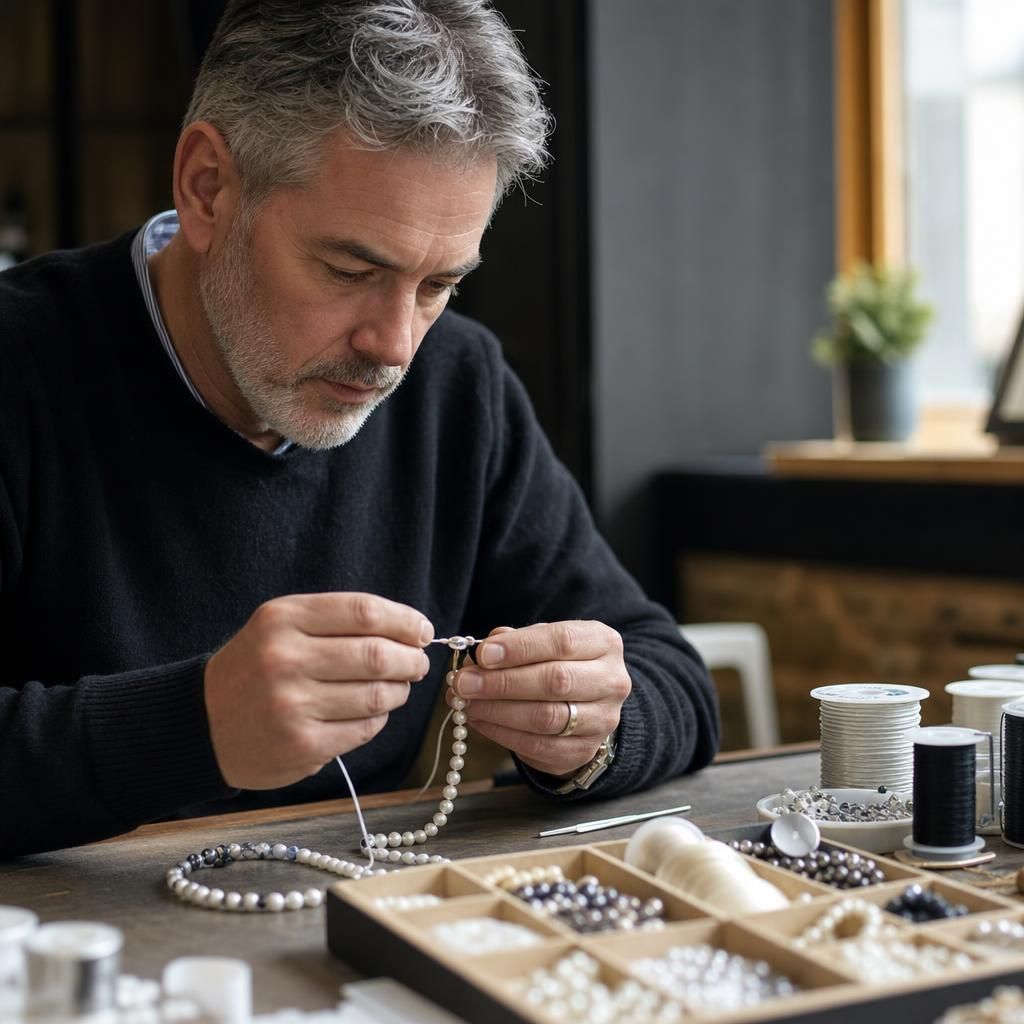
One crucial aspect in ensuring the durability and longevity of your restrung necklace is selecting the appropriate stringing material that matches the characteristics of your jewellery. Monitoring the quality begins with assessing the specific needs of your necklace, including the size and weight of its beads or gemstones. For instance, if your necklace features larger or denser beads, opting for a sturdy, coated nylon thread or stainless steel wire can enhance resilience and prevent premature wear. These materials are particularly effective if your necklace is subject to frequent use or environmental factors that might degrade more delicate threads like silk over time.
Silk, while luxurious, might not always be suitable for daily wear, especially in humid conditions where moisture can affect the thread’s integrity. Conversely, selecting a durable nylon or stainless steel option can mitigate these concerns, providing additional strength while maintaining a refined appearance. Consulting with an expert jeweller ensures an informed choice, tailored to complement the necklace’s aesthetic without compromising the piece’s structural reliability.
Ask Us to Verify Your Necklace Restringing Materials
Ask us to check the quality and suitability of the materials used for your necklace restringing, so the finished repair is durable, secure and appropriate for your beads. Bring your necklace to Steven Charles Quance for expert advice and a careful assessment.