
What should I consider regarding the metal type and design when selecting a jeweller for ring resizing?
When selecting a jeweller for ring resizing, check that they have experience working with your ring’s metal—such as gold, platinum or silver—and with its specific construction. The design, including gemstones, intricate shoulders, patterns and settings, determines the safest resizing method and whether the original finish and proportions can be preserved.
The metal type and design of your ring should determine which jeweller you choose for resizing. A suitable jeweller must be able to identify the metal accurately, understand how it behaves when heated, cut or stretched, and assess whether the setting, gemstones and decorative details can be protected throughout the work. Experience with a similar ring is more important than a standard resizing service that treats every piece in the same way.
Check the jeweller’s experience with the specific metal. Gold, platinum and silver require different techniques, equipment and finishing processes. Gold also behaves differently according to its colour and alloy, so white, yellow and rose gold may require different soldering and polishing considerations. Platinum requires specialist handling and finishing to preserve its distinctive surface and avoid contamination from other metals. Silver can be resized, but its softer nature means that the jeweller should consider the intended finished thickness and the risk of wear.
Some alternative metals are difficult or impossible to resize conventionally. Tungsten, ceramic and certain titanium rings may need replacing rather than cutting and joining. If the metal is unclear, ask for it to be tested before any work is agreed. A reliable jeweller should explain the likely options and limitations rather than promise that every ring can be altered.
Consider how the design affects the available method. A plain band usually provides the most flexibility, while a detailed or stone-set ring needs a more careful assessment. The jeweller should examine:
- the position, size and condition of each gemstone;
- whether stones are set in the band, shoulders, halo or underneath the ring;
- the thickness and shape of the shank;
- patterns, milgrain, engraving, applied details or contrasting metal sections;
- whether the ring is hollow, tapered, shaped or unusually narrow;
- whether the design is symmetrical and can be joined without disturbing its proportions; and
- the condition of existing claws, settings, joins and previous repair work.
These details influence whether the ring should be enlarged by inserting a section of matching metal, reduced by removing a section, or adjusted by another suitable method. Stretching is not appropriate for every ring, particularly where it could thin the band, distort a setting or affect the alignment of stones. A jeweller should recommend the least intrusive method that provides a durable result, rather than selecting the quickest option.
Pay particular attention to stone-set and patterned designs. An eternity-style ring with stones around much of the band may have little plain metal available for a conventional cut and join. Gemstones close to the resizing area can be exposed to heat, pressure or movement if the work is not carefully planned. Engraving and continuous patterns may need to be recreated across the altered section, and a textured, satin or brushed finish should be restored so that the resized area does not look noticeably different from the rest of the ring.
Ask how the jeweller will protect the setting and preserve the original appearance. The assessment should include checking for loose stones before work begins, deciding whether any stones need to be removed, protecting heat-sensitive materials, and inspecting the ring again after resizing. Pearls, opals, some treated gemstones and certain decorative materials may require additional precautions or may restrict the available process.
Choose a jeweller who gives a clear assessment before proceeding. The consultation should cover the current size, the desired fit, the metal, the design, any previous alterations and the condition of the ring. You should receive an explanation of:
- the recommended resizing method and why it suits the ring;
- how the metal will be matched and joined;
- whether the setting, stones, engraving or finish present particular risks;
- whether the ring may need related work, such as claw repairs or re-polishing;
- how the finished ring will be checked for roundness, comfort, security and symmetry; and
- what aftercare or inspection is advisable once the ring has been worn.
It is also sensible to ask whether the jeweller carries out the work using appropriate in-house expertise or sends it to a specialist, and who will inspect the ring before it is returned. This is not a matter of choosing one approach universally; the important point is that responsibility, proposed work and quality checks are explained clearly.
Look for evidence of careful finishing, not only the ability to change the size. A properly resized ring should remain structurally sound, sit evenly on the finger and retain its original design balance. The join should be secure and carefully finished, without a visible step, weak point or abrupt change in colour. Polishing should not remove important detail or soften crisp engraving and settings. With platinum and white gold in particular, discuss whether the surface finish or any subsequent plating treatment needs to be restored.
Before leaving the ring with the jeweller, record any existing marks or damage and confirm the requested size and finish. When collecting it, check that the ring is comfortable, the stones are secure, the band is evenly shaped and the design remains aligned. If anything feels different from what was agreed, raise it promptly so it can be assessed before normal wear continues.
For a valuable, sentimental or unusually designed ring, a face-to-face consultation is preferable to relying on a size alone. A jeweller with experience in bespoke jewellery and aftercare can assess the metal and construction together, explain realistic options and identify when resizing may not be the safest solution. In some cases, remodelling, replacing a worn section or creating a new band may protect the design better than forcing a conventional alteration.
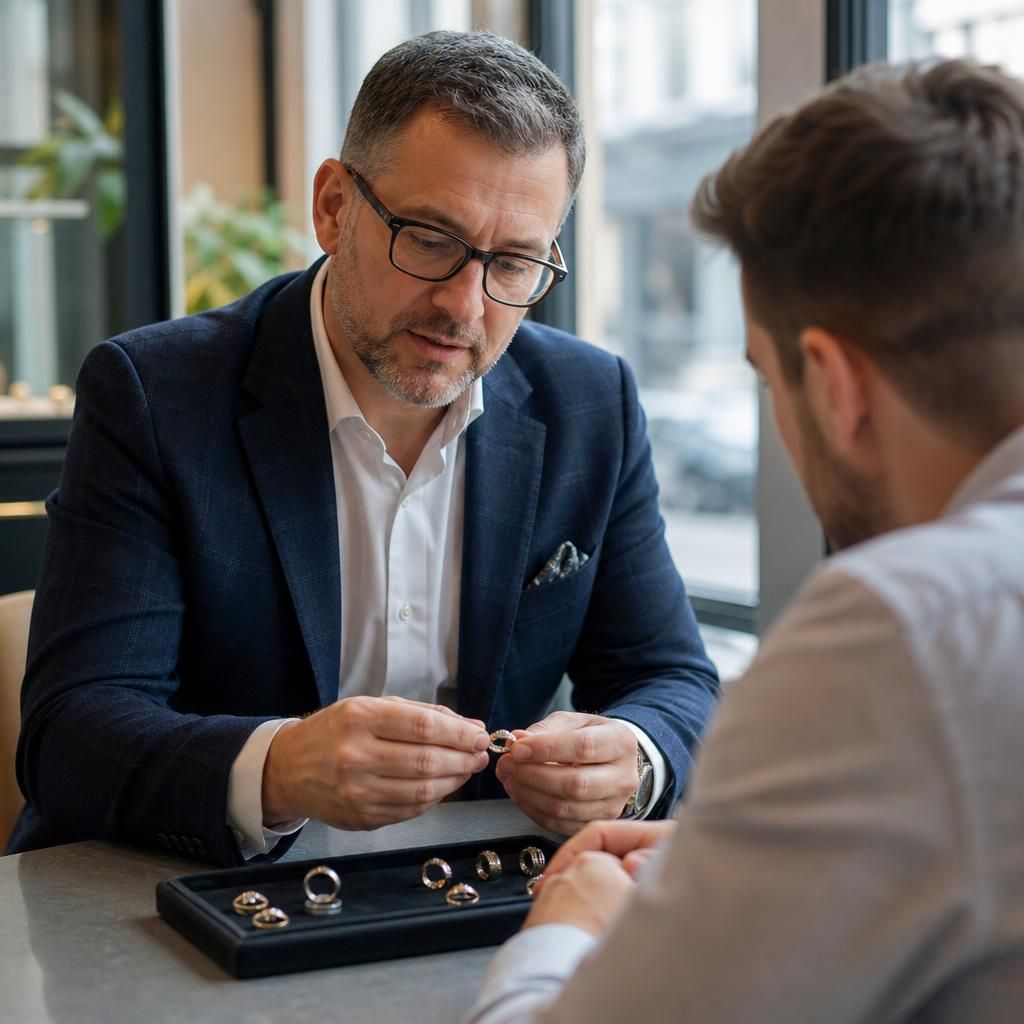
The metal and design of a ring determine whether resizing can be carried out safely and which technique is appropriate. A jeweller should assess the alloy, band thickness, gemstone settings, engraving and overall construction before recommending any alteration.
Plain gold and silver bands are generally more flexible, while platinum, patterned rings and stone-set designs require specialist equipment and careful finishing. Some tungsten, ceramic and titanium rings cannot be resized conventionally. Choose a jeweller who will explain the limitations, protect the gemstones and restore the ring’s original shape, texture and proportions after the work.
Book a Ring Resizing Consultation
Book a ring resizing consultation so we can assess your ring’s metal, design and condition before recommending the safest alteration method. We will explain the available options, likely finish and any precautions needed to protect its gemstones and original details.