
What should I consider when choosing a service for necklace and bracelet repairs in Birmingham?
Choose a necklace and bracelet repair service in Birmingham based on the jeweller’s experience with your piece, the quality of replacement materials, the proposed repair method and the clarity of the quotation. A professional assessment should also cover design details, cleaning or polishing, timescales, insurance and aftercare before work begins.
The right service for necklace and bracelet repairs in Birmingham should offer relevant experience, a careful inspection, high-quality materials and a clear explanation of the proposed work. Before authorising a repair, make sure the jeweller understands the construction, metal, clasp, stones and finish of your piece, and can explain the repair method, likely timescale, cost and aftercare.
Start with a proper assessment. A necklace or bracelet should be examined in person rather than assessed only from a photograph, particularly if it is valuable, antique, personalised or made from several materials. The jeweller should check for stretched links, thinning sections, worn rings, loose settings, damaged solder joints and weakness around the clasp. It is also important to identify whether previous repairs have affected the structure. A small visible fault can sometimes indicate wider wear that needs addressing to prevent further damage.
Check the jeweller’s experience with the type of piece. Chain repairs, clasp replacements and simple link repairs require different skills from the restoration of articulated bracelets, fine chains, charm bracelets or intricate handmade designs. Ask whether the service regularly works with the construction and style of your jewellery. Pieces with delicate links, moving parts, unusual settings or decorative details may need bench work and specialist tools rather than a quick alteration.
Confirm the metal and other materials. Gold, platinum, silver and mixed-metal jewellery require different approaches to soldering, polishing and colour matching. The jeweller should identify the metal correctly and consider its fineness, hardness and existing finish before recommending a repair. Additional care may be needed for jewellery containing pearls, opals, enamel, plated surfaces, leather, fabric or other materials that can be damaged by heat, chemicals or excessive polishing.
Ask how the repair will preserve the design. The most suitable repair is not always the most obvious one. Replacing a damaged section, reinforcing a worn area or remodelling part of a bracelet may be preferable to repeatedly closing a weak link. On a bespoke or unusual piece, the repair should respect the original proportions, texture, setting and decorative details. If the design is intricate, ask whether the work will be approached as a restoration rather than treated as a standard replacement.
Discuss clasps, links and replacement parts. Clasps are subject to regular strain, so a repair service should check both the clasp itself and the connecting rings or end fittings. Replacement parts should be appropriate for the weight and use of the jewellery, not simply selected for appearance. If a stone, link, charm or fitting is missing, ask how a suitable replacement will be sourced and whether it will match the original in colour, size, cut, texture and quality. Any proposed substitute should be agreed before work begins.
Clarify cleaning and polishing. Cleaning can remove surface dirt and make a repaired piece easier to inspect, but it is not a substitute for structural repair. Polishing may improve scratches and marks, although excessive polishing can soften edges, remove texture or reduce the definition of engraved and decorative work. Ask whether cleaning or polishing is necessary, which finish will be restored and whether delicate stones or specialist materials need to be excluded from the process.
Request a written quotation and explanation. A useful quotation should describe the work rather than provide only a price. It should state whether the repair involves labour, replacement parts, stone setting, cleaning, polishing, engraving or any additional restoration. If the jeweller cannot confirm the full cost until the piece is opened or dismantled, this should be explained in advance, along with how any further work will be authorised.
Consider security and insurance. For valuable jewellery, ask how it will be recorded and stored while it is in the workshop, and whether the service has suitable cover while the item is in its care. A description of the piece, photographs and details of any stones can help establish its condition before work starts. If the jewellery has a recent valuation or insurance documentation, provide it where relevant.
Discuss timescales and collection arrangements. The time required depends on the repair method, the availability of parts, the need for specialist work and whether the item must be sent to another workshop. A realistic timescale is preferable to an early promise that does not allow for careful inspection or testing. When the repair is complete, the jeweller should check that the clasp operates correctly, links move as intended and any stones or fittings are secure before returning the piece.
Ask about aftercare. Find out how soon the jewellery can be worn, whether it needs any restrictions and how it should be cleaned at home. Chains and bracelets should be checked periodically for stretched links, thinning areas and clasp wear, especially if worn frequently. A professional jeweller should also be able to advise when further inspection, cleaning, resizing, remodelling or valuation may be appropriate.
For a straightforward repair, a clear diagnosis and proportionate solution may be all that is needed. For a valuable, sentimental or unusually designed necklace or bracelet, choose a service that will document the condition, discuss alternatives and prioritise the long-term strength and appearance of the piece. At Steven Charles Quance, these points can be reviewed during a jewellery consultation so the proposed repair is matched to the construction, materials and purpose of your necklace or bracelet.
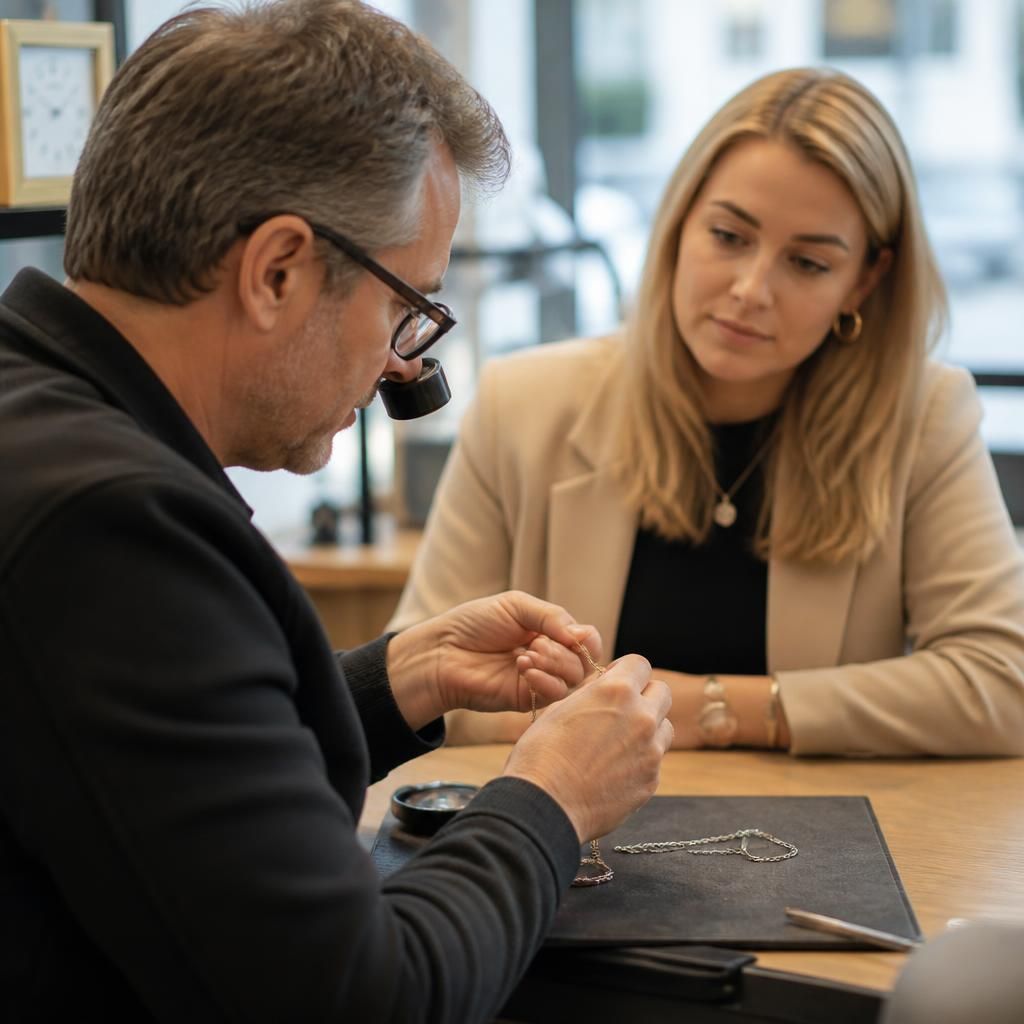
Choosing a repair service for a necklace or bracelet starts with a proper inspection of the damaged area and the surrounding components. A worn clasp, stretched link or thinning section may indicate wider weakness, so the jeweller should assess the whole piece before recommending a repair.
Ask whether the proposed work will restore the original strength and appearance, rather than simply conceal the visible fault. The jeweller should also explain the metal and finish involved, whether replacement parts are needed, how the repair will be tested, and whether cleaning or polishing could affect engraved details, gemstones or delicate surfaces.
Arrange Your Necklace or Bracelet Repair Consultation
Arrange a necklace or bracelet repair consultation with Steven Charles Quance to discuss the damage, materials, repair options and any replacement parts required. We will assess your jewellery carefully and explain the recommended work, timescale and quotation before proceeding.