What materials are best for a bespoke men’s signet or solitaire ring?
Platinum is an excellent choice for a bespoke men’s signet or solitaire ring because it is durable, naturally white and well suited to securely setting gemstones; 18ct gold offers a classic alternative in yellow, white or rose tones, while 9ct gold provides a harder-wearing, more accessible option. The best material depends on the design, stone, everyday wear, preferred colour, budget and whether the ring needs to coordinate with existing jewellery.
The best materials for a bespoke men’s signet or solitaire ring are usually platinum, 18-carat gold or 9-carat gold. Platinum is particularly well suited to a substantial signet or a solitaire ring with a valuable gemstone because it is dense, naturally white and highly secure for stone setting. Gold offers greater choice in colour, weight and budget, with yellow, white and rose gold all available. The right choice depends on the ring’s design, the gemstone, how it will be worn, the desired finish, existing jewellery and the level of maintenance you are comfortable with.
Material selection should be considered at the start of the design process rather than treated as a final finish. The metal affects the ring’s colour, weight, profile, durability, setting style, engraving detail and future repairs or resizing. A bespoke design can then be proportioned around the chosen material, rather than adapting an unsuitable design afterwards.
Platinum is often the strongest choice for a premium solitaire ring or a signet intended for frequent wear. It is naturally white, so its colour does not depend on a surface plating. Its density gives a platinum ring a reassuring weight, which can be especially effective for a broad signet face or a substantial band. Platinum is also well suited to gemstone settings because the metal can provide secure claws, bezels and shoulders when properly designed and made.
Platinum is not completely scratch-proof. With wear, its surface can develop a soft, matt patina as metal is displaced rather than lost. Some clients value this appearance, while others prefer the ring to be polished periodically. Platinum is also generally more expensive than gold because of its density and the amount of material required. Its weight and cost should therefore be balanced against the scale of the design, particularly when creating a wide signet.
18-carat gold is a versatile choice for both signet and solitaire rings. It contains a higher proportion of pure gold than 9-carat gold and is available in yellow, white and rose tones. Yellow gold gives a traditional, warm appearance and works particularly well with classic signet shapes, engraved crests and understated solitaire designs. Rose gold adds a subtle copper tone, while white gold provides a cooler appearance that can complement colourless or pale gemstones.
White gold is usually finished with rhodium plating to give it a bright, reflective white surface. This plating can wear over time, especially on the lower part of a ring and along edges that receive regular contact. It can be renewed as part of professional servicing. The underlying white gold may have a slightly warmer tone than freshly plated rhodium, so this is worth considering if you want a low-maintenance finish.
9-carat gold is a practical alternative where budget, everyday wear and a harder-wearing alloy are important considerations. It is available in yellow, white and rose gold, although the exact colour depends on the other metals used in the alloy. It can be a suitable choice for a robust signet or a straightforward solitaire ring, particularly when the design has sufficient metal around the setting and is intended for regular use.
The lower gold content does not automatically make a 9-carat ring unsuitable, nor does a higher gold content make a ring immune to damage. Wear depends on the design, the alloy, the ring’s thickness and how it is used. A bespoke jeweller can adjust the shoulders, setting and signet face to provide appropriate support, rather than relying on the metal alone.
Palladium can be considered when a naturally white precious metal is preferred but platinum’s weight or cost is not suitable. It is lighter in feel than platinum and does not require the same type of rhodium finish as white gold. Palladium can work well for a clean, contemporary solitaire or signet design, although the choice may be more limited depending on the required profile, alloy and future servicing needs. Its suitability should be assessed alongside the ring’s construction and the availability of compatible repair materials.
Silver may be appropriate for occasional wear, a lower-cost design or a piece with a deliberately softer, more changeable appearance. It is generally less suitable for a fine gemstone solitaire intended for everyday wear because it is more prone to tarnishing, scratching and distortion than platinum or gold. Silver can also require more frequent cleaning and polishing, particularly when used for a broad signet face that is regularly exposed to contact.
Alternative metals such as titanium, stainless steel and tantalum can offer distinctive colour, lightness or hardness, but they are not always practical for a fully bespoke ring. Some are difficult or impossible to resize using conventional jewellery methods, and repairs, polishing and stone-setting can require specialist equipment. They may therefore be better suited to a fixed-size contemporary design than to a ring expected to be altered or extensively remodelled in the future.
For a signet ring, consider how the metal will support the face and preserve its edges. A large, flat face shows scratches and surface marks more readily than a rounded band. Platinum and gold can both be used successfully, but the design should allow enough material around the shoulders and beneath the face to prevent excessive flexing. Engraving, a family crest or a recessed pattern may also influence the choice of colour and finish. Yellow gold can make traditional engraving particularly legible, while a darker oxidised recess or a polished and matt contrast can add definition to a white metal.
For a solitaire ring, the metal must work with the gemstone and setting. White metals can make a colourless diamond or pale stone appear especially bright, although the setting design and stone quality remain more important than colour alone. Yellow or rose gold can create deliberate contrast, particularly where the claws or bezel are made to match the band. Platinum is often selected for high-security settings, but gold can also be engineered effectively for claws, bezels and tension-free mountings when the design is suitable.
- Choose platinum for a naturally white, weighty metal with excellent credentials for secure gemstone settings and long-term wear.
- Choose 18-carat yellow gold for a traditional, rich colour and a refined finish.
- Choose 18-carat white or rose gold when the colour of the metal is central to a more contemporary or contrasting design, allowing for the relevant maintenance of white-gold plating.
- Choose 9-carat gold when a practical, accessible and robust precious-metal option is required.
- Consider palladium when a lighter, naturally white precious metal is preferred and the design is compatible with its servicing requirements.
- Use silver or alternative metals selectively, taking account of tarnishing, wear, resizing and future repair limitations.
Skin sensitivity is another consideration. Nickel can be present in some white-gold alloys, so anyone with a known metal allergy should mention it before the alloy is selected. The precise alloy should be confirmed with the jeweller, particularly for a ring worn continuously. Ethical sourcing can also form part of the discussion, including the provenance of the metal and gemstone and whether recycled or responsibly sourced materials are suitable for the design.
Finally, think about aftercare before making the decision. All rings benefit from periodic inspection, particularly solitaire rings whose claws or bezel can loosen after repeated impact. Gold rings may be polished or resized according to their construction, while platinum requires its own finishing techniques. White-gold rings may need their rhodium finish renewed, and engraved signets should be checked carefully before polishing so that fine detail is not softened unnecessarily.
In practical terms, platinum is the leading choice for a substantial, high-value solitaire or a particularly durable signet; 18-carat gold is the most versatile option for colour and refinement; and 9-carat gold is a sensible choice where everyday practicality and budget carry more weight. The best bespoke result comes from matching the metal to the ring’s proportions, gemstone, engraving, lifestyle and future aftercare rather than choosing solely by colour or price.
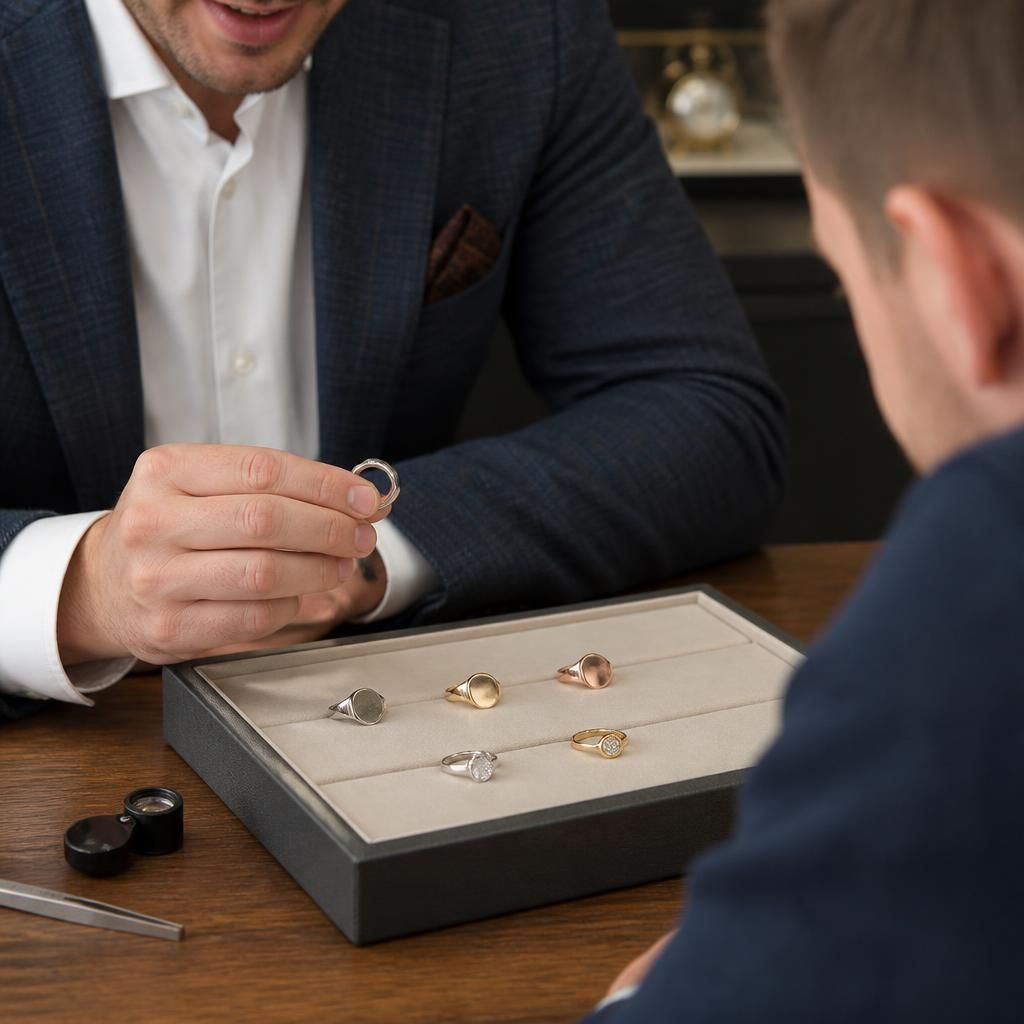
The best material for a bespoke men’s signet or solitaire ring depends on how the ring will be worn, rather than on colour or price alone. Platinum is well suited to substantial designs and valuable gemstone settings, while 18-carat gold offers the greatest choice of yellow, white or rose colour. A well-designed 9-carat gold ring can provide a practical, accessible option for regular wear.
For a signet, the metal must support the broad face and preserve its edges, particularly where engraving or a family crest is included. For a solitaire, the shoulders and setting need to provide adequate protection for the stone. Platinum is naturally white and develops a distinctive patina, whereas white gold usually requires periodic rhodium renewal. Discussing the intended wear, gemstone, engraving and future aftercare at the design stage helps ensure the chosen material is appropriate for the finished ring.