
What are the main design elements considered in crafting a bespoke engagement ring?
The main design elements of a bespoke engagement ring are the centre stone, its cut and setting, the choice of precious metal, the ring’s profile and proportions, and details such as accent stones, engraving and finish. Each element is considered alongside the wearer’s personal style, lifestyle, comfort, budget and preferences for responsibly sourced materials, so the finished ring is both distinctive and practical.
The main design elements of a bespoke engagement ring are the centre stone, its cut and setting, the choice of precious metal, the ring’s proportions and profile, and the decorative details that give the piece its individual character. These decisions are considered together rather than in isolation, taking account of personal style, lifestyle, comfort, budget, hand proportions and the availability of responsibly sourced materials.
The centre stone is usually the starting point. A diamond may be chosen for its size, colour, clarity and cut quality, while a coloured gemstone introduces different considerations, including hue, durability, transparency and the way it responds to light. Sapphires and rubies are generally well suited to regular wear, whereas some softer or more delicate gemstones may need a more protective setting or additional care.
The stone’s shape also affects the overall character of the ring. Round brilliant stones typically offer a bright, traditional appearance, while oval, pear, emerald, cushion, marquise and emerald-cut stones create different visual effects. Elongated shapes can make the finger appear longer, although the proportions of the stone should be assessed in relation to the wearer’s hand and the intended ring design. A bespoke design allows the stone’s natural characteristics to influence the setting, rather than requiring the stone to conform to a standard mount.
Cut, proportion and orientation are important beyond the basic outline of the stone. The relationship between the length, width and depth of the centre stone affects how it sits on the finger and how much presence it has. The stone can be positioned vertically, horizontally or at an angle, depending on the desired appearance and how the engagement ring is expected to sit alongside other jewellery. Its orientation may also influence the width, height and balance of the shoulders.
The setting holds the stone securely and contributes significantly to the ring’s appearance. A claw or prong setting exposes more of the stone and allows light to enter from several directions. A bezel setting surrounds the stone with metal, giving a clean outline and a greater degree of protection around the edges. A halo setting places smaller stones around the centre, increasing the visual spread of the design, while a cluster arrangement groups stones in a less formal composition. A rub-over or partially enclosed setting may be considered where a smoother, more protected profile is preferred.
The number, shape and placement of claws require careful consideration. They must provide appropriate security without unnecessarily covering the stone. The setting should also be examined for snagging risks, ease of cleaning and compatibility with the wearer’s everyday activities. A high-set stone may accommodate a wedding ring more easily, but it can be more exposed to knocks. A lower setting may feel more practical and discreet, although it may leave less room for a straight wedding band.
The precious metal affects colour, durability, maintenance and the visual contrast with the stone. Platinum has a naturally white appearance and is often selected for its substantial feel and suitability for fine settings. White gold provides a similar visual effect, although its finish and long-term care requirements should be discussed as part of the design. Yellow gold gives a warmer, traditional appearance, while rose gold introduces a softer pink tone. Mixed-metal designs can combine these effects, such as a white setting with a yellow or rose gold band.
Metal choice should be assessed in relation to skin sensitivity, existing jewellery and the wearer’s preferred level of maintenance. It also affects how details such as engraving, milgrain edges or textured surfaces appear. Where ethical sourcing is important, the provenance of the metal and the sourcing standards applied to the stones should form part of the design discussion from the outset.
The ring’s profile and proportions determine how it looks and feels when worn. This includes the width and thickness of the band, the height of the setting, the shape of the shoulders and the way the underside is constructed. A slim band can create a delicate appearance, but it must still provide appropriate structural support. A wider band may offer a stronger visual presence and more space for engraving or accent stones.
The inner surface can be shaped for comfort, with softened edges and a considered fit around the finger. The ring should feel balanced rather than top-heavy, particularly where the centre stone is large or the setting is raised. Finger size, knuckle shape and the way the wearer uses their hands can all influence the most practical profile. These details are especially relevant when the engagement ring is intended to be worn every day.
Accent stones can add light, colour or meaning without taking attention away from the centre stone. They may be set along the shoulders, around the centre stone, within a split-shank design or discreetly on the side of the ring. Smaller stones can match the centre stone for a uniform appearance, or contrast with it to create more definition. Their placement should be planned carefully so that the ring remains balanced and comfortable, with suitable protection for stones exposed to contact.
Shoulder and band design provide another opportunity for personalisation. The shoulders may be plain, tapered, split, shaped or set with stones. A knife-edge profile creates a more defined line, while a rounded or softly curved band tends to have a gentler appearance. The band can be designed to sit independently or to coordinate with a future wedding ring. If a close-fitting bridal set is intended, the shape and height of both rings should be considered together before the engagement ring is made.
Surface finish and craftsmanship details influence the final character of the piece. A high-polish finish reflects light and gives a smooth, classic appearance. Satin, brushed, hammered or textured finishes create a more subdued or tactile effect. Details such as milgrain beading, pierced gallery work and hand-finished edges can be used selectively to support the design, but they should not compromise the strength of the setting or make routine cleaning unnecessarily difficult.
Personal details can make the ring more meaningful without making the design appear overly decorative. Engraving may be placed inside the band or in another discreet position, subject to the available space and metal thickness. Initials, a date, a short phrase or a symbol can be incorporated, while the design itself may reference an existing piece of jewellery, a family detail or a particular architectural or natural form. The most successful details are proportionate to the ring and remain compatible with comfortable daily wear.
Finally, every design element must work as part of a practical object. The proposed ring should be assessed for security, wear resistance, cleaning, future resizing and the possibility of repairs or remodelling. A bespoke consultation therefore considers not only how the ring looks in a drawing or sample, but also how the materials, setting and proportions will perform over time. This process ensures that the finished engagement ring is distinctive, wearable and properly suited to the person for whom it is made.
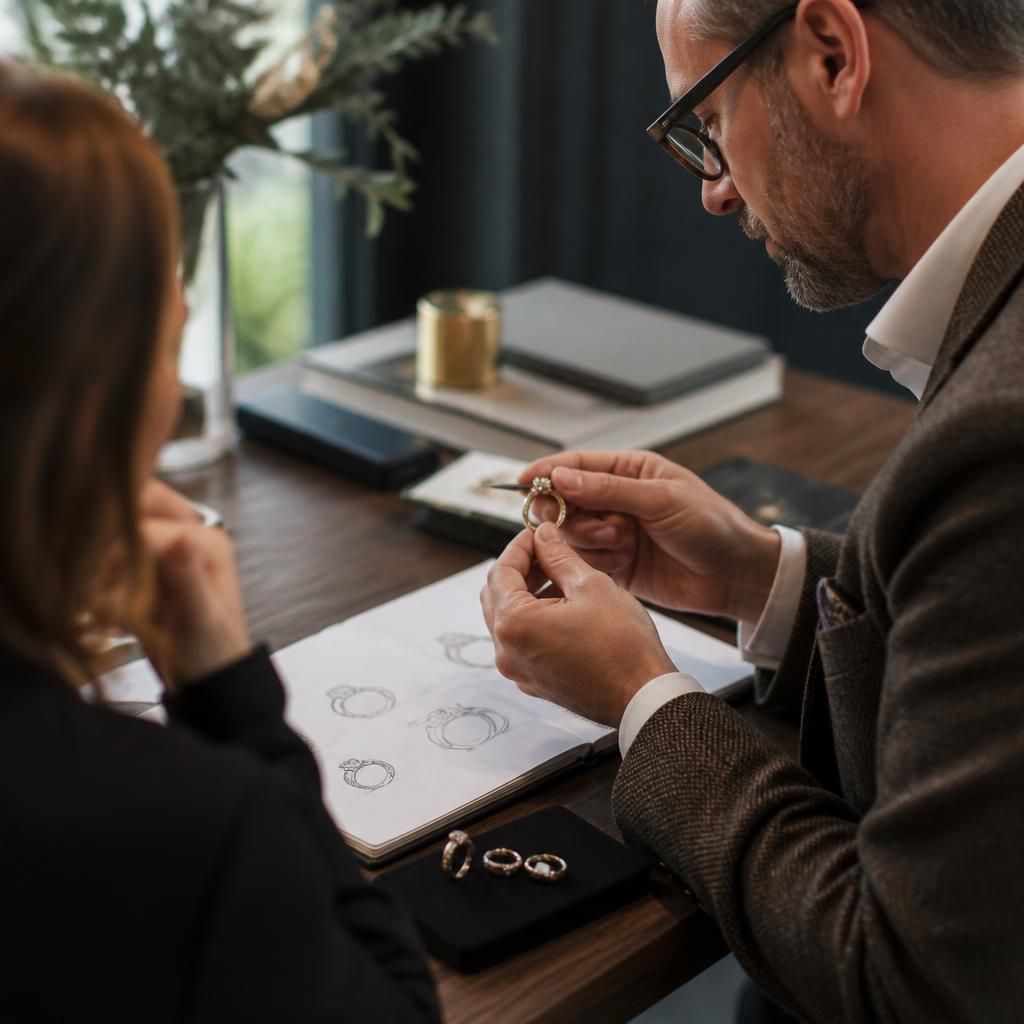
The setting is a key design element in a bespoke engagement ring because it secures the centre stone while determining the ring’s height, profile and overall appearance. A claw setting exposes more of the stone and allows light to enter from multiple directions, whereas a bezel or rub-over setting surrounds more of the stone for a smoother, more protective finish.
Setting height and claw placement should be chosen alongside the wearer’s lifestyle and intended wedding ring. A high setting may leave room for a straight wedding band but can be more exposed to knocks. A lower setting is often more practical for everyday wear, although it may require a shaped wedding ring to sit neatly alongside it. The proportions of the stone, shoulders and band must also be balanced so the finished ring feels secure and comfortable rather than top-heavy.
Discuss your bespoke engagement ring design
Discuss your bespoke engagement ring design with Steven Charles Quance to refine the centre stone, setting, metal, proportions and personal details around your preferences and lifestyle. Our expert guidance can help you develop a practical, distinctive design with ethically sourced materials and appropriate aftercare in mind.