How can I ensure I'm getting good value for my money when buying pre-loved jewellery?
To ensure you get good value when buying pre-loved jewellery, assess the piece’s precious-metal content, gemstone quality, condition, authenticity and craftsmanship alongside its price. Compare like-for-like items and buy from a trusted jeweller who can provide clear information, professional advice and appropriate aftercare.
Good value when buying pre-loved jewellery means paying a fair price for the piece’s precious-metal content, gemstones, workmanship, condition, design and documented authenticity. Do not judge value from the asking price alone. Compare like-for-like jewellery, verify what you are buying and allow for any immediate repair, cleaning, resizing or valuation costs.
Start with the metal. Look for a legally recognised hallmark where one is required. A UK hallmark can confirm the standard of precious metal, such as gold, silver or platinum, and usually includes marks identifying the assay office and maker or sponsor. A stamp such as “9ct” or “18ct” can be useful, but a hallmark is more reliable than an informal description alone. Ask the jeweller to explain any marks that are worn, unclear or inconsistent with the item’s description.
- Confirm whether the item is solid gold, silver or platinum, rather than plated or filled.
- Check the stated metal standard and whether it applies to every part of the item, including the setting, chain, clasp and any replacement components.
- Remember that a higher precious-metal content does not automatically make one design better value; condition, craftsmanship and gemstone quality also affect the price.
Assess gemstones carefully. The value of a diamond or coloured gemstone depends on factors including species, colour, clarity, cut, carat weight, treatment and whether it is natural, laboratory-grown, synthetic or an imitation. A pre-loved piece may contain gemstones that have been replaced, fracture-filled, heat-treated or otherwise enhanced. Treatment is not necessarily a disadvantage, but it should be disclosed because it affects care requirements and comparison with untreated stones.
Ask what information is available about the gemstones and whether a report or independent assessment is appropriate. For valuable pieces, a gemmological report can provide useful confirmation of the stone’s identity and characteristics. Do not assume that a certificate is included or that every document carries the same weight; check who issued it and whether it relates specifically to the stone being offered.
Inspect condition and workmanship. Pre-loved jewellery can offer excellent value when it has been well maintained, but visible wear is only one part of the assessment. Look closely at:
- claws or bezels holding stones, checking for thinning, looseness or gaps;
- the shank of a ring, particularly beneath the finger where repeated wear can cause thinning;
- hinges, catches, clasps and safety chains;
- signs of previous sizing, repairs, reshaping or soldering;
- scratches, dents, chips, cracks and abrasion on gemstones;
- matching details on earrings, cufflinks or other paired items; and
- the quality and precision of the setting, links, engraving and finishing.
Some wear is consistent with a pre-loved item and may be reflected in the price. More significant damage can create a safety risk or lead to a repair bill that removes any apparent saving. Ask for a clear explanation of the condition and whether the piece has been professionally checked, cleaned or serviced before purchase.
Compare prices on a like-for-like basis. A meaningful comparison should consider the same metal standard, approximate weight, gemstone characteristics, design quality, condition, age and included services. The cheapest similar-looking item may have lower-grade materials, worn settings, undisclosed treatments or no meaningful aftercare. Conversely, a higher price may be justified by distinctive craftsmanship, a well-preserved setting, a desirable period design, documented provenance or professional restoration.
Metal value can provide a useful reference, but it is not the complete retail value of a finished piece. The price also reflects design, labour, setting quality, gemstone value, inspection, restoration and the expertise involved in selecting and preparing the jewellery. Avoid relying solely on an online calculator based on weight, particularly for intricate or gem-set pieces.
Ask what is included in the price. Before committing, establish whether the purchase includes professional cleaning, a condition assessment, resizing, repairs, a valuation document, a guarantee or aftercare. These services should not be used to disguise an inflated price, but they can make two apparently similar offers materially different. If a ring needs resizing, confirm whether the design can be safely altered and obtain the likely cost before buying.
Check authenticity and ownership information. A reputable jeweller should be able to describe the item accurately and explain its hallmarks, materials and known history. Where provenance is relevant, ask what documentation is available. For items with a notable designer, period style or distinctive signature, ensure that attribution is supported rather than based on appearance alone. Be cautious where a seller refuses reasonable questions, gives inconsistent descriptions or pressures you to make an immediate decision.
For higher-value purchases, consider obtaining an independent valuation for insurance or probate purposes after the item has been authenticated. An insurance replacement valuation is not the same as the price you paid or the amount you would necessarily receive on resale, so ask the valuer to explain the purpose and basis of the valuation.
Use a practical pre-purchase checklist:
- Read the description and confirm the metal, hallmarks and gemstone details.
- Examine the item in good light, including the underside, setting and fastenings.
- Ask about repairs, alterations, treatments, missing documentation and known defects.
- Confirm whether the item has been inspected and whether any work is recommended.
- Compare the total cost with similar pieces from established jewellers.
- Check the returns policy, receipt, guarantee and available aftercare.
- Keep all paperwork, photographs and correspondence after purchase.
Value is strongest when the jewellery is authentic, accurately described, structurally sound and priced in line with its materials and workmanship. When an item’s history or condition is unclear, professional guidance is more valuable than an apparently low price. A trusted jeweller should give you enough information to make a measured decision and should remain available for appropriate care, repairs, resizing and valuation after the sale.
Good value in pre-loved jewellery means comparing the complete cost of an authentic, wearable piece—not simply choosing the lowest asking price. Before buying, assess the metal standard, gemstone quality, condition, workmanship and any work the item may need.
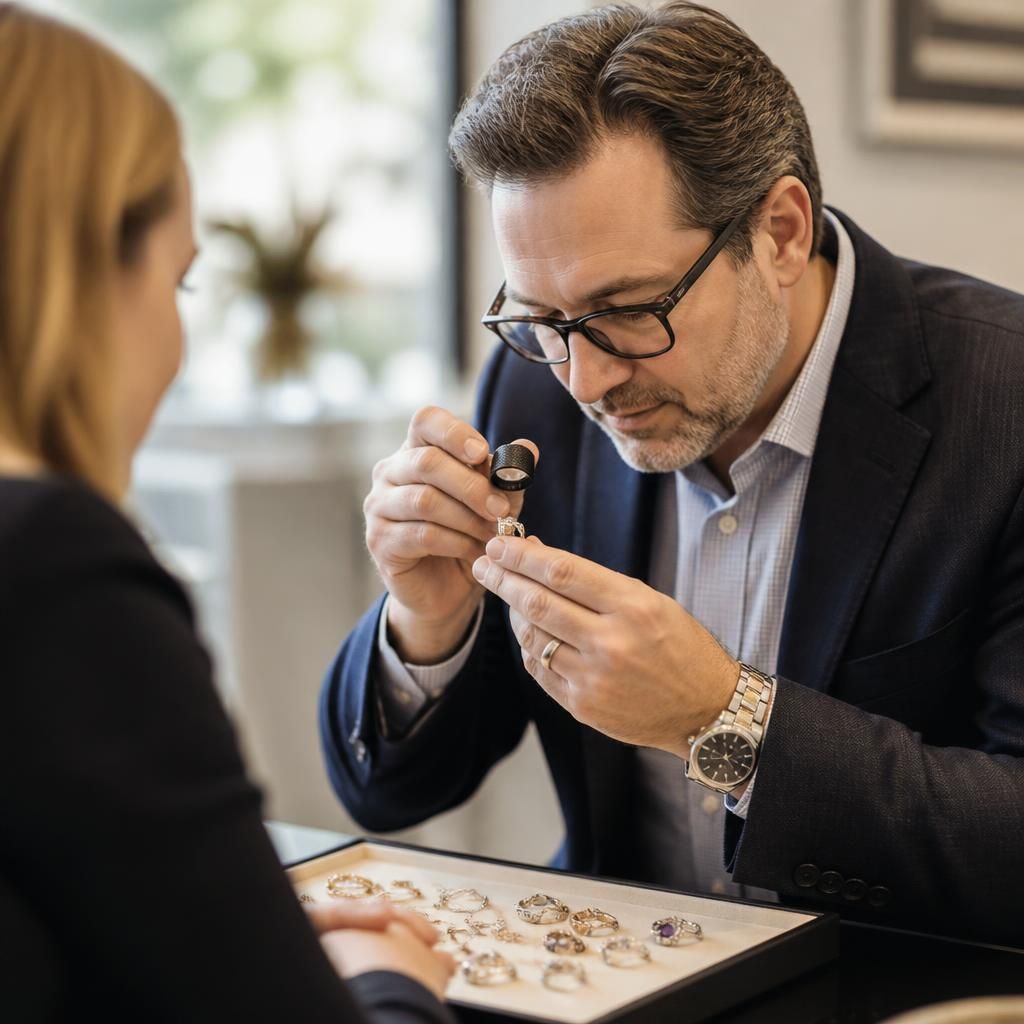
Inspect areas that experience wear, including ring shanks, claws, hinges, clasps and catches. Ask whether the jewellery has been professionally checked, and whether repairs, cleaning or resizing are included. A lower-priced ring may be less economical if worn claws or a thin shank require immediate attention.
Compare similar pieces using like-for-like details such as metal, approximate weight, gemstone characteristics, design and condition. Confirm the hallmarks, any gemstone treatments and the available returns policy or aftercare. A trusted jeweller should explain the item clearly and provide suitable documentation, helping you judge whether the price reflects its quality and long-term condition.
Ask us to assess your pre-loved jewellery purchase
Bring the pre-loved jewellery you are considering to Steven Charles Quance for an expert assessment of its materials, condition, authenticity and overall value. We can also advise on any necessary repairs, resizing, valuation or ongoing aftercare before you make your decision.